The tile you choose for a master bath does more heavy lifting than any other finish in the room. It sets the color palette, controls how big the space feels, and determines whether your feet slip on a wet Saturday morning. After tiling well over a hundred bathrooms, I can tell you the projects that look effortless are the ones planned around a few smart decisions rather than a Pinterest board full of clashing patterns. These master bath tile ideas focus on combinations that actually work together, hold up to daily use, and give you a room that still looks current in ten years.
Below I break the room into its tiling zones, floor, shower, walls, and accents, so you can mix ideas without ending up with a busy mess.
Start With a Large-Format Floor Tile
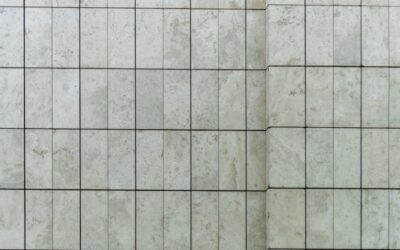
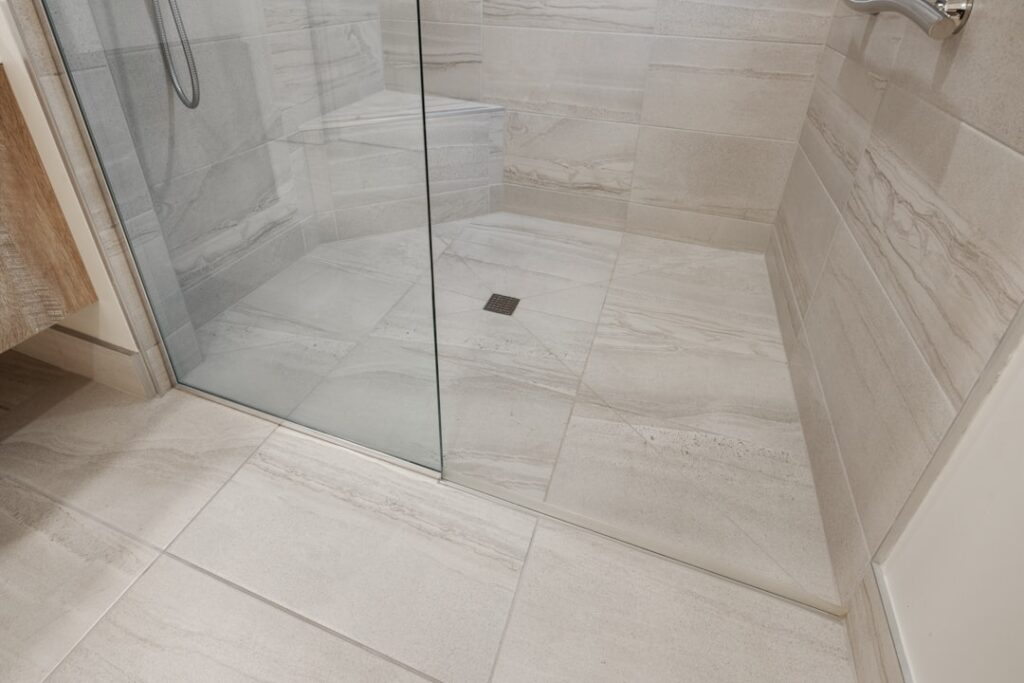
Big tiles read as luxury and, just as importantly, they mean fewer grout lines to scrub. A 12×24 or 24×24 porcelain plank in a soft greige or warm limestone look is the workhorse of the modern master bath. Fewer joints make a small room feel larger and cut cleaning time in half.
For safety, look for a floor tile with a Dynamic Coefficient of Friction (DCOF) rating of 0.42 or higher, printed right on the spec sheet. A honed marble-look porcelain gets you the high-end aesthetic without the slick surface of real polished marble. Run the same tile straight into the shower for a seamless, spa-like flow, or shift to a smaller mosaic on the shower floor for extra grip.
Make the Shower the Focal Point
The shower is where you can afford to be bold because it is a contained area. A vertical stack of 4×12 subway tile draws the eye up and makes an 8-foot ceiling feel taller. For something richer, a zellige-look ceramic in deep green or navy adds handmade texture and catches the light differently through the day.
- Feature niche: Line a recessed shampoo niche with a contrasting marble hexagon or a metallic mosaic to create a jewel-box accent.
- Shower floor: Use 2×2 penny rounds or 1×1 mosaics; the extra grout lines add slip resistance where you need it most.
- Full-height walls: Tiling shower walls to the ceiling looks more finished and prevents the painted-drywall mildew line that plagues half-tiled showers.
Play With Color Without Committing Forever
Trend colors are fun, but ripping out tile is a $3,000 to $8,000 mistake. Keep the expensive, permanent surfaces, the floor and main shower walls, in timeless neutrals, then bring color through easily changed elements: a painted vanity, towels, or a single accent wall of colored tile behind the tub.
Blue and green glazed tile is having a long moment and pairs beautifully with brass or matte black fixtures. If you love a bolder look, a terracotta or blush pink zellige on one wall gives warmth that photographs well and is inexpensive to swap later compared to redoing the whole shower.
Mix Patterns the Right Way
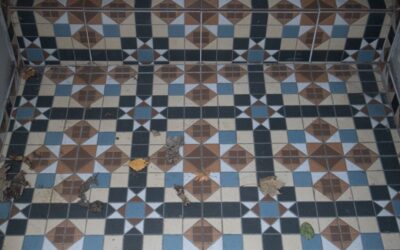
The rule I give every client: pick one star and let the rest support it. If your floor is a patterned encaustic-look tile, keep the shower walls plain white. If the shower has a dramatic marble slab look, keep the floor quiet. Two loud surfaces in one small room fight each other and make the space feel chaotic.
A herringbone layout is an easy way to add interest with plain tile. Laying standard 3×12 planks in a herringbone or chevron pattern on a shower accent wall costs only the extra labor, roughly 15 to 20 percent more than a straight layout, but delivers a custom look for a fraction of a true mosaic price.
Don’t Forget the Grout
Grout color changes everything. A white tile with bright white grout reads clean and crisp; the same tile with a warm gray grout looks softer and hides dirt far better. For floors and shower pans, always choose a mid-tone grout, light gray or greige, because pure white grout on a floor turns gray within a year no matter how well you seal it.
Use an epoxy or high-performance urethane grout in wet areas. It costs more, around $30 to $45 per unit versus $15 for standard cement grout, but it resists mold, never needs sealing, and keeps its color for the life of the installation.
Scale Tile to the Size of the Room
A common misstep is putting tiny mosaic everywhere in a compact master bath, which chops the space into a thousand busy pieces. Reserve small tile for accents and shower floors. In a room under 100 square feet, lean on 12×24 or larger tile for the main surfaces to keep the eye moving smoothly.
In a large primary suite with a freestanding tub, you have room to layer: a large-format floor, a marble-look feature wall behind the tub, and a mosaic shower floor all coexist happily because there is enough square footage to let each element breathe.
Budget and Material Reality Check
Set expectations before you fall in love with a $30-per-square-foot marble mosaic. Here is a rough tiled-master-bath budget for materials and installation combined:
- Budget: Porcelain floor and subway shower, $8 to $15 per square foot installed.
- Mid-range: Large-format porcelain plus a mosaic accent, $15 to $25 per square foot installed.
- High-end: Natural stone, custom patterns, full-height walls, $25 to $50-plus per square foot installed.
Porcelain that convincingly mimics marble, travertine, and wood has gotten so good that most homeowners no longer pay the premium or the maintenance cost of natural stone. It is harder, non-porous, and needs no sealing.
Let Lighting Guide Your Tile Choice
Tile and light are partners, and the mistake I see most is choosing a finish in the showroom without thinking about how it behaves at home. Glossy tile bounces light and brightens a windowless master bath, but it also shows every water spot and streak. Matte and honed surfaces read softer and hide fingerprints, which is why they suit vanity walls and floors better.
Think about the color temperature of your bulbs, too. A warm 2700K bulb makes a beige or dune tile glow but can turn a cool gray tile murky. A 3000K to 3500K bulb renders white and gray tile crisply and reads clean at the mirror. Whenever possible, hold your tile samples under the actual fixtures, or at least matching bulbs, before you commit, because a tile that looked bright and airy under showroom fluorescents can go flat and gloomy under warm can lights at home.
Pulling It All Together
The best master bath tile ideas share a common thread: restraint. Choose one durable neutral for the bulk of the room, add a single confident feature, coordinate your grout, and mind the slip rating on anything underfoot. Order a few sample boards and tape them to the wall for a week so you can see them in morning and evening light before ordering. Get those fundamentals right and the room will feel like a retreat every time you walk in, without dating itself the moment trends shift.
Prefer to explore on your own?
See how new flooring looks in your actual room in seconds — free, no signup.
Try the free Floor Studio →