
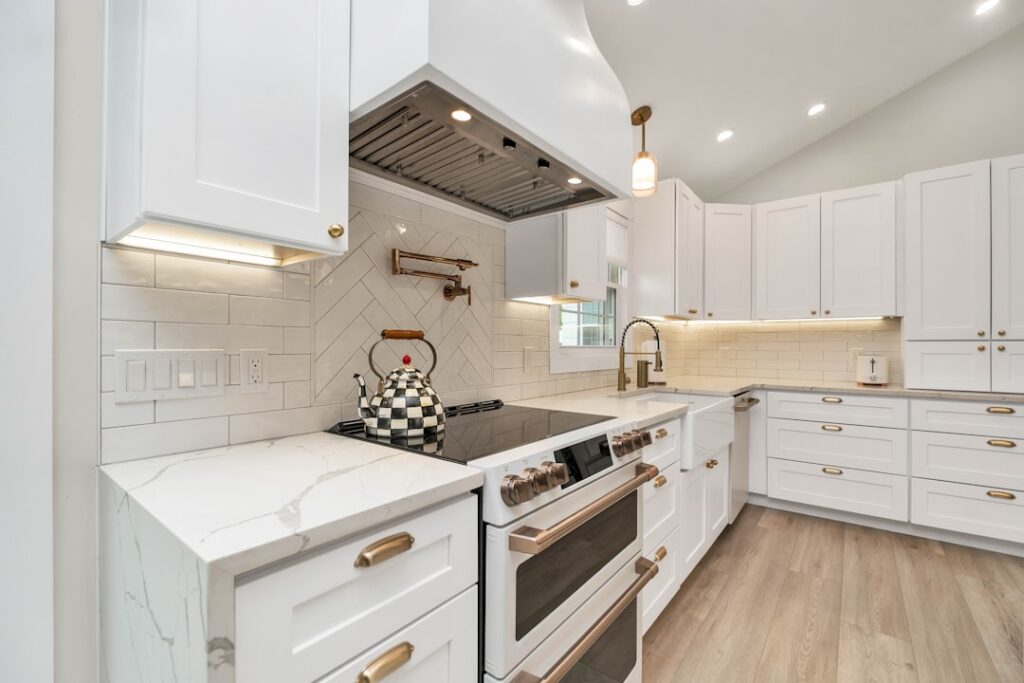
Glossy tile shows every fingerprint and water spot, which is exactly why so many homeowners are switching to flat, velvety finishes behind the counter. A matte black backsplash delivers dramatic, architectural contrast while hiding the smudges that plague high-shine surfaces. Having installed both finishes in dozens of kitchens, I can tell you the matte version photographs like a designer showroom and forgives daily life far better than its glossy cousin. This guide breaks down the tile choices, layouts, cost, and the cleaning quirks nobody warns you about.
- Why Choose a Matte Finish
- Tile Materials and Options
- Layouts and Design Ideas
- Grout Color Matters More Than You Think
- Cost of a Matte Black Backsplash
- Installation Notes
- Cleaning and Maintenance
- Common Questions From Homeowners
- Does a dark backsplash make a kitchen look smaller?
- Are water spots really a problem?
- What countertop colors go with a matte black backsplash?
- Is matte or glossy black easier to maintain?
- Is a Matte Black Backsplash Right for You?
Why Choose a Matte Finish
Matte tile scatters light instead of reflecting it, producing a soft, even tone that reads as sophisticated rather than flashy. That diffusion is practical too. Fingerprints, dried water droplets, and light streaks vanish into a flat black surface, whereas gloss magnifies every mark under your under-cabinet lighting.
The look leans modern and minimalist, but it’s surprisingly versatile. Pair it with warm wood and it turns Scandinavian; combine it with brass hardware and marble counters and it goes glam; set it against white cabinets and you get a crisp, timeless graphic contrast. Black also grounds a bright kitchen, giving the eye a place to rest amid stainless appliances and busy counters.
Tile Materials and Options
Black comes in nearly every backsplash material, and the substrate matters for durability and price. Here are the options I recommend most.
- Matte porcelain and ceramic: The workhorse choice. Durable, waterproof, affordable, and available in subway, hex, and large-format.
- Honed granite or soapstone slab: A seamless, high-end look with natural depth; soapstone has a soft, silky matte feel.
- Zellige and handmade black tile: Slight texture and tonal variation for an artisan wall.
- Matte glass: Waterproof and easy to clean, though it can look flatter and more uniform.
- Slate: Naturally matte with rich texture, great for rustic and industrial kitchens.
For most homeowners, matte black porcelain hits the sweet spot of looks, durability, and cost. Reserve natural stone slabs for the budget and the statement wall behind a range.
Layouts and Design Ideas
The shape and pattern do the heavy lifting since the color is a constant. A classic 3×6 subway tile in matte black set in running bond keeps things clean and familiar. Stack those same tiles vertically for a more contemporary, elongated look that draws the eye up.
Large-format tile, say 12×24 laid horizontally, minimizes grout lines for a sleek, almost monolithic wall. Small hexagons or penny rounds add texture and a touch of retro character. For a bolder statement, run the backsplash full height behind the cooktop from counter to hood, framing the range as the kitchen’s anchor. Whatever the layout, remember that grout color changes everything, which is the single most common thing homeowners overlook.
Grout Color Matters More Than You Think
Grout can make or break a black backsplash. A matching black or charcoal grout produces a seamless, monolithic wall where the tile shapes nearly disappear, which flatters large-format and modern kitchens. Choose a light gray or white grout and every tile pops into a bold geometric grid, a high-contrast look that suits subway and hex patterns.
My default recommendation is a dark gray grout rather than pure black. It hides staining, ties the wall together, and avoids the slightly stark, artificial look that jet-black grout can take on. Whatever you pick, use a quality stain-resistant grout and seal cement-based grout after it cures to keep it from graying near the sink and range.
Cost of a Matte Black Backsplash
Pricing tracks closely with material choice. For a typical 30-square-foot kitchen backsplash, here’s what I generally see.
- Matte black porcelain or ceramic tile: $5 to $15 per square foot.
- Matte glass tile: $15 to $30 per square foot.
- Handmade or zellige black tile: $25 to $50 per square foot.
- Honed granite or soapstone slab backsplash: $40 to $100 per square foot installed.
- Professional installation labor: $12 to $25 per square foot.
A standard installed ceramic or porcelain black backsplash usually lands between $700 and $2,000. DIY drops that to $300 to $700 in materials. Slab and artisan tile push well past $3,000, but they deliver a genuinely custom, high-end result.
Installation Notes
Installing black tile follows the same steps as any backsplash, with a couple of finish-specific tips. Because the color is so uniform, imperfections in the wall show as shadows, so start with a flat, primed substrate and check for high spots with a straightedge.
- Dry-lay your tile to plan cuts and center the pattern on the range or sink.
- Spread white or gray thinset with a 3/16-inch notched trowel; avoid dark thinset bleeding through matte grout joints.
- Set tiles with even spacers, keeping lippage minimal since flat black reveals uneven edges.
- Cure 24 hours, then grout with your chosen color and wipe carefully.
- Seal cement grout after curing and add matching caulk at the countertop seam.
Take extra care wiping grout haze off matte tile; the textured surface can trap a chalky film. A grout haze remover and a clean microfiber cloth solve it if plain water won’t.
Cleaning and Maintenance
Here’s the honest tradeoff with matte black: it hides fingerprints but can show hard-water mineral deposits and soap residue as a dull white film, especially near the sink. The flat texture also holds a little more grease than glass.
Wipe the wall regularly with warm water and a drop of dish soap on a microfiber cloth. For mineral buildup, use a small amount of distilled white vinegar on porcelain or glass, but keep acids away from natural stone and honed slabs, which etch. Avoid abrasive scrubbers that can burnish the matte surface into uneven shiny patches. Dry the wall after cleaning to prevent new water spots, and your backsplash stays showroom-clean with minimal effort.
Common Questions From Homeowners
Does a dark backsplash make a kitchen look smaller?
It can visually recede and add depth, but it won’t shrink the room the way people fear. Pair it with light cabinets, good under-cabinet lighting, and reflective surfaces like a polished counter, and a black backsplash actually adds sophisticated contrast rather than closing the space in. In a small, dim kitchen, keep the rest of the palette bright to balance it.
Are water spots really a problem?
On matte porcelain and glass near the sink, hard water can leave a faint white film over time. It wipes off easily with a damp cloth and, on non-stone tile, a little diluted vinegar. Drying the wall after cleaning prevents most spotting, so it’s a minor upkeep habit rather than a dealbreaker.
What countertop colors go with a matte black backsplash?
White and light gray quartz create crisp contrast, warm wood butcher block softens the look, and veined marble or quartzite adds elegant movement. Even a black counter works if you vary the texture, pairing a matte wall with a honed or leathered slab so the two blacks read as intentional rather than a mismatch.
Is matte or glossy black easier to maintain?
Matte hides fingerprints and smudges far better, which is its main appeal, while glossy hides hard-water film better but shows every print. For most kitchens, matte wins on daily appearance, as long as you keep a microfiber cloth handy near the sink.
Is a Matte Black Backsplash Right for You?
If you want drama, modern edge, and a surface that shrugs off fingerprints, a matte black backsplash is hard to beat. It suits contemporary, industrial, and transitional kitchens and pairs brilliantly with wood, white, brass, and marble. The main considerations are hard-water spotting near the sink and the importance of getting grout color right. Nail those two details, choose durable porcelain unless your budget stretches to slab, and you’ll end up with a bold, low-maintenance wall that makes the whole kitchen feel intentional and current.


