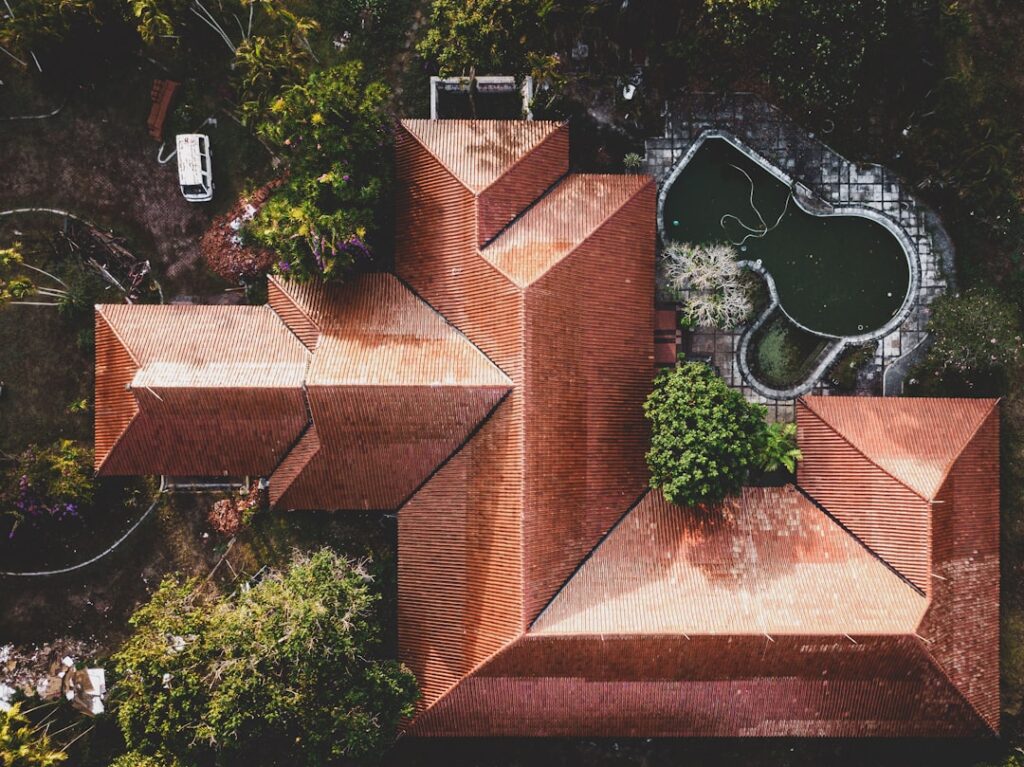
A properly installed metal roof can outlive the mortgage, shrugging off 60 years of sun, hail, and wind while an asphalt roof gets replaced two or three times over the same span. Metal roofing sheets have moved well beyond the old corrugated barn look, and today they cover everything from farmhouses to sleek modern homes. Choosing the right metal roofing sheets comes down to panel profile, metal type, gauge, and coating, and getting those four right determines whether your roof lasts 25 years or 70.
Types of Metal Roofing Sheets
Panel profile is the first decision, and it splits into two broad families:
- Standing seam: Vertical panels with raised, interlocking seams that hide the fasteners underneath. The premium residential choice, clean-looking and leak-resistant, running $9 to $16 per square foot installed.
- Exposed-fastener (corrugated/ribbed): Panels screwed directly through the face, with visible fasteners. More affordable at $4 to $9 per square foot installed, common on barns, sheds, and budget-conscious homes.
- Metal shingles and tiles: Stamped panels that mimic slate, shake, or clay tile, offering a traditional look with metal durability.
Standing seam costs more up front but eliminates the exposed screws that are the number-one leak point on cheaper panels, where rubber washers dry out and fasteners back out over 15 to 20 years.
Choosing the Metal: Steel, Aluminum, or Beyond
The base metal affects price, weight, and where the roof performs best.
- Galvanized/Galvalume steel: The most common and economical. Galvalume (an aluminum-zinc coating) resists rust better than plain galvanized. Great all-around choice.
- Aluminum: Lightweight and corrosion-proof, the top pick for coastal homes where salt air eats steel.
- Copper and zinc: Premium, long-lived architectural metals that develop a patina; expensive, often $20 to $40 per square foot.
For most inland homes, Galvalume steel delivers the best balance of cost and longevity. Within a mile or two of salt water, spend the extra for aluminum to avoid premature corrosion.
Understanding Gauge and Thickness
Gauge measures the metal’s thickness, and, counterintuitively, a lower gauge number means thicker, stronger metal. Residential steel panels typically run 24 to 29 gauge:
- 29 gauge: The thinnest common option, fine for sheds and mild climates, but dents more easily.
- 26 gauge: A solid middle ground for most homes.
- 24 gauge: The thickest standard residential panel, best for standing seam and areas with hail or high wind.
If your region sees hail or heavy snow load, do not cheap out on gauge. The difference between 29 and 24 gauge is a few hundred dollars on a whole roof but a large difference in dent resistance and panel oil-canning.
Coatings and Finishes That Matter
The paint system is what protects the metal and holds the color, and there is a real quality split. Cheaper panels use a polyester or SMP (silicone-modified polyester) finish that fades faster. Premium panels use a PVDF coating (branded Kynar 500 or Hylar 5000) that resists fading and chalking for decades and usually carries a 30- to 40-year finish warranty.
Beyond looks, ask about a “cool roof” reflective coating. These reflect more solar heat, and in hot southern climates they can cut attic temperatures and shave a noticeable amount off summer cooling bills. Light colors reflect the most; dark colors absorb more heat but still outperform asphalt.
Installation Basics and Underlayment
Metal roofing goes over a solid, dry deck with the right underlayment, and the details make or break the job. A synthetic underlayment or, better, a high-temperature ice-and-water shield over the whole deck protects against condensation and wind-driven rain. In cold climates, ice-and-water membrane along the eaves is essential.
Panels expand and contract with temperature, sometimes by a fraction of an inch over a long run, so standing seam clips are designed to let the metal float. Exposed-fastener panels must be screwed at the correct spacing with the fastener seated snug, not overdriven, so the rubber washer seals without crushing. This expansion behavior is exactly why exposed-fastener roofs eventually leak: the constant movement works the screws loose, which is why standing seam is worth the premium for a forever roof.
DIY or Hire a Pro
Exposed-fastener panels on a simple gable, a shed, garage, or porch, are within reach of a confident DIYer with a drill, tin snips, and a helper, and doing it yourself saves the $4 to $7 per square foot labor charge. Standing seam is a different story: it requires specialized seaming tools, precise panel fabrication, and experience with flashing valleys and penetrations. A botched standing seam install voids the warranty and leaks, so hire a metal-certified roofer for anything beyond the simplest outbuilding.
Noise, Energy, and Common Myths
The loudest objection to metal roofing is that it will sound like a drum in the rain. In reality, a metal roof installed over a solid deck with underlayment is no louder inside than asphalt, the myth comes from barns and sheds where panels are screwed to open purlins with nothing beneath them. On a home with attic insulation and a plywood deck, rain noise is a non-issue for nearly everyone.
On energy, metal genuinely helps in hot climates. Its reflective surface, especially with a cool-roof coating, bounces solar heat away instead of absorbing it like dark asphalt, which can lower attic temperatures by 20 to 40°F on a summer afternoon and trim cooling costs. Another myth worth dispelling: metal does not attract lightning, and if struck, it safely disperses the energy and will not ignite the way wood or asphalt can. Metal is also 100 percent recyclable at the end of its long life, unlike asphalt shingles that clog landfills.
Ventilation is the quiet detail that determines how long the whole assembly lasts. A metal roof over a poorly ventilated attic traps moisture, which condenses on the underside of the panels in cold weather and can rust them from the inside out. A balanced system, intake vents at the soffits and exhaust at the ridge, lets air wash the underside of the deck and carry that moisture away. Some installers add a ventilated batten or a self-adhering high-temperature underlayment specifically to manage condensation under metal. In snow country, that same ventilation keeps the roof deck cold enough to prevent the melt-refreeze cycle that forms ice dams at the eaves. Pair good ventilation with adequate attic insulation and you protect both the roof and your energy bills. Skimping here is a false economy: the panels may carry a 40-year finish warranty, but trapped moisture can undermine the deck beneath them long before the metal itself gives out, so treat ventilation as part of the roofing system rather than an afterthought.
Metal roofs are low-maintenance but not no-maintenance. Once or twice a year, clear leaves and debris from valleys and gutters so water sheds freely, and inspect the roof after major storms. On exposed-fastener panels, check the screws every few years; the rubber washers eventually dry out, and backed-out or leaking fasteners are the most common repair, an inexpensive fix if caught early. Standing seam roofs have no exposed fasteners to fail, which is why they need the least attention.
Watch for two things over the decades: scratches that expose bare metal, which can be touched up with matching paint to prevent rust, and any dissimilar-metal contact, such as copper flashing against Galvalume steel, that can cause galvanic corrosion. A quick annual walk-around, or a look with binoculars from the ground, catches minor issues before they become leaks. Keep a few spare panels and fasteners from the original order so any future repair matches perfectly.
Lifespan, Value, and Final Considerations
The long game is where metal wins. A quality steel roof lasts 40 to 70 years, aluminum and standing seam at the top of that range, versus 15 to 30 years for asphalt. Metal is also fire-resistant, sheds snow, and can lower insurance premiums in some regions. Resale studies consistently show metal roofs recouping a strong share of their cost, and their durability is a genuine selling point.
Before you order, confirm three things: the gauge suits your climate, the finish is a PVDF/Kynar system if you want lasting color, and the installer has metal-specific references. Get that trio right and your metal roofing sheets will very likely be the last roof you ever buy for the house.
Budget realistically for the whole project, not just the panels. On top of the material and labor, factor in tear-off of the old roof if you are not going over it, new flashing and trim, ridge caps, closures that seal the panel ends against wind and pests, fasteners, and a permit. These accessories add up and are exactly what separates a watertight, long-lived roof from one that leaks at the edges. Ask the installer for an itemized quote that lists the gauge, the metal type, the finish system, and every trim piece, then compare bids on those specifics rather than the bottom-line number. A slightly higher quote that includes 24-gauge steel, a Kynar finish, and proper closures is a better buy than a cheaper one hiding thinner metal and a short-lived coating. Over the fifty-plus years a good metal roof can last, that small upfront difference is invisible against the decades of protection it buys.