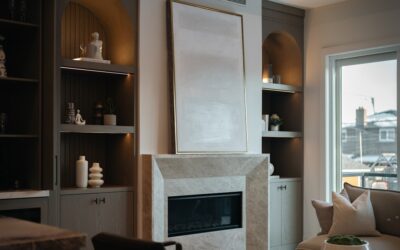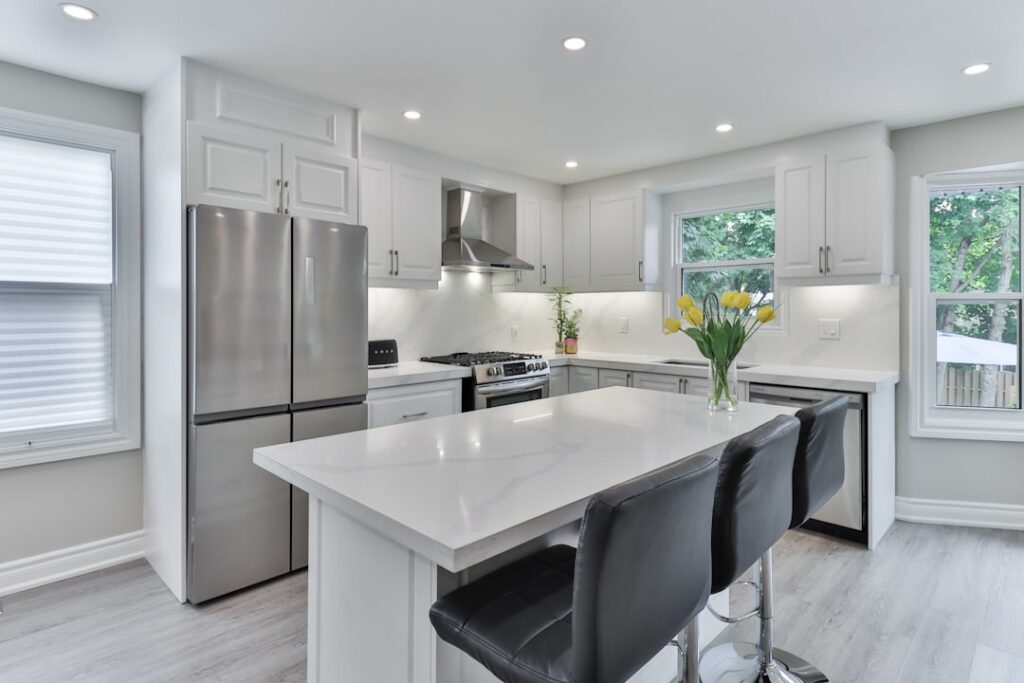
The clean lines, warm wood tones, and functional simplicity of 1950s and 1960s kitchen design have never gone out of style — they just evolved. A midcentury modern kitchen blends the era’s signature aesthetic with contemporary appliances and materials, creating a space that feels both retro and timeless. Whether you are renovating a genuine mid-century ranch home or bringing MCM style into new construction, the design principles are the same: flat-panel cabinetry, natural materials, bold accent colors, and nothing unnecessary.
Defining Characteristics of MCM Kitchen Design
Midcentury modern architecture emphasized the connection between indoors and outdoors, clean horizontal lines, and honest use of materials. In the kitchen, this translates to:
- Flat-panel (slab) cabinet doors without ornate trim or raised panels
- Warm wood species — walnut, teak, and oak in natural or lightly stained finishes
- Open shelving mixed with closed cabinetry
- Large windows that bring natural light deep into the space
- Minimal upper cabinets to maintain visual openness
- Geometric patterns in backsplash and flooring
Cabinetry: The Foundation of MCM Style
Cabinets define the look of any kitchen, and in a midcentury modern kitchen, they should be simple and sleek. Flat-panel doors in natural walnut are the quintessential choice, running $250-$400 per linear foot for semi-custom options. White oak offers a lighter, more casual MCM feel at $200-$350 per linear foot.
For a budget-friendly approach, IKEA’s VOXTORP and ASKERSUND door fronts deliver the slab-door look at $80-$150 per linear foot. Pair them with mid-century-inspired pulls — long horizontal bar pulls in brushed brass or oil-rubbed bronze — mounted at the upper third of doors rather than centered. Hardware costs $3-$8 per pull.
Color Palette
Authentic midcentury kitchens were not afraid of color. While the base palette stays neutral — white walls, wood cabinets, light countertops — accent colors bring the era to life:
- Avocado green — the definitive MCM kitchen color; use it on a single accent wall, lower cabinets, or the backsplash
- Mustard yellow — warm and inviting as a pendant light color or bar stool upholstery
- Orange and burnt sienna — energetic accents in small doses through accessories and textiles
- Teal and turquoise — popular in the late 1950s; works beautifully as a tile backsplash color
Keep bold colors to one or two accent elements. The rest of the palette should be white, cream, warm gray, or natural wood to let the accent colors pop without overwhelming the space.
Countertops and Backsplash
Original midcentury kitchens featured laminate countertops — and high-quality modern laminates from brands like Formica and Wilsonart are actually an authentic choice at $15-$40 per sq ft installed. For a more contemporary take, white quartz ($50-$90 per sq ft installed) or butcher block ($40-$70 per sq ft installed) complement MCM cabinetry without competing visually.
The backsplash is where you can inject the most personality. Subway tile in a vertical stack bond pattern is more MCM-appropriate than the standard horizontal offset used in farmhouse kitchens. Geometric hex tiles, penny rounds in mixed earth tones, or solid-color ceramic tile in teal or avocado green are all period-appropriate. Budget $8-$25 per sq ft for tile and installation.
Flooring Options
Midcentury homes originally featured linoleum, vinyl, or terrazzo floors in the kitchen. Modern equivalents include:
- Luxury vinyl plank (LVP) in a warm walnut or oak pattern — $3-$7 per sq ft installed
- Terrazzo-look porcelain tile — captures the classic MCM floor look, $6-$12 per sq ft installed
- Cork flooring — period-appropriate, warm underfoot, sustainable, $4-$8 per sq ft installed
- Hardwood in white oak or walnut with a matte finish — $8-$14 per sq ft installed
Lighting and Fixtures
Iconic midcentury lighting designs remain in production and widely available as reproductions. A Nelson Bubble Lamp pendant over the dining area ($200-$500 for an original; $60-$150 for quality reproductions) is instantly recognizable MCM. Sputnik chandeliers, globe pendants, and arc floor lamps all fit the aesthetic.
For task lighting, slim under-cabinet LED strips provide clean, shadow-free countertop illumination without visible fixtures — exactly the kind of functional simplicity that MCM designers championed. Faucets should be simple and geometric; single-handle designs in brushed gold or matte black complement the era without imitating it.
Appliances That Blend In
Stainless steel works in a midcentury modern kitchen but can look cold against warm wood cabinets. Panel-ready appliances hidden behind matching cabinet fronts keep the clean lines intact. If your budget does not stretch to panel-ready ($500-$1,500 premium over standard models), consider matte white or matte black finishes that feel less commercial than stainless.
Retro-styled appliances from brands like SMEG and Big Chill capture the MCM vibe with modern performance, though they carry premium pricing ($1,500-$3,000 for a refrigerator). They work best as a single statement piece rather than a matching suite.
Bringing It All Together
A successful midcentury modern kitchen balances warm natural materials with clean geometry and intentional pops of color. The style rewards restraint — every element should feel purposeful, and the overall impression should be calm and uncluttered. Start with flat-panel wood cabinets as your foundation, add one bold accent color through the backsplash or a painted cabinet section, choose simple hardware and fixtures, and let the natural beauty of the materials carry the design.