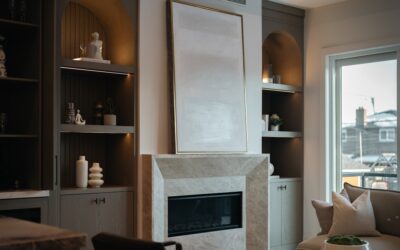
A blank drywall surface is a missed opportunity, and nothing fixes it faster than a millwork wall. Millwork refers to the finished woodwork, paneling, trim, wainscoting, and built-ins, that turns a plain wall into a piece of architecture. Whether you want the timeless look of board and batten, the texture of a slat wall, or the function of floor-to-ceiling built-in shelving, a millwork wall adds depth, character, and real resale appeal. Best of all, many styles are within reach of a confident DIYer with basic tools.
What Counts as a Millwork Wall
Millwork is any decorative or functional woodwork installed on a wall, as opposed to flat paint or wallpaper alone. It spans a wide range of looks and complexity:
- Board and batten: Vertical battens over a flat base, creating a grid of raised lines.
- Wainscoting: Paneling on the lower portion of a wall, often capped with a chair rail.
- Picture frame molding: Applied molding boxes that mimic raised panels for a refined, traditional look.
- Slat walls: Evenly spaced vertical wood slats for a warm, modern texture.
- Shiplap and beadboard: Horizontal or vertical plank paneling with a casual, cottage feel.
- Built-ins: Custom shelving, cabinetry, or media walls integrated into the wall.
You can keep it purely decorative or combine paneling with built-in storage for a wall that earns its keep.
Choosing a Style for Your Room
Match the millwork style to your home’s character and the room’s purpose. Picture frame molding and wainscoting suit traditional and transitional spaces, dining rooms, entryways, and formal living rooms. Board and batten reads farmhouse or classic and works almost anywhere, including hallways and mudrooms. Slat walls and modern flat panels fit contemporary interiors and make striking bedroom or living room feature walls. Built-ins shine in living rooms flanking a fireplace, in home offices, and in awkward alcoves that need both style and storage.
Consider scale too. Tall ceilings can carry full-height paneling, while a standard 8-foot wall often looks best with wainscoting or paneling that stops around chair-rail or two-thirds height.
Common Materials
Most millwork is built from a few reliable materials:
- MDF (medium-density fiberboard): Smooth, stable, and affordable; ideal for painted trim, battens, and picture frame molding. It paints beautifully but must be kept dry.
- Primed pine and poplar: Solid wood options for trim that take paint well and resist dents better than MDF.
- Plywood: Used for slat-wall backers, built-in carcasses, and shelving.
- Hardwood: Oak, walnut, or maple for stained slat walls and built-ins where you want visible grain.
For painted projects, MDF is the budget-friendly favorite. For natural, stained looks, choose a hardwood with attractive grain.
Tools and Materials to Have on Hand
A basic millwork project calls for a tape measure and level, a miter saw for clean angled cuts, a brad nailer or hammer and finish nails, construction adhesive, a stud finder, wood filler, caulk, sandpaper, primer, and paint. A nail gun speeds the work dramatically and gives cleaner results than hand-nailing, but it is not strictly required for simple designs.
Installation Overview
While details vary by style, most paneling and trim projects follow the same sequence:
- Plan and measure: Sketch your layout on the wall, mark stud locations, and calculate spacing for battens or boxes so the design is symmetrical.
- Prep the wall: Remove outlet covers, fill holes, and lightly sand glossy surfaces so adhesive and paint bond well.
- Cut your pieces: Measure twice and cut once, using a miter saw for crisp ends and any 45-degree corners.
- Attach the trim: Apply construction adhesive to the backs and nail into studs or the wall, checking level as you go.
- Fill and caulk: Fill nail holes with wood filler, then caulk all seams and edges. Caulking is what makes the difference between a DIY look and a professional one.
- Prime and paint: Sand smooth, prime bare MDF or wood, and apply two coats of paint in a durable satin or semi-gloss finish.
Take your time with layout and caulking; those two steps determine how polished the finished wall looks.
Design Tips for a Polished Result
A few details elevate the finished wall. Keep batten and box spacing consistent and centered so the eye reads order rather than randomness. Paint the millwork and the wall behind it the same color for a rich, modern monochrome look, or use crisp white trim against a colored wall for classic contrast. For slat walls, paint the backer board a dark color so any gaps disappear into shadow. And always run trim level, even if your floors or ceilings are not perfectly square, since the eye reads the trim line, not the room.
Budgeting Your Millwork Wall
One of millwork’s biggest appeals is the range of price points. A simple picture-frame molding accent wall using MDF can cost as little as a few dozen dollars in materials plus a weekend of labor, making it one of the cheapest high-impact upgrades in the home. Board and batten and basic wainscoting run a bit more depending on wall size and the cost of trim stock. Slat walls fall in the middle, with the main expense being the wood slats themselves. Full custom built-ins are the priciest, since they involve more material and often professional carpentry. Doing the work yourself dramatically lowers the cost on everything but complex built-ins, where a carpenter’s precision is worth paying for.
Adding Built-Ins for Function
If you want your millwork wall to do more than decorate, integrate built-ins. Floor-to-ceiling bookshelves, a window seat with storage, or cabinetry flanking a fireplace combine the architectural look of millwork with real utility. Built-ins are more involved than applied trim and may warrant a carpenter for complex designs, but a wall of simple open shelving is achievable for a determined DIYer using plywood and trim.
The Bottom Line
A millwork wall is one of the highest-impact upgrades you can make, adding architecture, texture, and value to a plain room. Choose a style that fits your home, pick the right material for painted or stained finishes, and focus on careful layout and clean caulking during install. Whether you opt for simple board and batten or a full wall of built-ins, the result transforms a forgettable wall into the focal point of the room.