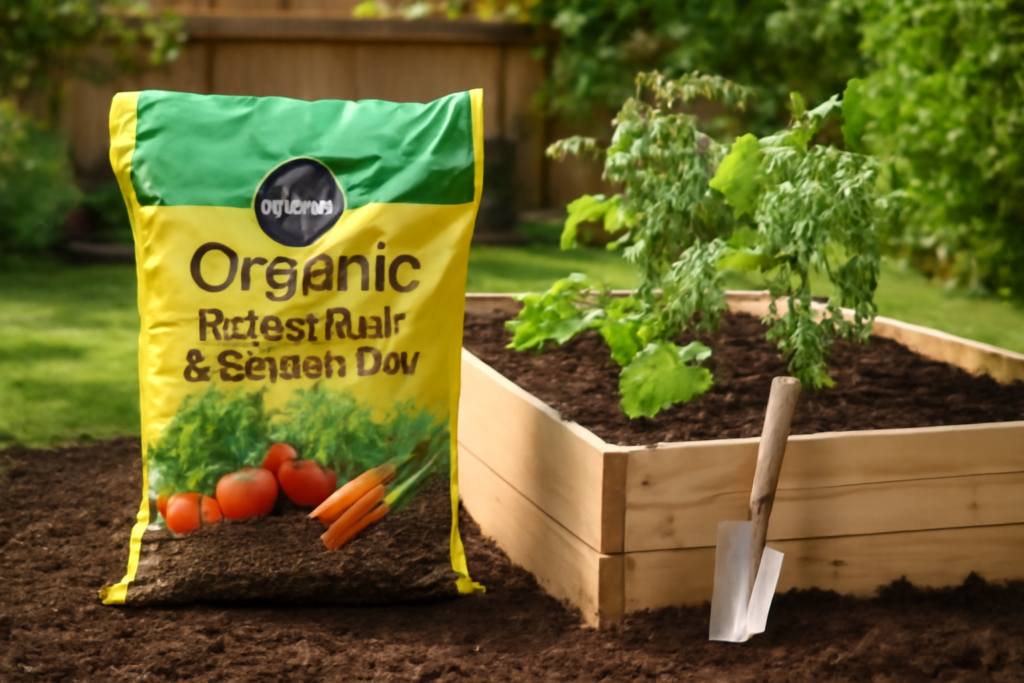
Filling a raised bed is where most first-time gardeners either set themselves up for a great season or doom their plants before a single seed goes in. Miracle-Gro Organic Raised Bed and Garden Soil is one of the most widely stocked bagged mixes for exactly this job, and it carries the OMRI listing that lets you call your garden organic. I have filled beds with it, blended it with native soil, and watched what grows, so this guide covers how to use it well, how much you actually need, and where it falls short.
What This Product Actually Is
Despite the name, this is not a lightweight potting mix and it is not straight compost. It is a heavier, soil-based blend formulated to go directly into in-ground beds and raised beds. The recipe includes aged compost, sphagnum peat, and other organic materials, and it is enriched to feed plants for up to three months right out of the bag. The OMRI listing means the ingredients meet organic standards, which matters if you are growing food and want to keep synthetic inputs out.
Because it has real body to it, this mix holds moisture and anchors roots better than a fluffy container mix would. That density is a feature in a raised bed but a drawback in pots, where it can pack down and stay soggy. Reach for the potting mix version for containers and save this one for beds.
How Much You Need: Coverage Math
Each bag covers a known volume, and getting the count right up front saves you a second trip to the store. The 1.5 cubic foot bag fills roughly 12 square feet at a 1.5-inch depth, but a raised bed needs far more depth than that. The number that matters is total cubic feet of bed volume.
- 4×4 bed, 10 inches deep: about 13.3 cubic feet, or nine 1.5 cubic foot bags.
- 4×8 bed, 10 inches deep: about 26.6 cubic feet, or eighteen bags.
- 4×8 bed, 6 inches deep: about 16 cubic feet, or eleven bags.
To calculate your own beds, multiply length by width by depth in feet, then divide by 1.5. A tall bed swallows an astonishing amount of soil, which is why many gardeners fill the bottom third with logs, branches, or coarse compost before topping off with the good stuff. That trick, sometimes called hugelkultur, can cut your bag count by a third.
Cost Per Bed
Bags run $12 to $16 each at most retailers in 2026, with the 1.5 cubic foot size being the standard. That puts a fully filled 4-by-8 bed at roughly $215 to $290 in soil alone if you buy enough to reach 10 inches. Filling the bottom with organic bulk material to save on bags can bring that down to around $140 to $190. For a single 4-by-4 starter bed, budget $110 to $145. It is not the cheapest way to fill a bed, but it is far more convenient than sourcing and hauling bulk soil for small projects.
Blend It, Do Not Just Dump It
The mistake I see most often is filling a bed with 100 percent bagged mix and calling it done. This soil performs best blended with existing garden soil or topsoil at roughly a 50-50 ratio for in-ground beds, and mixed with compost and native material in raised beds. A pure bag-only bed can dry out at the surface and lacks the mineral content and living biology that native soil brings.
For a raised bed, I like a blend of about 60 percent Miracle-Gro Organic Raised Bed soil, 30 percent finished compost, and 10 percent coarse material like aged bark for drainage. Turn it together with a fork before planting so the layers are not stratified. This gives you the convenience of the bagged mix with the resilience of a diverse, biologically active soil.
Feeding Beyond the First Three Months
The bag feeds plants for up to three months, which comfortably covers spring planting through early summer. Heavy feeders like tomatoes, squash, and corn will run out of steam by mid to late summer in most zones. Plan to side-dress with an organic granular fertilizer or top-dress with compost around the eight to ten week mark to carry crops through a long season.
For leafy greens, radishes, and other fast crops that finish inside two months, the initial charge in the soil is usually enough on its own. Match your feeding to the crop and you will not waste fertilizer.
Pros and Cons From the Bed
After multiple seasons, here is my honest tally. On the plus side, the mix is consistent bag to bag, the OMRI organic listing is legitimate, plants establish quickly, and it holds moisture well through hot spells. Availability is excellent, so restocking mid-season is never a problem.
- Watch outs: some bags contain wood chips and bark chunks that are still breaking down, which can temporarily tie up nitrogen.
- Quality varies slightly by production lot, so check a bag for excessive sticks before buying a pallet.
- At full depth it gets expensive fast, making the bottom-fill trick worthwhile on tall beds.
Raised Bed Soil vs. Potting Mix vs. Garden Soil
Miracle-Gro sells several products with similar names, and mixing them up is a costly mistake. The raised bed and garden soil covered here is a heavier, soil-based blend meant to go into beds. The potting mix is a lightweight, fluffy product designed for containers, with more perlite and peat for drainage and aeration. The plain garden soil is meant to be tilled into existing in-ground beds, not used on its own.
- Raised bed and garden soil: use in raised beds and in-ground beds; too heavy for pots.
- Potting mix: use in containers, hanging baskets, and self-watering planters; too light and expensive to fill a whole bed.
- Garden soil: a cheaper amendment to blend into native ground; not a standalone growing medium.
Using potting mix in a raised bed drains too fast and dries out; using raised bed soil in a container packs down and stays soggy. Read the bag carefully and match the product to the job. This single distinction prevents most of the disappointing results new gardeners blame on the brand.
Storing and Reusing Leftover Soil
Buying by the pallet often leaves you with extra bags, and the good news is this soil stores well. Keep unopened bags off the ground and out of standing water, ideally under cover, and they stay usable for a year or more. Opened bags should be closed up or emptied into a lidded bin so they do not dry out or grow weeds from airborne seeds.
At the end of a season, do not throw out the soil in your beds. Raised bed soil is reusable year after year with amendment. Each spring, pull out old roots, mix in a few inches of fresh compost or a partial bag of new raised bed soil to replace what settled and depleted, and turn it over. Over several seasons this refresh-and-reuse approach costs a fraction of refilling from scratch and actually improves the soil as organic matter and biology build up. The initial investment in a good bagged mix pays dividends for years when you steward it this way.
What Grows Best in This Soil
Not every plant responds the same way to a rich, moisture-holding bed soil, so it helps to match your crops to what this mix does well. Heavy feeders that love consistent moisture and fertility thrive in it: tomatoes, peppers, squash, cucumbers, and most leafy greens establish fast and produce well thanks to the aged compost and the built-in feed charge. Root vegetables like carrots and beets appreciate the loose, workable texture once it is blended, provided you have not left large wood chunks that fork the roots.
Plants that prefer lean, fast-draining soil are the exception. Mediterranean herbs like rosemary, lavender, and thyme, along with many succulents, actually resent the moisture retention and richness of this mix and do better in a grittier, leaner blend. For those, cut the raised bed soil heavily with coarse sand or perlite, or use a dedicated cactus and herb mix instead. Knowing which side of that line your plants fall on prevents the common disappointment of watching a rosemary sulk in soil that your tomatoes are loving.
The Verdict
Miracle-Gro Organic Raised Bed and Garden Soil is a reliable, convenient foundation for raised beds and in-ground gardens, especially for beginners who want a predictable result without sourcing bulk soil. Use it as the backbone of a blend rather than the whole bed, do the coverage math before you shop, and plan to feed heavy crops after three months. Handle it that way and you will get a productive, genuinely organic garden without the guesswork that sinks so many first-year beds.