Kitchen floors absorb more abuse per square foot than any other surface in the house, yet homeowners chasing a contemporary look often spec materials that photograph beautifully and fail within five years. Modern kitchen flooring today is about matching clean-lined aesthetics with performance that actually survives dropped cast iron, pet spills, and the occasional dishwasher flood. After specifying floors across hundreds of kitchen remodels, I have seen the same handful of options emerge as the clear winners for real homes. Here is the honest breakdown of what works now.
Large-Format Porcelain Tile
Large-format porcelain, with tiles measuring 24×48 or 30×60 inches, defines the contemporary kitchen aesthetic. Minimal grout lines read nearly seamless and make small kitchens feel larger. Stone-look, concrete-look, and marble-look prints from manufacturers like Florim, Atlas Concorde, and Daltile achieve realism that fools guests at close range.
Waterproof and nearly indestructible, porcelain tolerates 50 years of use without wearing through. The downside is a hard, cold surface that punishes dropped glassware and tires the legs during long cooking sessions. Radiant heat underneath solves the comfort issue but adds $6 to $10 per sq ft in system cost.
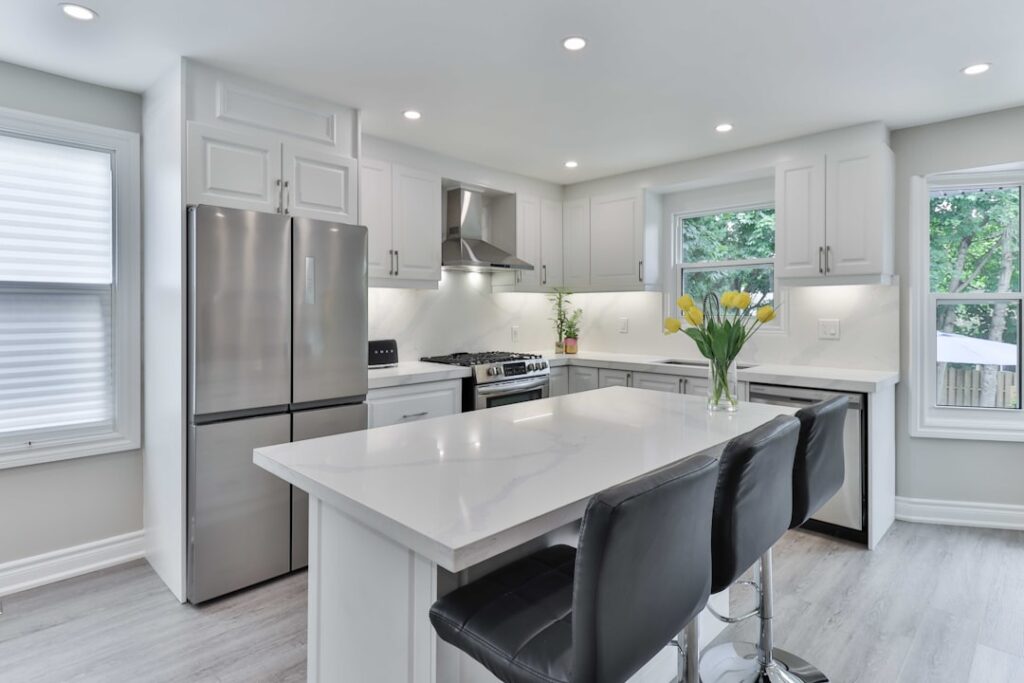
While you’re upgrading the kitchen floor, it might be a good time to rethink the seating too. Swapping out old bar stools is one of those small changes that makes the whole room feel more pulled together.
We may earn a commission when you purchase through our links.
Wide-Plank Engineered Hardwood
Wide-plank engineered hardwood, usually 7 to 9 inches wide in European oak, delivers warmth and character that tile cannot match. Factory finishes like Bona Traffic HD or Rubio Monocoat resist kitchen abuse when properly applied. Expect $7 to $14 per sq ft for quality product, plus $4 to $7 per sq ft for nail-down or glue-down installation.
Engineered hardwood handles kitchen humidity far better than solid wood, thanks to a cross-ply core that resists seasonal movement. Spills wiped promptly cause no damage, though standing water from a slow leak under the sink can still warp boards. White oak in a matte, smoked, or wire-brushed finish dominates modern design magazines for good reason.
Luxury Vinyl Plank and Tile
Modern LVP hits price points from $3 to $8 per sq ft installed and handles kitchen conditions with ease. Rigid-core SPC products resist dents from dropped cans and tolerate the thermal cycling near ovens and dishwashers. Long planks over 48 inches with beveled edges closely mimic engineered hardwood.
The softer underfoot feel compared to tile is a genuine advantage for cooks who spend hours on their feet. Avoid products with wear layers under 20 mils in kitchens. Quality brands include Coretec Pro Plus, Karndean Korlok, Shaw Floorté Pro, and Mannington Adura Max. Installation over existing flooring often eliminates demo labor.
Polished Concrete for Open Floor Plans
Polished concrete has moved from industrial lofts to mainstream residential kitchens, especially in open floor plans where one continuous surface flows from kitchen into living and dining spaces. Existing slabs can be ground, densified, and polished for $3 to $8 per sq ft, while new pours run similar money plus structural prep.
Concrete handles every kitchen challenge: spills, dropped pots, pet claws, and years of dragging bar stools. The surface can be dyed, scored, or stenciled for pattern work. The same hardness that makes it durable also demands a thick anti-fatigue mat in prep zones where you stand for long sessions.
Terrazzo Comes Back
Terrazzo is having a design moment, with both traditional pour-in-place systems and modern porcelain terrazzo-look tiles appearing in high-end kitchens. True cementitious terrazzo runs $25 to $50 per sq ft installed and lasts a century. Porcelain imitations achieve most of the look for $8 to $14 per sq ft.
The speckled chip-and-matrix pattern hides crumbs and splatter far better than solid-color floors. Brass or aluminum divider strips create clean geometric patterns when laid in place. For homeowners willing to invest in a statement floor, terrazzo ages beautifully and never looks dated.
Natural Stone Selections
Natural stone appears in kitchens for buyers who want authentic material and do not mind the maintenance. Honed limestone, slate, travertine, and certain granites handle kitchen conditions well when sealed every two years. Polished marble is a beautiful mistake, since citrus juice etches the surface within seconds.
Expect $12 to $22 per sq ft installed for stone, plus sealer costs every other year. Stone works best in large, open kitchens where irregularity and natural variation become design features. In small spaces, the busyness of stone fights cabinet and countertop finishes.
Cork and Other Emerging Options
Cork flooring deserves a mention for its renewable sourcing, underfoot warmth, and acoustic properties. Modern cork from Globus and Wicanders comes in wide-plank formats with printed wood-look tops that survive kitchen use. Expect $5 to $9 per sq ft installed.
The caveat with cork is water. Even waterproof cork-core products fail if standing water from an appliance leak sits for 24+ hours. In kitchens with solid preventive plumbing and a dishwasher alarm, cork delivers warmth and quiet that harder surfaces cannot match. It is a niche pick but a real option for the right homeowner.
How to Decide What Is Right for You
Start with water tolerance. Households with small kids, large dogs, or older dishwashers should prioritize porcelain, LVP, or concrete. Homes with a formal cooking practice and no plumbing concerns open up to hardwood and stone. Budget matters, but 20-year cost-per-year often favors the more durable option over the cheapest upfront material.
Match the flooring to your home’s architecture. Clean-lined contemporary homes pair best with large-format tile, polished concrete, or minimalist wide-plank wood. Transitional kitchens look natural with engineered hardwood or premium LVP. Pick the surface that solves your specific problems, not what trended on Instagram last week.
Pairing Flooring With Other Finishes
The floor should harmonize with cabinets, countertops, and backsplash rather than competing for attention. Busy patterned floors pair best with simple solid-slab countertops and plain cabinet doors. Quiet neutral floors allow for bolder upper-level finishes like veined marble counters or handmade tile backsplashes.
Watch the undertone relationships. A warm oak floor clashes with cool-gray cabinets. A cool concrete floor looks off beside warm cream cabinets. Bring physical samples together on the kitchen floor under the room’s actual lighting before finalizing any major selection, and give yourself two or three days to live with the combination before locking in orders.
Prefer to explore on your own?
See how new flooring looks in your actual room in seconds — free, no signup.
Try the free Floor Studio →