
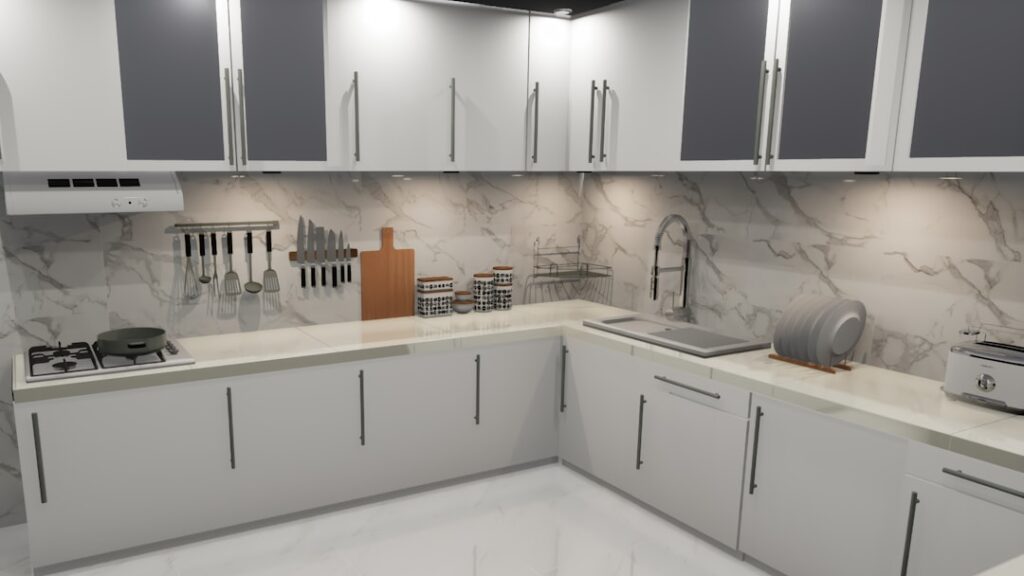
Pastel appliances, checkerboard floors, and chrome accents are back, but nobody wants to actually cook the way people did in 1955. The modern retro kitchen solves this beautifully by marrying mid-century and 1950s nostalgia with the appliances, storage, and efficiency homeowners expect today. Done well, it feels playful and warm without veering into a theme-park diner. Here is how to capture that vintage spirit while keeping your kitchen genuinely livable.
What Defines the Modern Retro Look
The style draws on the optimism of the 1950s and 1960s: rounded forms, bold but cheerful colors, glossy surfaces, and a touch of chrome. What makes it modern is the editing. Instead of recreating an entire era, you pick a few signature retro elements and set them against clean, contemporary backgrounds.
Think a single curvy pastel refrigerator as the focal point, paired with flat-panel cabinets and quartz counters. The contrast between old and new is what keeps the room from looking like a costume.
Color Palettes That Pop
Color is the heart of retro design. The era loved saturated, friendly hues balanced by plenty of white to keep things bright.
- Mint green and seafoam — the quintessential 1950s kitchen color, fresh and instantly nostalgic.
- Buttery yellow — cheerful and warm, perfect on cabinets or a single appliance.
- Coral and salmon pink — playful and bold, often used on a feature wall or the fridge.
- Turquoise and teal — a confident mid-century accent that pairs with chrome.
- Classic red and white — the diner palette, best used sparingly with checkerboard accents.
Anchor any of these with white walls and natural wood to prevent the color from overwhelming the space. A two-tone scheme, color below and white above, is a reliable, balanced approach.
Retro-Style Appliances
Nothing signals the style faster than a statement appliance. Brands like Smeg, Big Chill, and Unique build refrigerators, ranges, and dishwashers with rounded 1950s silhouettes and pastel finishes wrapped around modern, energy-efficient interiors.
A Smeg FAB28 fridge runs roughly $2,000 to $2,500 and instantly becomes the room’s centerpiece. If that is out of budget, you can fake the look for far less: a single retro-style toaster, kettle, or stand mixer in a matching color delivers the vibe for under $150. Choose one or two hero pieces rather than a full matched set, which can tip into theme overload.
Cabinets, Counters, and Hardware
Cabinetry sets the foundation. Flat-panel (slab) or simple shaker doors in glossy lacquer read appropriately mid-century, especially in a soft color with chrome or brushed-nickel pulls. Tubular bar handles and ball-style knobs reinforce the period feel.
For counters, laminate is having a comeback and is historically accurate, boomerang and starburst patterns from Formica nod directly to the 1950s while staying budget-friendly at $20 to $40 per square foot installed. If you prefer durability, a solid quartz in white or a soft pastel keeps maintenance low while honoring the clean retro palette. Open shelving displaying vintage Pyrex or melamine dishware completes the look.
Flooring and Backsplash Choices
The black-and-white checkerboard floor is the most recognizable retro flooring statement, achievable in classic vinyl composition tile (VCT) at around $2 to $5 per square foot or in porcelain for a more durable, modern build. For a softer take, a pale terrazzo or a warm wood-look luxury vinyl plank keeps the nostalgia subtle.
On the walls, subway tile is a safe, period-appropriate backsplash, but you can amp up the retro factor with a colored gloss tile, a penny-round mosaic, or a single band of patterned tile. Pair any of these with chrome edge trim or a stainless ledge for an authentic diner accent.
Styling Without Going Overboard
The line between charming and kitschy is restraint. Choose a primary retro color and one or two accent shades, then repeat them deliberately rather than scattering every vintage tone you love. Modern lighting, a chrome pendant or a sleek schoolhouse fixture, grounds the nostalgia in the present.
Mix in a few genuine vintage finds, an enamel canister set, a sunburst clock, a chrome-legged dinette, to add authenticity that brand-new reproductions cannot. The goal of a modern retro kitchen is a space that feels joyful and timeless while cooking, storing, and cleaning as efficiently as any contemporary kitchen. Edit ruthlessly, invest in one standout appliance, and let clean modern bones carry the playful vintage details.
Lighting the Retro Kitchen
Lighting can make or break the period feel. Mid-century kitchens loved sculptural fixtures, so a globe pendant, a sputnik-style chandelier, or a row of schoolhouse lights over an island instantly signals the era. Chrome and milk-glass shades read most authentically.
Balance the statement fixtures with practical task lighting, modern under-cabinet LED strips keep prep areas bright without disrupting the vintage look, since they hide out of sight. Warm-white bulbs in the 2700K range cast the cozy, golden glow associated with mid-century interiors, while cooler temperatures can make pastel colors look washed out. Put the decorative fixtures on a dimmer so the room shifts easily from bright cooking mode to mellow evening ambiance.
Mixing Old and New Successfully
The most convincing modern retro kitchens treat vintage style as a flavor, not a full reconstruction. The rule of thumb many designers follow is roughly 70 percent contemporary function and 30 percent retro character. Keep the hardworking elements, soft-close drawers, a quiet modern dishwasher, ample outlets, USB charging, firmly in the present, then layer the nostalgia on top.
This balance also future-proofs your investment. Trends in saturated color come and go, so concentrate the most era-specific touches in easily swapped items: small appliances, textiles, bar stools, and accessories. Keep the expensive, permanent surfaces, cabinets, counters, and flooring, in flexible neutrals or classic two-tone schemes. That way your kitchen reads joyfully retro today but can evolve without a full remodel when your taste shifts, giving you the best of both eras.
One more practical tip ties the whole room together: choose a consistent metal finish and repeat it. Whether you favor polished chrome for a clean 1950s diner feel or brushed brass for warmer mid-century warmth, carrying that finish across cabinet pulls, the faucet, light fixtures, and bar stool legs creates the cohesion that makes a designed space feel intentional rather than accidental. Inconsistent metals are the quickest way to make an otherwise charming retro kitchen look like a thrift-store jumble, so pick your finish early and stick with it throughout the build.


