Few household battles are as constant as the daily flood of toys across the living room floor, which is exactly why thoughtful modern toy storage has become a must-have rather than a nice-to-have. The goal is not just hiding the clutter; it is creating a system kids can actually use, that looks good in a shared living space, and that adapts as your children grow. Done right, toy storage keeps your home tidy without turning the playroom into a sterile showroom.
- Why Storage Style Matters in Open Floor Plans
- Cube Shelving: The Workhorse
- Baskets and Bins You Can Label
- Multi-Purpose Furniture
- Vertical Space and Wall Solutions
- Designing a System Kids Will Actually Use
- Storage That Grows With Your Child
- Storage by Room
- Materials and Safety
- Quick Wins for an Instant Refresh
- Final Thoughts
Why Storage Style Matters in Open Floor Plans
In today’s open-concept homes, the playroom often spills into the living and dining areas, so toy storage is no longer something you can shut behind a door. Modern solutions are designed to blend in. Furniture-grade pieces in neutral wood tones, matte whites, and soft colors look intentional rather than like a kids’ afterthought. When storage coordinates with your existing decor, you can leave it out in the open without it dragging down the room’s look.
Cube Shelving: The Workhorse
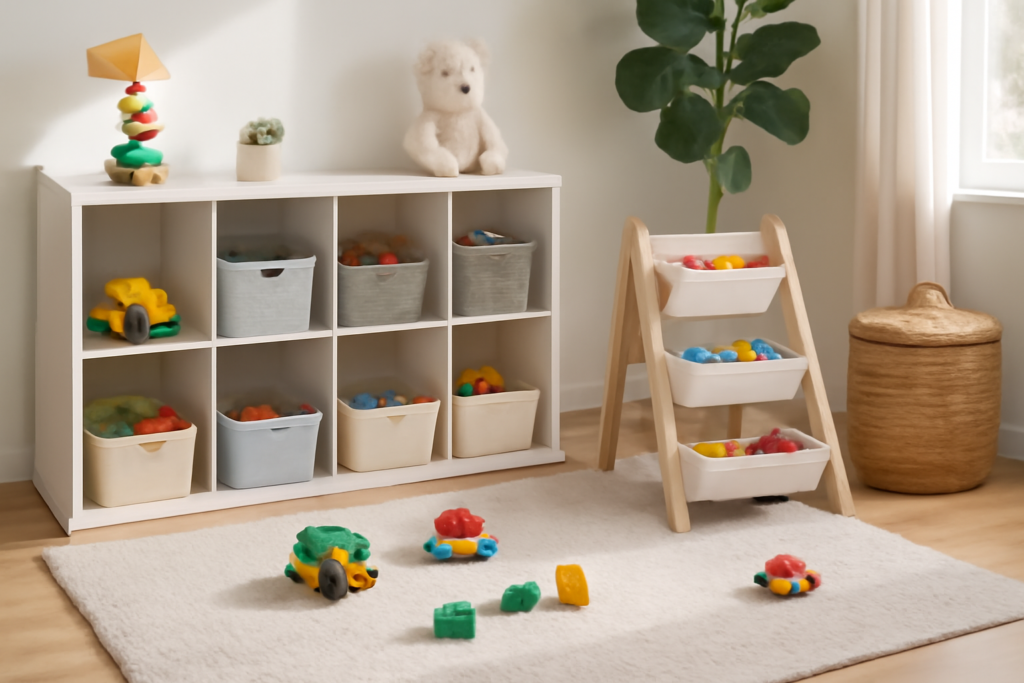
Open cube shelving units remain the backbone of most modern toy storage for good reason. They pair perfectly with fabric or woven bins, letting you hide small pieces while keeping larger toys visible and accessible. Kids can pull a bin, dump it on the floor, and slide it back without help, which is the whole point. Mount taller units to the wall for safety, and reserve the lower cubes for items children reach daily while stashing less-used toys up high. A nine-cube grid offers a flexible mix of open and bin-covered storage.
Baskets and Bins You Can Label
Containers do the real organizing, and a smart mix keeps everything in its place:
- Woven seagrass or cotton baskets: Soft, attractive, and safe for active play areas.
- Clear plastic bins: Let kids see contents at a glance, ideal for building blocks and small sets.
- Stackable lidded boxes: Great for seasonal or rarely used toys stored in a closet.
- Rolling carts: Mobile storage that moves with the play, perfect for art supplies.
Picture labels work wonders for pre-readers, turning cleanup into a matching game and teaching kids where things belong.
Multi-Purpose Furniture
The cleverest modern pieces do double duty. Storage benches give kids a place to sit while hiding a deep bin of toys inside, and they often work as window seats or entryway perches. Ottomans with hollow interiors swallow a surprising volume of stuffed animals. Coffee tables and side tables with drawers or lower shelves blend storage into the living room itself. These pieces earn their floor space twice, which matters in smaller homes and apartments.
Vertical Space and Wall Solutions
Floors fill up fast, so look up. Wall-mounted shelves keep favorite books and display toys off the ground while decorating the room. Pegboards offer endless flexibility, holding everything from art supplies to dress-up costumes on hooks you can rearrange as needs change. A hanging net or hammock in a corner corrals stuffed animals attractively. Just keep heavy items low and anchor any tall furniture to the wall to prevent tip-overs.
Designing a System Kids Will Actually Use
The most beautiful storage fails if children cannot manage it. Keep daily toys at kid height so they can access and put away items independently. Limit the number of categories; too many bins overwhelms young children. Rotate toys by storing some out of sight and swapping them every few weeks, which keeps the play area fresh and reduces overall clutter. Involve kids in deciding what goes where, and they are far more likely to maintain the system.
Storage That Grows With Your Child
Buy with the future in mind. Cube units that hold toys at age three can store books, games, and electronics at age ten. Neutral, adaptable furniture outlasts themed pieces a child quickly outgrows. Adjustable shelving lets you reconfigure the space as needs evolve. Choosing flexible, well-made storage now means you will not be replacing everything in a few years.
Storage by Room
Where the toys live changes the best approach. In a dedicated playroom, you can go all-in with full cube walls, a reading nook, and open floor space for active play. In a shared living room, lean on furniture-grade pieces, like storage ottomans and benches, that close up at the end of the day so the space reads adult by evening. In a child’s bedroom, under-bed bins and closet organizers keep the floor clear for play and sleep. Small apartments benefit most from vertical and multi-purpose solutions that claim no extra footprint, such as wall shelves and a toy-storage coffee table.
Materials and Safety
Because kids interact with these pieces daily, durability and safety matter. Choose sturdy, well-built units rather than flimsy particleboard that sags under weight. Look for rounded corners or add corner guards on hard edges. Anchor any tall or top-heavy furniture to the wall with anti-tip straps, a critical safety step that prevents the serious injuries caused by climbing children pulling units over. Soft fabric bins are safer than hard containers in active zones, and any toy chest with a lid should have a slow-close or removable lid to avoid pinched fingers.
Quick Wins for an Instant Refresh
If you want results this weekend, start small. Add a few matching baskets to an existing shelf, attach picture labels, place a storage ottoman in the living room, and do one round of decluttering to remove broken or outgrown toys. These low-cost steps make an immediate difference and lay the groundwork for a fuller system later. Doing the decluttering with your kids also sets a helpful habit, teaching them to part with broken or outgrown toys and to value keeping their space tidy.
Final Thoughts
Effective modern toy storage balances tidiness, style, and real-world usability. Build around cube shelving and labeled bins, add multi-purpose furniture and vertical solutions, and keep daily items at kid height. Choose flexible pieces that adapt as your children grow, and you will tame the toy clutter while keeping your home looking pulled together.