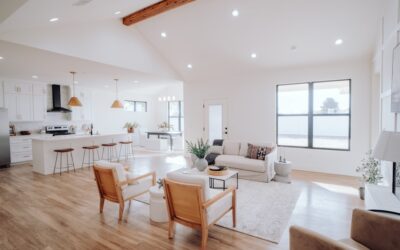
If you have shopped for new floors, you have almost certainly bumped into mowhawk flooring at a big-box store or a local flooring dealer, even if you typed the name into your search bar a little differently than the label reads. Mohawk is one of the largest flooring manufacturers in the world, and its enormous catalog spans carpet, luxury vinyl, laminate, and engineered hardwood. That breadth is a blessing and a curse: there is a Mohawk product for nearly every room and budget, but sorting the lines can be confusing. This guide breaks down what the brand makes, what it costs, and where it shines or falls short.
Who Makes Mohawk Flooring
Mohawk Industries has been manufacturing floor coverings for well over a century and today operates as one of the biggest names in the residential and commercial market. The company owns several familiar sub-brands, including Pergo and Quick-Step in the laminate world and Karastan in premium carpet and rugs. When people search for mowhawk flooring, they are usually looking at the mainstream Mohawk-branded collections you find at Home Depot, Lowe’s, and independent Mohawk Flooring Center dealers. Buying through an authorized dealer generally gets you the full warranty and professional installation options, while the big-box lines are often trimmed-down versions built to a price point.
The Main Product Lines
Understanding the categories helps you compare apples to apples. Each division targets a different buyer, and the pricing reflects that.
- Carpet: Mohawk’s SmartStrand and EverStrand lines are the flagships. SmartStrand uses triexta fiber with strong built-in stain resistance, while EverStrand is made from recycled PET and is the value-friendly option.
- Luxury vinyl (LVT/LVP): Collections like SolidTech and Pergo Extreme offer rigid-core waterproof planks for kitchens, baths, and basements.
- Laminate: RevWood and RevWood Plus are Mohawk’s answer to waterproof, wood-look laminate, competing directly with LVP.
- Hardwood: TecWood engineered hardwood and solid oak and hickory options round out the premium end.
Mohawk Flooring Prices
Because the catalog is so wide, prices swing dramatically. Entry-level EverStrand carpet can start around $1.50 to $2.50 per square foot, while a plush SmartStrand runs $3 to $6 per square foot before pad and labor. RevWood laminate typically lands between $2.50 and $5 per square foot, and SolidTech and Pergo Extreme LVP usually fall in the $3 to $6 range. Engineered TecWood hardwood is the priciest tier, commonly $4 to $9 per square foot for materials. Add roughly $1 to $4 per square foot for professional installation depending on your region and the product. For a 400-square-foot living room, a mid-grade mowhawk flooring job installed often totals $2,500 to $4,500.
Pros of Choosing Mohawk
The brand’s biggest advantage is reliability at scale. Mohawk products are widely stocked, so matching or reordering later is easier than with a boutique import. The SmartStrand carpet warranty is genuinely strong on stains and soiling, and many homeowners with pets and kids report that spills clean up without leaving a mark. On the hard-surface side, RevWood and SolidTech carry solid waterproof claims and realistic wood embossing that holds up to daily wear. You also get nationwide dealer support, real warranties that range from 10 years to lifetime depending on the line, and easy access to matching trim and transition pieces.
Cons and Things to Watch
The flip side of a giant catalog is inconsistency. A budget big-box Mohawk laminate is not the same product as a mid-tier dealer collection with the same brand on the box, so read the spec sheet, not just the name. Wear-layer thickness on LVP, fiber weight on carpet, and the abrasion rating on laminate tell you far more than the marketing. Warranties also come with fine print: most require professional installation records, an approved underlayment, and proof of routine maintenance, and they will deny claims if you used the wrong cleaner or skipped the moisture barrier. Finally, some homeowners find the premium lines priced close to competitors like Shaw or COREtec, so it pays to cross-shop.
How to Buy the Right Mohawk Floor
Start with the room, not the product. A basement or full bath needs a waterproof rigid-core like SolidTech or RevWood Plus. A cozy bedroom is a natural home for SmartStrand carpet. A busy entry or kitchen calls for a thick 20-mil wear layer on LVP or a high AC4-rated laminate. Once you know the category, ask the dealer for three specifics: the wear-layer or fiber spec, the exact warranty terms in writing, and whether the SKU is the retail-exclusive version or the full dealer line. Order 7 to 10 percent extra for cuts and future repairs, and confirm the underlayment the warranty requires so you do not void your coverage on a technicality.
How Mohawk Compares to Shaw and Others
Mohawk’s closest rival is Shaw, the other flooring giant, and the two trade blows across every category. Shaw’s Floorté and COREtec-adjacent lines compete directly with Mohawk SolidTech in waterproof vinyl, and both offer strong warranties and realistic textures at similar price points. Where Mohawk pulls ahead is soft carpet, thanks to the SmartStrand triexta technology that many shoppers find genuinely superior for stain resistance. Where competitors sometimes win is the ultra-premium engineered hardwood tier, where specialty brands offer wider planks and more exotic species. For laminate, Mohawk’s ownership of Pergo and Quick-Step gives it deep expertise, and RevWood’s water-resistant construction is among the best mass-market laminate you can buy. The practical takeaway is that no single brand dominates every category, so let the specific room and product spec, not brand loyalty, guide your final pick.
Installation and Warranty Registration
One detail that trips up buyers is warranty registration. Most Mohawk warranties require you to register the product shortly after installation and to keep your receipt and installation records. Skipping that step, or having a floor installed by someone who ignores the required underlayment and moisture barrier, is the most common reason otherwise valid claims get denied. If you are installing yourself, read the installation manual for your exact SKU, use the specified adhesive or click method, and photograph the underlayment before you cover it. For click-together LVP and laminate, leave the recommended expansion gap at the walls, usually a quarter to three-eighths of an inch, so the floor can move seasonally without buckling. Following these steps protects both your investment and your coverage.
The Bottom Line
Mowhawk flooring, spelled correctly as Mohawk, is a safe, well-supported choice that covers every major flooring type under one trusted name. It rarely offers the absolute lowest price or the single most cutting-edge product, but it delivers dependable quality, broad availability, and warranties that mean something when you follow the rules. Match the specific collection to the room, verify the specs rather than trusting the brand name alone, and you will get a floor that performs for a decade or more.
Prefer to explore on your own?
See how new flooring looks in your actual room in seconds — free, no signup.
Try the free Floor Studio →