For homeowners who want flooring with genuine character and a connection to the earth, few materials deliver like real stone. Natural slate tile is a metamorphic rock split into flat tiles, prized for its rich earth-tone colors, naturally slip-resistant texture, and exceptional durability indoors and out. Every piece carries its own variation in color and surface, so a slate floor looks organic and timeless rather than mass-produced. It works on floors, walls, fireplaces, and patios alike.
This guide covers what slate is, its strengths and weaknesses, color options, and how to install and care for it so it lasts for generations.
What Natural Slate Tile Is
Slate is a fine-grained metamorphic rock formed when shale and clay are subjected to heat and pressure deep within the earth over millions of years. That process gives slate its characteristic ability to split into thin, flat layers, which is exactly what makes it usable as tile.
The natural cleft surface, the slightly uneven texture left when the stone is split, is part of slate’s appeal and provides excellent traction. Slate can also be honed smooth or given a gauged back for easier installation. Because it is a true natural stone, each tile differs in tone and pattern, and no two floors are ever quite the same.
Advantages of Slate
Slate brings a combination of beauty and toughness that few materials match.
- Durability: Extremely hard and long-lasting, slate resists cracking and can last decades or longer when properly installed and maintained.
- Slip resistance: The natural cleft texture grips underfoot, making it ideal for bathrooms, entries, and outdoor areas.
- Water and heat resistance: When sealed, slate handles moisture well and tolerates heat, suiting kitchens and fireplace surrounds.
- Unique appearance: Rich, varied earth tones and natural texture give every installation a one-of-a-kind look.
- Versatility: Works indoors and outdoors, on floors, walls, and countertops.
Drawbacks to Consider
No material is perfect, and slate has real trade-offs to weigh before you commit. It is hard and cold underfoot, which is wonderful in hot climates but can feel chilly in winter without radiant heat or rugs. The surface is also unforgiving, so dropped glassware shatters readily.
Slate is porous and requires sealing to resist staining, and the naturally uneven cleft surface can be harder to keep clean and can collect dirt in low spots. Some slate also sheds fine flakes, called spalling, especially lower-grade material. The stone is heavy, which can demand a reinforced subfloor, and installation is more demanding than with manufactured tile. Finally, color variation, while beautiful, means you should view actual tiles before buying.
Colors and Finishes
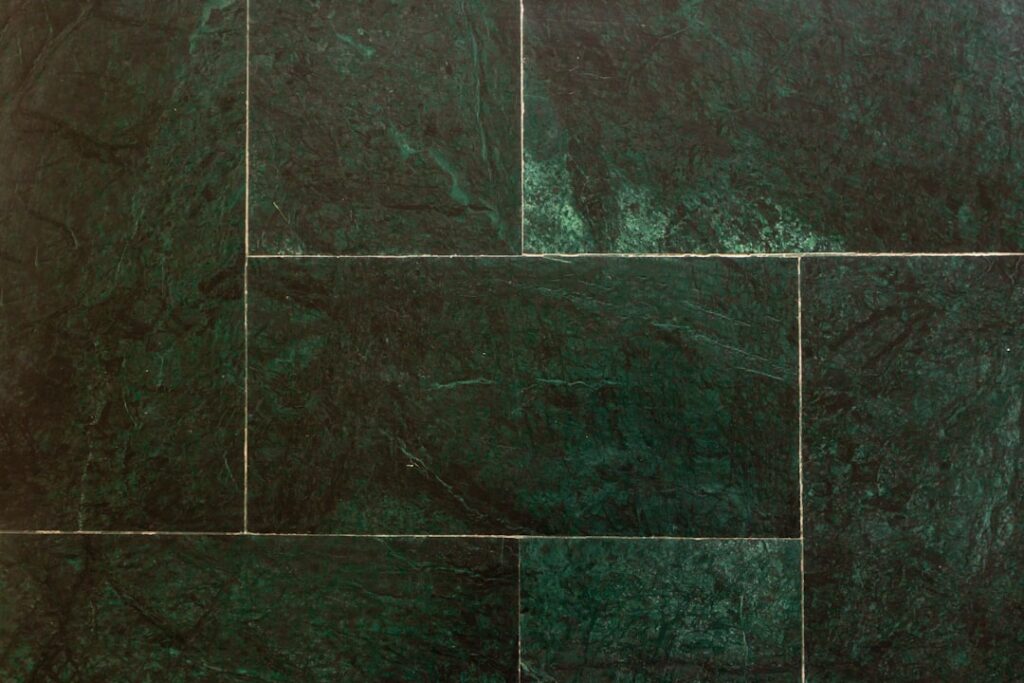
Slate comes in a wonderful range of natural colors, often blended within a single batch. Common tones include charcoal and black, gray, green, rust and copper, deep purple, and warm multicolor blends that shift from gold to red to gray across the floor.
Finishes change the look and feel. Natural cleft keeps the rugged, textured split surface for maximum traction and character. Honed slate is ground to a smooth, matte finish that is easier to clean. Some slate is sold calibrated or gauged on the back for a more consistent thickness and simpler installation. Choose darker, blended tones to hide dirt in busy areas, and lighter or honed slate where you want a more refined look.
Installation Basics
Installing slate is more involved than standard ceramic tile, largely because of its weight and surface variation. A few fundamentals matter.
- Prepare a solid substrate. Slate needs a flat, rigid, properly supported base, often with a cement backer board, to prevent cracking.
- Dry lay first. Arrange tiles to blend colors and distribute variation evenly across the floor before setting.
- Use the right thinset. Set the tiles in a quality thinset mortar, back-buttering uneven tiles for full coverage.
- Seal before grouting. Many installers seal cleft slate first so grout does not stain the textured surface.
- Grout and clean carefully. Choose a grout color that complements the stone and wipe haze promptly.
- Seal again after grouting. Apply a penetrating sealer to protect against stains and moisture.
Given the weight, substrate demands, and sealing steps, many homeowners hire an experienced tile setter for slate, especially for large floors.
Sealing and Maintenance
Sealing is essential to slate’s longevity. Apply a penetrating stone sealer after installation and reseal periodically, typically every one to three years depending on traffic and the product. An enhancing sealer can deepen the colors for a richer look.
For daily care, sweep or dust-mop regularly to keep grit off the surface, since abrasive dirt dulls stone over time. Damp-mop with a pH-neutral stone cleaner, and avoid acidic or harsh products like vinegar and bleach that can etch or degrade the sealer. Wipe spills promptly, and use mats at entries to trap debris. Always follow the sealer manufacturer’s instructions and ventilate when applying solvent-based products.
Where Slate Works Best
Slate’s rugged durability and traction make it a natural fit for specific areas of the home. Entryways and mudrooms benefit from its toughness and slip resistance, shrugging off tracked-in water, grit, and salt that would mar softer floors. Bathrooms and showers take advantage of the textured surface for safe footing, provided the stone is well sealed.
Kitchens suit slate for its heat and stain resistance once sealed, and the dark, blended tones hide everyday spills. Fireplace surrounds and hearths showcase slate’s earthy beauty while standing up to heat. Outdoors, slate makes a striking patio or walkway in temperate climates, though freeze-prone regions call for careful sealing and the right grade of stone. The one place to think twice is a room where you want soft warmth underfoot, since slate is hard and cold without radiant heating or generous rugs.
Cost and Value
Slate sits in the mid-range of natural stone pricing. Material costs commonly run $4 to $15 per square foot, with premium or specialty slate higher, and professional installation typically adds $7 to $15 per square foot or more depending on complexity and your region.
While the upfront cost is higher than basic ceramic, slate’s longevity and timeless appeal make it a strong long-term value. A well-installed, well-sealed slate floor can last for decades, adding both durability and natural beauty to your home. If you love the look of real stone and accept the maintenance, natural slate tile is a flooring choice you will enjoy for many years.
Prefer to explore on your own?
See how new flooring looks in your actual room in seconds — free, no signup.
Try the free Floor Studio →