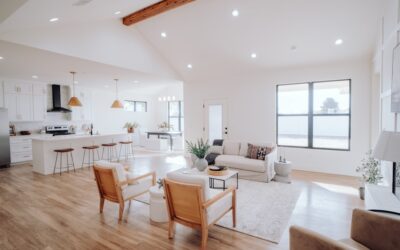
Walk into any home and the floor is the largest single design element in the room. Nice flooring is not a brand or a price point. It is a combination of material quality, install precision, visual coherence with the rest of the house, and durability that holds up through 10 to 20 years of real life. Spending $9 per square foot on a stunning hardwood does not produce a nice floor if the subfloor is wavy or the install crew rushed the perimeter. Spending $4 per square foot on the right LVP, installed well over flat substrate, often does.
- What Separates Nice from Mediocre
- Material Tiers That Deliver
- Why Wear Layer Spec Trumps Price
- Janka Hardness for Hardwood Selection
- Brand Picks That Earn the Premium
- Subfloor Prep Is Half the Job
- Install Crew Quality Versus Material Quality
- Visual Coherence with the Rest of the House
- Pricing the Right Floor for Your Home
What Separates Nice from Mediocre
Five factors define a quality floor across every material category. Wear-surface specification (AC4 or higher on laminate, 20 mil-plus on LVP, prefinished UV-cured urethane on hardwood). Subfloor flatness within 3/16 inch over 10 feet. Tight, uniform joints with consistent micro-bevel geometry. Color and grain variation that reads natural rather than printed. Trim and transitions cut to fit, not gapped with caulk.
Any one of these missing drops the floor from “nice” to “fine, I guess.” All five present, and even a mid-price product reads as premium.
Material Tiers That Deliver
Different budgets buy nice floors in different categories. Here is the realistic 2026 landscape:
- Hardwood: $7 to $14 per sq ft installed, 5 to 7 inch wide-plank white oak or hickory with a wire-brushed matte finish
- Engineered hardwood: $6 to $11 per sq ft installed, 7-ply construction with 4 mm wear layer, allows two refinishes
- LVP: $5 to $9 per sq ft installed, 20 to 30 mil wear layer, rigid SPC core, painted bevels
- Laminate: $4 to $7 per sq ft installed, AC4 rating, water-resistant core, registered embossing
- Porcelain tile: $7 to $13 per sq ft installed, rectified edges, 24 inch or larger format, DCOF 0.42 plus
Why Wear Layer Spec Trumps Price
A $3.49 per sq ft LVP with a 12 mil wear layer will outlast a $5.99 per sq ft LVP with a 6 mil wear layer in any home with kids or pets. The wear surface is what gets walked on, scratched, and dented. Plank thickness, core construction, and brand all matter less than the millage on the top layer.
The same logic applies to laminate. AC ratings define the abrasion resistance. AC3 is rated for moderate residential traffic and a 10 to 15 year life. AC4 is rated for heavy residential and light commercial, with 20 to 25 year warranties on Pergo Outlast Plus and Mohawk RevWood Premier. AC5 is overkill for residential but lasts indefinitely.
Janka Hardness for Hardwood Selection
Janka hardness predicts dent resistance in solid and engineered hardwood. The numbers that matter for residential:
- Red oak: 1,290 (the benchmark)
- White oak: 1,360 (slightly harder, better water resistance)
- Hickory: 1,820 (great for high-traffic homes)
- Hard maple: 1,450 (good for clean modern looks)
- American walnut: 1,010 (beautiful but softer, save for low-traffic rooms)
- Brazilian cherry: 2,820 (extremely hard, narrow style range)
Pine and fir at 380 to 870 Janka should stay in low-traffic spaces like bedrooms and home offices. Dropped cans, dog claws, and chair legs will dent softwoods within months.
Brand Picks That Earn the Premium
Not every brand justifies its price. The names that consistently deliver value across categories:
Hardwood: Mannington Hand Crafted Rustics, Bruce American Originals, Mullican Castillian, and Sawyer Mason custom wide-plank. Engineered: Shaw Empire and Mohawk Coastal Couture. LVP: COREtec Pro Plus, Karndean Korlok, and Shaw Floorte Pro Endura. Laminate: Pergo TimberCraft, Mohawk RevWood Plus, and Mannington Restoration Collection. Tile: Daltile Marazzi, MSI Surfaces, and Florida Tile.
These brands publish honest spec sheets, hold tight tolerances on plank dimensions, and back products with warranties their dealers actually honor.
Subfloor Prep Is Half the Job
The expensive floor installed over a wavy subfloor will look cheap within a year. Plan for subfloor flattening before any material order goes in. On wood subfloors, plane down high spots and shim or feather low spots with self-leveling compound. On concrete slabs, grind high spots and patch low spots with Ardex SD-T or Mapei Planipatch.
Moisture testing on slabs is non-negotiable. ASTM F1869 calcium chloride or ASTM F2170 in-situ RH probes establish whether the slab can accept resilient flooring. Skipping this step is how $9,000 LVP installs blow seams within a heating season.
Install Crew Quality Versus Material Quality
An average installer with premium material produces an average floor. A great installer with mid-tier material produces a great floor. The math is consistent across every project type. Vet crews by asking for three job-site references from the last 12 months, then call those owners and ask how the floor looks today. Check perimeter cuts, plank stagger, and transition fit on the references. Floors photograph well from across the room, but the quality lives at the wall.
Expect to pay $3 to $5 per sq ft for skilled labor on LVP and laminate, $4 to $7 on engineered hardwood, and $6 to $9 on solid hardwood and tile. Bargain crews at $2 per sq ft usually run rushed installs that show within two years.
Visual Coherence with the Rest of the House
A nice floor matches the rest of the architecture. Wide-plank rustic oak fits Craftsman bungalows and farmhouses but fights modernist condos. Polished porcelain reads sleek in lofts but cold in colonial New England rooms. Match the floor to the bones of the building, the trim profile, and the cabinetry style. The most common mistake is buying a floor based on a Pinterest photo without checking whether the rest of the room supports it.
Pricing the Right Floor for Your Home
A typical 1,200 sq ft main-level renovation in 2026 lands between $7,000 and $18,000 turnkey depending on material. Within that range, a nice flooring spec hits the upper half of the budget on material and the upper third on labor. Cutting either by 30 percent to save money usually shows up in the floor within 18 months as edge separation, hollow click sounds, or visible wear lanes.
Buy the right material, hire the right installer, prep the subfloor properly, and the floor reads as nice for two decades or more. Skip any of those steps and even the premium plank brand reads cheap before the first refinance.
Prefer to explore on your own?
See how new flooring looks in your actual room in seconds — free, no signup.
Try the free Floor Studio →