
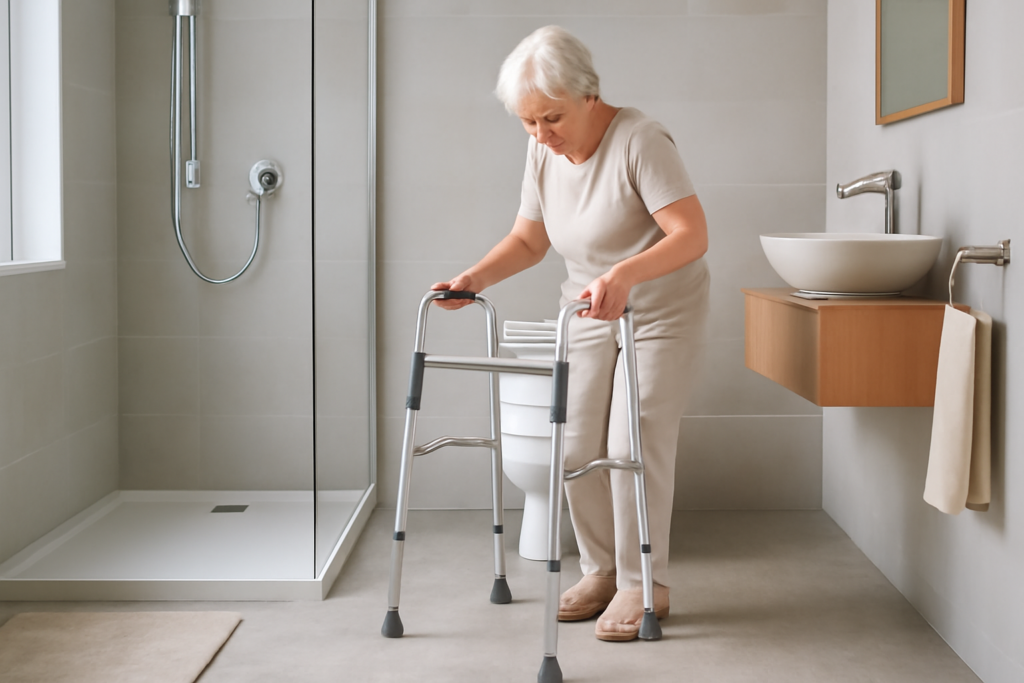
Roughly 80 percent of falls among older adults happen in the bathroom, where wet tile, narrow spaces, and grab-bar gaps combine into the most dangerous room in the house. Choosing the right non slip bathroom flooring elderly family members can walk on safely is one of the highest-impact aging-in-place upgrades you can make, often costing far less than a single trip to the emergency room. This guide compares the materials that actually reduce falls, what they cost, and the small details that make a bathroom safer for someone with limited balance or mobility.
Why the Bathroom Is So Risky
Bathrooms concentrate every fall hazard in a small footprint. Water pools on smooth surfaces, soap and shampoo leave a film, and people pivot, step over tub walls, and stand from low toilets. For an older adult with reduced grip strength, slower reflexes, or medications that affect balance, a slick floor turns a routine task into a serious risk. A hip fracture at 75 can permanently reduce independence, which is why the floor surface deserves as much attention as grab bars and walk-in showers.
What “Non Slip” Actually Means
The key number is the dynamic coefficient of friction (DCOF). Under the US ANSI A326.3 standard, a wet DCOF of 0.42 or higher is the minimum for interior wet areas, but for a bathroom used by someone frail, aim higher, ideally 0.50 or above. European products use an R-rating from a ramp test, where R10 to R11 suits a home bathroom and R11 to R12 suits a curbless shower area. Texture is your friend here: a slightly rough or matte surface grips a wet foot far better than a glossy polished one.
The Best Flooring Options
No single product is perfect for every household, so weigh comfort, traction, and budget together.
- Textured luxury vinyl plank (LVP): Warm, soft underfoot, waterproof, and available with grippy embossed finishes.
- Sheet vinyl safety flooring: A seamless welded surface with embedded grit, the gold standard in care homes.
- Matte porcelain or ceramic tile (R11): Durable and water-resistant with a textured face.
- Cork flooring: Naturally slip-resistant, cushioned, and warm, though it needs sealing.
- Rubber flooring: Maximum grip and cushion, common in accessible and clinical settings.
Luxury Vinyl Plank: The Popular Choice
Textured LVP has become the go-to for accessible bathrooms because it balances safety, comfort, and price. It is fully waterproof, warmer underfoot than tile, and the embossed surface provides reliable wet traction. If someone does fall, the slight give in a vinyl floor over a cushioned underlayment is more forgiving than stone or porcelain. Installed pricing typically runs $4 to $9 per square foot. Choose a product with a documented slip rating rather than a smooth, glossy plank meant for living rooms.
Sheet Vinyl Safety Flooring
If you want the surface used in hospitals and assisted-living facilities, this is it. Safety vinyl comes in continuous sheets that are heat-welded at the seams, so water cannot penetrate, and the surface has aluminum oxide or silica particles baked in for permanent grip. It is easy to wheel a walker or shower chair across and simple to disinfect. The trade-off is appearance, since it looks more clinical than residential, and seam welding should be done by a professional. Expect $5 to $11 per square foot installed.
Matte Porcelain Tile
Tile remains a strong option if you prefer its look and longevity. Choose small-format tiles or mosaics for the shower floor, because the extra grout lines add traction and let water drain. Use a matte or textured R11 tile rather than a polished one. Tile is the hardest and coldest option, which is its main drawback for older users, so consider radiant heat or rugs with non-slip backing outside the wet zone. Installed cost generally falls between $8 and $16 per square foot.
Cork and Rubber
Cork is naturally warm, quiet, and slip-resistant, with a cushioned feel that is gentle on joints, but it must be properly sealed to handle bathroom moisture and resealed every few years. Rubber flooring offers the most grip and cushion of any option and is excellent for high-risk users, though its look and higher price keep it mostly in clinical or heavily modified homes. Both run roughly $6 to $14 per square foot installed depending on quality.
Pros and Cons Summary
LVP wins on comfort, warmth, and value but quality varies, so verify the slip rating. Safety sheet vinyl offers the best documented traction and easiest cleaning but looks institutional. Porcelain lasts longest and looks best but is hard and cold. Cork and rubber maximize comfort and grip but cost more and need more care. The worst choice for an elderly bathroom is polished stone or glossy large tile, which becomes dangerously slick the moment it gets wet.
Beyond the Floor: A Safer Bathroom
Flooring is one layer of safety, not the whole solution. Pair your non-slip surface with these proven measures:
- Install grab bars anchored into studs near the toilet and inside the shower.
- Use a curbless or low-threshold shower to eliminate the step-over hazard.
- Add a shower chair and a handheld showerhead.
- Improve lighting, including a night light on the path from bed to bathroom.
- Replace loose bath mats with mats that have a full non-slip backing.
How to Choose and What to Spend
Start with the user’s needs. Someone using a walker or wheelchair benefits most from seamless safety vinyl or smooth-transition LVP with no thresholds. Someone steady but cautious may be happiest with warm textured LVP. If long-term durability and resale matter, matte porcelain is worth the extra cost and discomfort. Whatever you pick, ask the supplier for the wet DCOF or R-rating in writing, request a sample to test with a wet bare foot, and confirm the installer will handle waterproofing and seam sealing. D and G Flooring suggests budgeting for proper subfloor prep and professional installation in wet areas, because a perfectly slip-rated floor still fails if water gets underneath it. A thoughtful floor, combined with grab bars and good lighting, can dramatically lower the odds of a life-changing fall.
Prefer to explore on your own?
See how new flooring looks in your actual room in seconds — free, no signup.
Try the free Floor Studio →

