Remote work made home offices permanent, and the wall behind your chair on every Zoom call is now part of your professional image. Office accent wall design solves two problems at once: it upgrades a room that otherwise reads as generic, and it creates a background that looks intentional on camera. The trick is picking a color or material that works for both long focus sessions and the harsh lens of a webcam, because what looks fine in person can read as chaotic or dull over video. This guide covers colors that perform well on camera, material options from paint to wood slats, realistic DIY timelines, and mistakes that make a home office look amateur.
What Makes a Good Office Accent Wall
Three criteria matter more than anything else: camera performance, focus impact, and durability. A wall that looks sharp in a phone photo can disappear under office LED lights or wash out on a laptop camera. Saturated mid-tone colors (think deep teal, warm terracotta, sage green, or navy) camera better than either light pastels or very dark blacks, which push the autofocus and exposure systems into trouble.
For focus, color psychology research from the University of Texas suggests blues and greens promote concentration, while reds and oranges stimulate energy. Most productivity coaches recommend blue-green tones on the wall behind you so your eyes can relax when you look up from the screen. Earthy neutrals like warm white, taupe, and mushroom also work well and are the safest resale choice.
Best Paint Colors for Home Offices
If paint is your accent wall solution, the top contenders from Benjamin Moore and Sherwin-Williams specifically for home offices:
- Benjamin Moore Hale Navy HC-154: Rich, camera-friendly navy that reads professional on video.
- Sherwin-Williams Evergreen Fog SW 9130: Muted sage green that calms without looking dated.
- Benjamin Moore Mopboard Black CC-60: Deep warm black for dramatic backgrounds. Best with good lighting.
- Sherwin-Williams Accessible Beige SW 7036: Neutral option for those who want warmth without commitment.
- Farrow and Ball Inchyra Blue No. 289: Moody gray-blue that looks custom on any camera.
- Benjamin Moore Soft Fern 2144-40: Biophilic green that pairs with natural wood elements.
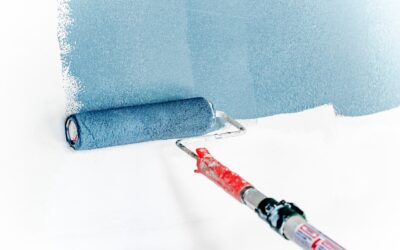
Pick an eggshell finish for accent walls. Flat hides imperfections but marks easily. Satin or semi-gloss reflects too much camera light and shows every roller stroke. Eggshell is the middle ground that cleans up and photographs well.
Wood Slat Walls: The Modern Favorite
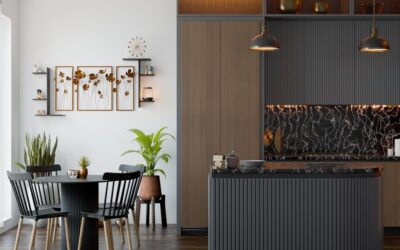
Vertical wood slats over a dark felt or painted backer have become the defining accent wall of home offices in 2024-2026. The texture adds visual interest, absorbs sound for better meeting audio, and the negative space between slats photographs beautifully on camera. Kits from brands like Skaper and Woodupp run $25 to $40 per sq ft.
DIY versions cost around $8 to $15 per sq ft using 1×2 pine or poplar slats ripped to width, stained, and attached with finish nails to a dark felt or painted wall. Spacing is typically 3/4 inch between slats. The total project takes 1 to 2 weekends for a 60 sq ft accent wall. Total budget lands around $500 to $900 for materials on a typical 8×10 wall.
For acoustic benefit, add a layer of 1/2-inch felt board behind the slats. It tames echo in a small office and improves microphone quality on video calls.
Wallpaper and Peel-and-Stick
Removable wallpaper is perfect for renters and anyone unsure about commitment. Peel-and-stick options from Chasing Paper, Spoonflower, and Target’s Opalhouse line run $35 to $75 per roll and apply in an afternoon. Traditional paste-up wallpapers look more upscale, cost $5 to $15 per sq ft, and last 10-plus years if the wall behind is properly primed.
Patterns that work on camera share a few characteristics: medium scale (small patterns read as noise), subtle contrast (high contrast causes focus hunting), and muted tones. Grasscloth textures in taupe or sage are nearly foolproof. Bold florals and geometric patterns distract viewers from your face, which is the opposite of what you want on a video call.
Board and Batten or Shiplap
Architectural accent walls using MDF battens or shiplap boards add dimension without committing to a strong color. Board and batten typically uses 1×3 or 1×4 MDF strips in a grid pattern over painted drywall, with spacing of 12 to 18 inches on center. Material cost is around $2 per sq ft. Installation is straightforward with a miter saw and finish nailer.
Shiplap using tongue-and-groove pine or MDF runs $3 to $8 per sq ft. Paint white, cream, or a muted color for a farmhouse feel. Both options photograph well and read as intentional design rather than builder-grade drywall. Budget 1 to 2 weekends of work for a DIY install including caulking and painting.
Camera and Lighting Considerations
Your accent wall has to work with whatever light hits it. Natural light from a window in front of you flatters skin tones but can blow out bright colors on the wall behind. Overhead LED panels at 4000K create a harsh cool light that makes cool-toned walls look institutional. Bias your lighting toward 3000K warm LEDs, and add a key light in front for video calls.
Avoid placing shiny objects on shelves directly on the accent wall because they catch light and pull focus from your face. Matte finishes, soft texture, and a single intentional focal point (a framed print or a small plant) read as professional. Busy shelves packed with trinkets look cluttered even when they are not.
Common Mistakes to Avoid
A few patterns sink a lot of DIY accent walls:
- Picking a color based on a phone screenshot without sampling. Always paint a 2×2 sample and evaluate in the actual lighting.
- Going too dark in a small, poorly-lit room. Deep navy in a 10×10 office with one small window reads as a cave.
- Matching the accent wall to other walls too closely. The whole point is contrast.
- Adding too many elements. One wall, one color or material, one focal point.
- Skipping primer on dark-over-light color changes. Two topcoats are not enough when going from builder beige to Hale Navy. Tint the primer to match.
Budget and Decision Framework
Paint alone is the cheapest option at $50 to $150 for materials and a weekend of labor. Wood slats, board and batten, or peel-and-stick land in the $300 to $900 range. Professional-installed shiplap, traditional wallpaper, or custom wood paneling runs $1,500 to $4,000. Pick based on how long you plan to stay, how much DIY time you have, and whether this is a core workspace or a guest room that occasionally hosts video calls. The most professional-looking upgrade for most home offices is a muted paint color plus a single piece of framed art hung at camera eye level.