
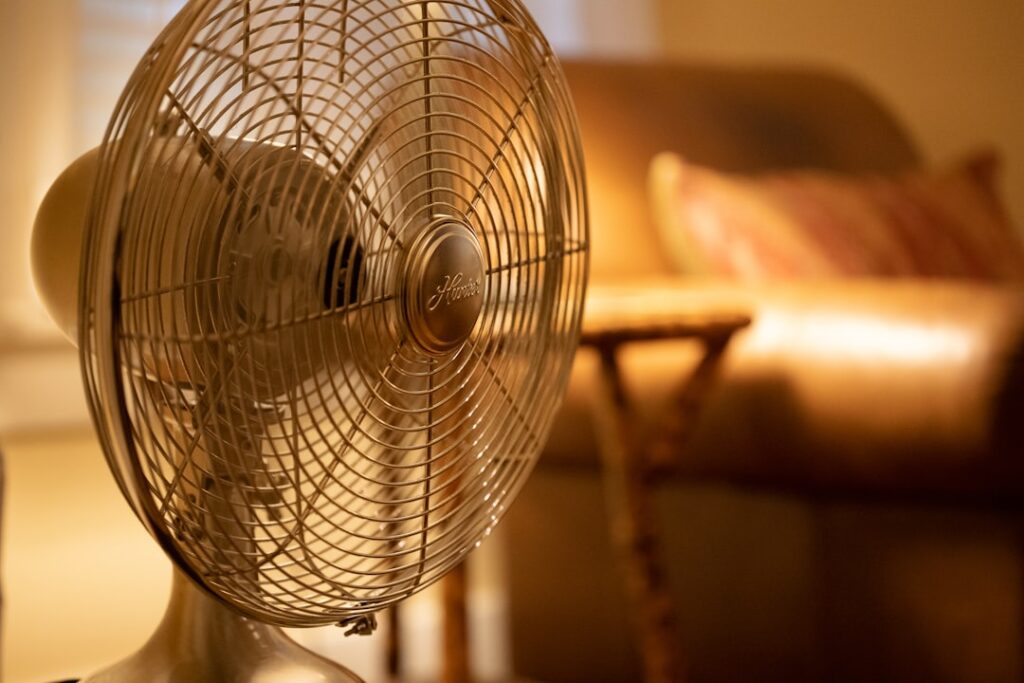
An oscillating floor fan is a portable fan that sits on the floor and sweeps its head from side to side, distributing airflow across a wide area instead of blasting a single fixed spot. That sweeping motion is what makes it so useful: rather than cooling just the person directly in front of it, an oscillating fan circulates air throughout a room, keeping the whole space more comfortable and helping an air conditioner work more efficiently. For cooling, ventilation, and air circulation, it is one of the most cost-effective tools in the home.
This guide covers the main types of floor fans, the features worth looking for, how to size a fan to your space, energy considerations, and how to place and use one safely.
How Oscillation Helps
A stationary fan creates a narrow stream of moving air, which feels great if you sit right in its path but does little for the rest of the room. Oscillation solves that by rotating the fan head back and forth, typically across a 60 to 90 degree arc or wider, so the airflow reaches a much larger area. The result is more even circulation and a room that feels uniformly cooler.
Moving air also makes you feel cooler than the actual temperature through evaporation off your skin, which is why a fan can keep you comfortable while letting you set the thermostat a few degrees higher. Pairing an oscillating fan with air conditioning spreads the cooled air around and can reduce how hard the AC has to run, trimming energy use.
Common Types of Floor Fans
Oscillating floor fans come in several designs, each suited to different needs and spaces.
- Pedestal fans: Mounted on an adjustable-height stand, these lift the fan head higher to move air across a room at body or head height. Versatile and common.
- Tower fans: Tall, slim units with a small footprint that oscillate and blend into a room’s decor. Quieter and space-saving, though often with less raw airflow than blade fans.
- Floor and box-style fans: Lower units that sit directly on the floor, some with oscillating heads, good for moving large volumes of air.
- High-velocity fans: Powerful units, some oscillating, designed to move air over long distances in garages, workshops, and large rooms.
Choose based on your room and priority. Pedestal fans suit general room cooling, towers fit tight or styled spaces, and high-velocity fans handle big or hot work areas.
Features Worth Looking For
Beyond oscillation, several features improve daily use and comfort.
- Multiple speed settings: Lets you match airflow to conditions, from a gentle breeze to maximum cooling.
- Adjustable height and tilt: Directs air where you need it, especially useful on pedestal fans.
- Remote control: Convenient for adjusting from across the room or from bed.
- Timer and sleep modes: Shut the fan off automatically and reduce noise overnight.
- Quiet operation: Look for lower decibel ratings if the fan runs in a bedroom or office.
- Easy-clean grille: A removable front grille makes cleaning blades far simpler.
Prioritize the features that match how you will use the fan rather than paying for extras you will not touch. A quiet fan with a timer and remote is ideal for bedrooms, while a workshop fan benefits most from raw power and durability.
Sizing the Fan to Your Space
Fan effectiveness depends on matching its airflow to the room size. Airflow is measured in cubic feet per minute, or CFM, and higher CFM moves more air over a larger area. A small bedroom or office is well served by a compact or tower fan, while a large living room or open-plan space needs a larger pedestal or high-velocity fan with higher CFM to circulate air effectively.
Blade diameter is a rough guide too, with larger blades generally moving more air. For a big or particularly warm room, err toward more power, since an underpowered fan simply will not circulate enough air to make a noticeable difference. Consider ceiling height and layout as well, placing the fan to push air across the longest open path for the best circulation.
Energy Use and Efficiency
One of the biggest advantages of an oscillating floor fan is how little electricity it uses compared to air conditioning. Most floor fans draw a modest amount of power, often in the range of a few cents per hour to run, which is a tiny fraction of what an AC unit consumes. Running a fan to feel comfortable at a higher thermostat setting can meaningfully reduce cooling costs over a hot season.
Keep in mind that a fan cools people, not rooms, by moving air across skin rather than lowering the actual temperature. There is little point in leaving one running in an empty room, so turn it off when you leave or use a timer. Used thoughtfully alongside air conditioning, a fan is an inexpensive way to stretch comfort and energy savings.
Safe Placement and Use
Because a floor fan is an electrical appliance with moving blades, a few safety habits matter. Place the fan on a stable, level surface so it cannot tip over, and keep it away from water, since combining electricity and moisture is dangerous. Position the cord so it is not a trip hazard, and plug the fan directly into a wall outlet rather than overloading a power strip or extension cord with other high-draw devices.
Keep small children and pets away from the blades, and choose a fan with a tightly spaced grille if little fingers are around. Unplug the fan before cleaning, and never operate it with a damaged cord or plug. If a fan repeatedly trips a breaker, runs hot, or makes unusual noises, stop using it and have it inspected, and consult a licensed electrician for any persistent electrical concerns. Clean the blades and grille regularly, since dust buildup reduces airflow and can strain the motor.
Is an Oscillating Floor Fan Right for You
For nearly any home, an oscillating floor fan is a low-cost, high-value way to improve comfort and air circulation. Prices commonly range from about $25 for basic models to $150 or more for premium high-velocity and feature-rich units, treated as general estimates. Match the fan type and CFM to your room, choose the features that fit your routine, and place it safely, and you get cooler, better-circulated air at a tiny fraction of the running cost of air conditioning, season after season.
Prefer to explore on your own?
See how new flooring looks in your actual room in seconds — free, no signup.
Try the free Floor Studio →

