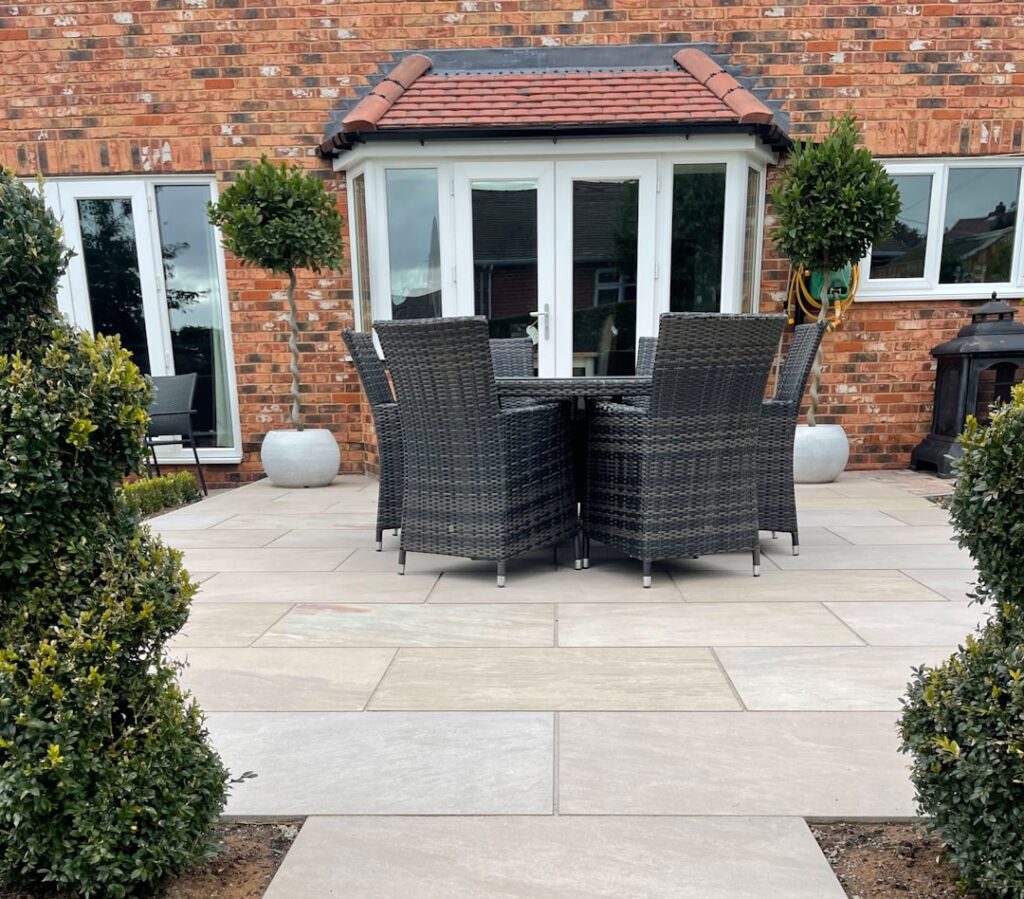
Most backyards have a table and four chairs sitting unused 11 months a year. The reason is rarely the furniture. It’s the surrounding details — wrong size, no shade, harsh lighting, uneven surface. A well-planned outdoor dining area functions as a real second kitchen and pulls families outside three to four nights a week from May through October. Here’s how to design one with proper dimensions, materials, and lighting that actually works.
Sizing the Footprint Correctly
A six-person rectangular table needs a 12×14 ft clear pad minimum. That gives 3 ft behind each chair for someone to walk past while another diner is seated. Cramped clearance is the number-one reason backyard dining areas feel awkward and stop getting used.
Round tables for four or six need an 11×11 ft pad. If you plan to add an umbrella stand in the table center, factor an additional 2 ft of overhead clearance from any low tree branches or roofline. Measure your actual furniture, then add a 36-inch buffer in all directions.
Choosing the Right Surface
Soft surfaces ruin dining experiences. Pea gravel looks great in photos but chairs sink, table legs wobble, and guests track stones into the house. Stick to one of these proven options:
- Concrete pavers: $8 to $14 per sq ft installed, level and stable, lasts 30+ years
- Stamped concrete: $12 to $18 per sq ft, fully sealed surface that cleans with a hose
- Composite deck: $25 to $40 per sq ft if elevated; great for sloped lots
- Flagstone with polymeric sand joints: $18 to $25 per sq ft, premium look but uneven for chairs
Whatever you pick, slope the surface 1/4 inch per foot away from the house for drainage. Standing water under chairs is a mosquito hatchery and stains the underside of any wood furniture.
Solving Sun and Heat
An umbrella covers a 36-inch round table comfortably. For anything larger, plan a cantilever umbrella (11 ft Treasure Garden, around $700) or a pergola. A 12×12 ft pergola with a retractable canopy runs $3,500 to $6,500 installed and shades 4 to 8 diners depending on table orientation.
Plan the layout so the table sits in afternoon shade between 3 and 7 pm — peak dinner hours. South-facing patios usually need permanent shade. East-facing layouts get natural late-day relief and need less hardware.
Layered Lighting That Doesn’t Glare
One overhead light is never enough. The best outdoor dining area uses three layers:
- Overhead ambient: A pendant from a pergola beam or a string of cafe lights at 8 to 9 ft height
- Path lighting: Low-voltage stake lights every 6 to 8 ft along walkways, 50 to 100 lumens each
- Accent uplighting: Small 3-watt LED spots aimed at surrounding trees or planters
Total system wattage stays under 100 watts with LED. A Kichler or Volt low-voltage starter kit covers a 200 sq ft area for around $400. Aim for 2700K to 3000K color temperature — anything cooler looks like a parking lot.
Wind and Bug Control
Even a 10 mph breeze ruins lightweight tablecloths and blows out candles. If your yard sits in a wind corridor, plan a 4 ft tall windbreak on the prevailing side using a tall planter row, a slat fence, or a freestanding screen. Bamboo screens at $80 each cover an 8 ft section.
For mosquitoes, position oscillating outdoor fans 6 ft from the table. Lasko makes a 16 in pedestal model rated for outdoor use ($75) that drops mosquito landings by 70% within its 10 ft cone. Citronella torches work but leave residue on table surfaces.
Cooking and Serving Distance
Plan less than 20 ft between the grill or outdoor kitchen and the table. Anything farther creates serving fatigue, and food cools below safe temps faster than people expect. If you have an indoor kitchen exit door, the path from door to table should be unobstructed — no stepping over plant pots or up two stair sets.
A 36-inch beverage cart or rolling cooler bridges the distance for parties. Restoration Hardware and Crate & Barrel sell teak rolling carts in the $400 to $700 range that double as serving stations.
Furniture That Survives the Climate
Aluminum frames with HDPE wicker (Polywood, Tropitone, Castelle) handle UV and rain without rusting or fading. Expect $1,500 to $3,500 for a six-piece set. Teak is the premium choice at $3,500 to $7,000 and weathers to silver gray within two seasons unless oiled twice a year.
Avoid powder-coated steel in coastal areas — salt eats through the coating within 3 to 5 years. For desert climates, store cushions in a deck box like the Suncast 99-gallon ($120) when not in use. Sun-baked Sunbrella fabric still lasts 8 to 10 years; off-brand cushions fail in 2 to 3.
Acoustic Comfort and Privacy
Hard surfaces echo conversation across property lines. Adding a planted edge — boxwoods, holly, or grasses at 4 to 6 ft tall — softens sound and shields sightlines. A wall of arborvitae costs $200 to $500 to install along a 20 ft stretch and matures in 2 to 3 years.
For townhomes or zero-lot-line yards, a 6 ft horizontal slat fence with 1/2 inch gaps lets airflow through while blocking direct views. Cedar slat panels run $40 to $70 per linear foot installed.
Small Details That Make the Space Stick
Built-in storage near the table — a teak buffet, a covered drawer in a pergola post, or a small outdoor cabinet — eliminates trips inside for napkins, lighters, and bug spray. Add one outdoor outlet within 6 ft for phone charging and portable speakers. And keep one piece of soft texture in play: an outdoor rug, throw pillows, or a chunky knit blanket nearby. These small comforts are what separate a dining area people use weekly from one that collects pollen.