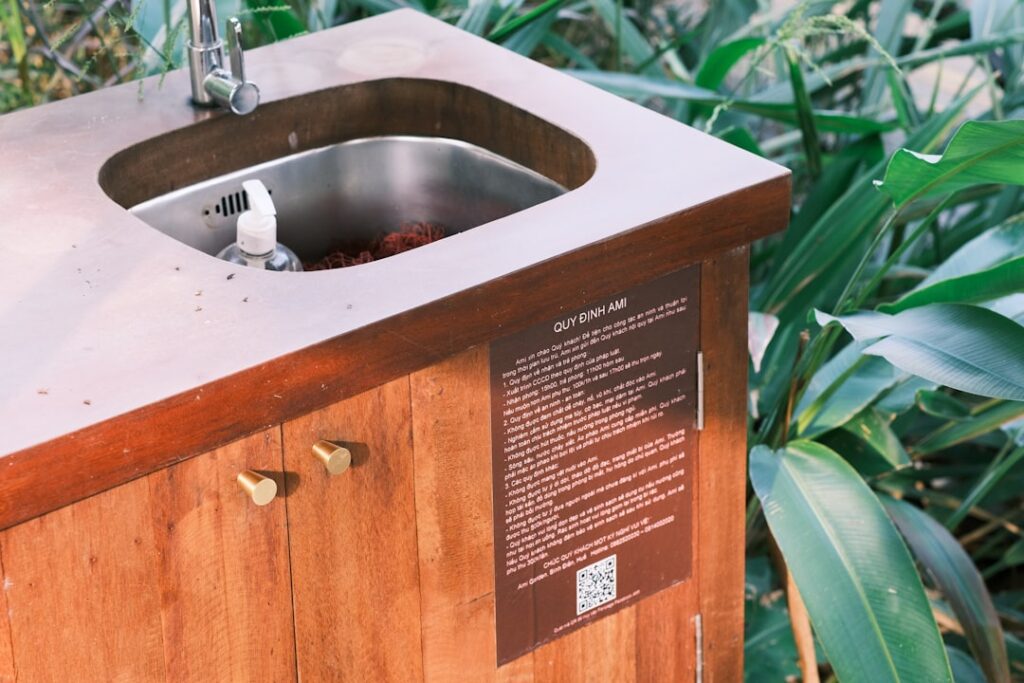
A sink transforms an outdoor cooking area from a glorified grill into a true kitchen, and the cabinet that houses it has to survive weather that would destroy an indoor unit. An outdoor kitchen sink cabinet combines a rugged, water-resistant enclosure with a sink, faucet, and the plumbing to feed and drain it, giving you a place to rinse produce, wash hands, and clean up without trekking indoors. Because it lives outside year-round, material choice, drainage, and freeze protection matter as much as looks. This guide walks through the options, plumbing basics, and construction details for a durable, functional wash station.
- Why Add a Sink Cabinet Outdoors
- Cabinet Material Options
- Choosing the Sink and Faucet
- Water Supply Options
- Drainage Solutions
- Freeze Protection and Winterizing
- Storage and Layout
- Cost and Installation Approach
- Prefab vs. Custom-Built Cabinets
- Countertop and Backsplash Considerations
- Accessories That Boost Functionality
Why Add a Sink Cabinet Outdoors
A dedicated sink dramatically improves how an outdoor kitchen works.
- Convenience: Rinse vegetables, fill pots, and wash hands without running inside.
- Hygiene: A hand-washing station near the grill keeps food prep clean.
- Cleanup: Scrub utensils and platters on the spot instead of hauling them in.
- Entertaining flow: Guests and cooks stay outside, keeping the party where the action is.
Cabinet Material Options
The enclosure must resist rain, humidity, UV, and in many regions freezing temperatures.
- Stainless steel: The premium standard. Marine-grade 304 stainless resists rust and cleans easily, though quality units are pricey.
- Marine-grade polymer (HDPE): Weatherproof plastic panels that never rot, rust, or fade; low maintenance and increasingly popular.
- Masonry (block, brick, or stone veneer): Built-in cabinets clad in stone or stucco for a permanent, high-end look.
- Teak and treated wood: Attractive but demands sealing and maintenance to survive outdoors.
Stainless and polymer are the most forgiving for a sink cabinet, since the interior stays damp.
Choosing the Sink and Faucet
Pick fixtures rated for outdoor use. Stainless steel sinks are the go-to for durability and easy cleaning; a single deep bowl handles most tasks, while a larger dual bowl adds versatility. For the faucet, choose one with an outdoor or marine-grade finish, since standard indoor faucets can corrode. A tall gooseneck or pull-down faucet makes filling pots easy. If you only plan seasonal use in a warm climate, a simpler cold-water-only setup can work, but a hot-and-cold faucet greatly expands what the sink can do.
Water Supply Options
How you feed the sink depends on your ambitions and local codes.
- Cold-water only: The simplest approach, tapping a nearby hose bib or a dedicated cold line. Fine for rinsing and hand-washing.
- Hot and cold: Requires running a hot line from the house water heater or adding a small point-of-use heater, expanding cleaning ability.
- Garden-hose connection: A budget option where a hose feeds the faucet, common on portable or prefab units.
Permanent supply lines that run underground should sit below the frost line and include a shutoff for winterizing.
Drainage Solutions
Draining an outdoor sink is often the trickiest part, and codes vary by locality.
- Connection to household drain/sewer: The proper permanent solution, requiring a trap, vent, and often a permit.
- Dry well: A gravel-filled pit that disperses graywater into the ground, allowed in some areas for rinse-only sinks.
- Graywater to landscape: Permitted in some regions for irrigation, subject to local rules.
- Portable catch bucket: A five-gallon jug under the drain for simple, code-free setups you empty manually.
Always check local plumbing codes; connecting to the sewer usually requires a licensed plumber and inspection.
Freeze Protection and Winterizing
In cold climates, water left in outdoor lines will freeze and burst pipes. Protect your investment by installing shutoff valves indoors or at the supply, and by draining the lines each fall. Blow out the supply and drain lines with compressed air, leave the faucet open, and disconnect any hoses. Frost-proof hose bibs and burying supply lines below the frost line reduce risk. Skipping winterization is the most common cause of costly springtime repairs on outdoor plumbing.
Storage and Layout
The cabinet below the sink is prime storage, so plan it well. Use the space for cleaning supplies, a trash pull-out, towels, and outdoor dishware, keeping items in weather-resistant bins since some moisture is inevitable. Position the sink cabinet within the work triangle relative to the grill and prep counter so cooks move efficiently. A common layout places prep counter and sink adjacent, with the grill a step away. Leave counter space on at least one side of the sink for staging dishes.
Cost and Installation Approach
Budget depends heavily on the plumbing scope.
- Prefab sink cabinet unit: $400 to $1,500 for a stainless or polymer cabinet with sink and faucet.
- Plumbing hookup: $500 to $2,500 or more depending on distance to supply and drain and whether a plumber and permit are needed.
- Full custom masonry sink station: $2,000 to $6,000 and up.
Homeowners comfortable with basic plumbing can handle a cold-water, catch-bucket setup themselves, but sewer connections and hot-water lines are best left to professionals to meet code.
Prefab vs. Custom-Built Cabinets
One early decision shapes the whole project: buy a ready-made sink cabinet or build one into a custom outdoor kitchen. Each route fits a different homeowner:
- Prefab modular units arrive ready to set in place, complete with sink and faucet, and simply need water and drain hookups. They are faster, more predictable in cost, and ideal for a defined budget.
- Custom masonry cabinets are framed and clad on site in stone, stucco, or brick to match your home, integrating seamlessly with a larger built-in kitchen but costing more and taking longer.
- DIY polymer or stainless kits split the difference, letting a handy homeowner assemble a durable cabinet at moderate cost.
For most backyards, a quality prefab unit delivers the best balance of durability, appearance, and installation speed, while a full custom build makes sense when the sink is part of an elaborate permanent outdoor kitchen.
Countertop and Backsplash Considerations
The surface around the sink takes constant water exposure, so material choice matters as much as it does indoors, if not more. Granite is the outdoor favorite because it resists heat, stains, and UV without fading, while quartz, though excellent indoors, can discolor in direct sun and is generally not recommended for uncovered outdoor use. Concrete and porcelain slab are other durable, weather-tolerant options. Whatever you choose, seal natural stone regularly to fend off staining from food and standing water. A modest backsplash behind the sink protects the wall or cabinet from splash and makes cleanup easier, and it can tie the station visually into the rest of the outdoor kitchen. Slope the countertop very slightly toward the sink or the yard so water drains rather than pooling, and choose a finish that hides water spots, since an outdoor counter will rarely be perfectly dry. Getting the surface right ensures the sink area stays attractive and sanitary season after season.
Accessories That Boost Functionality
A few well-chosen add-ons turn a basic sink station into a genuinely convenient workspace:
- Cutting-board insert that sits over the sink bowl, creating extra prep surface right where you rinse.
- Colander or drop-in strainer basket for washing produce and draining it in place.
- Soap and towel dispensers mounted to the counter or cabinet for easy hand-washing.
- Bottle opener and trash chute built into the counter for entertaining.
- Under-cabinet storage bins in weatherproof material for cleaning supplies and dishware.
These accessories are inexpensive relative to the overall build, yet they meaningfully improve how the sink area works day to day, especially when you are cooking and hosting outdoors at the same time.
An outdoor kitchen sink cabinet turns a backyard cooking spot into a genuine kitchen, adding the convenience of on-site rinsing, hand-washing, and cleanup. The keys to a lasting installation are a weatherproof enclosure in stainless steel or marine polymer, outdoor-rated sink and faucet fixtures, a drainage plan that satisfies local code, and diligent freeze protection in cold climates. Plan the layout so the sink sits logically between prep and grill zones, and use the cabinet below for practical, moisture-tolerant storage. Match the plumbing complexity to your budget and skills, calling a licensed plumber for sewer and hot-water work, and you will gain a durable, hardworking station that makes outdoor cooking and entertaining far more enjoyable.