
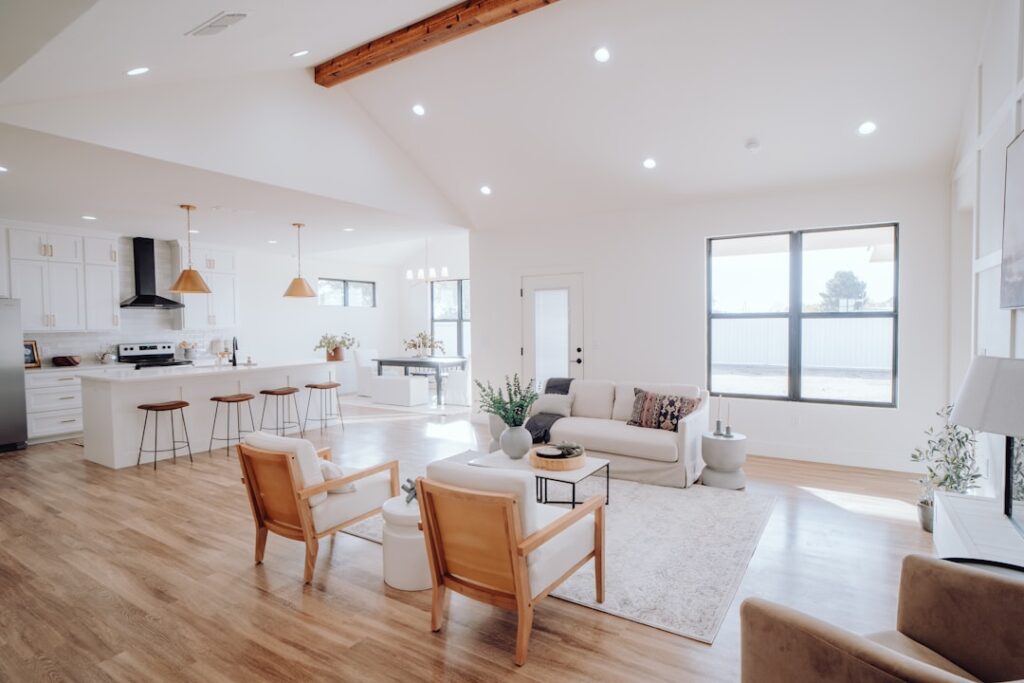
The name says a lot about the likely material. Panda flooring is a name often associated with bamboo, the fast-growing grass that pandas famously eat and that has become a popular eco-friendly alternative to traditional hardwood. Rather than make claims about a specific company we cannot independently verify, this guide treats Panda as a likely bamboo product and shows you how to evaluate any bamboo floor on its merits, so you buy on real specifications instead of a memorable name.
If the product you are looking at is bamboo, the framework below tells you exactly what to check, how the construction types differ, and the questions that separate a durable floor from a disappointing one.
- First, Confirm What the Product Is
- Understanding Bamboo Construction Types
- Specs That Predict Performance
- The Eco-Friendly Appeal, Verified
- Reading the Warranty and Reviews
- Potential Pros
- Potential Cons
- Questions to Ask Before Buying
- Bamboo vs Hardwood: Setting Expectations
- Installation and Acclimation
- The Bottom Line
First, Confirm What the Product Is
Before anything else, verify the material and construction. A product marketed under a name like Panda may be solid bamboo, engineered bamboo, or strand-woven bamboo, and the differences are large. Ask the seller to state the construction type plainly, along with whether the floor is click-lock floating, tongue-and-groove, or glue-down.
If the seller cannot confirm what the floor is actually made of, treat that vagueness as a reason for caution. A reputable bamboo product will disclose its construction, hardness, finish, and emissions without hesitation.
Understanding Bamboo Construction Types
The three main bamboo styles perform very differently, and this single factor drives durability:
- Strand-woven bamboo: Bamboo fibers are shredded, compressed, and bonded under heat and pressure into an extremely hard board. This is the toughest and most dent-resistant bamboo, ideal for busy homes.
- Solid (horizontal/vertical) bamboo: Strips of bamboo glued together. Attractive and natural-looking but softer than strand-woven and more prone to dents.
- Engineered bamboo: A bamboo wear layer over a plywood or composite core, offering better stability over concrete and radiant heat.
For most homeowners, strand-woven bamboo is the standout choice because it rivals or exceeds many hardwoods in hardness. If a Panda product is strand-woven, that is a point in its favor; if it is soft solid bamboo, set your durability expectations accordingly.
Specs That Predict Performance
Whatever the brand, request these numbers before you buy:
- Janka hardness: Quality strand-woven bamboo often tests very hard. A clearly stated, high Janka rating signals dent resistance.
- Thickness and wear layer: For engineered bamboo, a thicker top layer means more life and possible refinishing.
- Finish type: Aluminum-oxide finishes resist scratches; the number of coats matters.
- Moisture rating: Bamboo is sensitive to humidity, so check the acceptable range and any water-resistance claim.
- Emissions certification: Look for FloorScore or CARB Phase 2 / TSCA Title VI compliance for low formaldehyde.
The Eco-Friendly Appeal, Verified
Bamboo’s reputation as a green material is largely earned, since it grows and regenerates far faster than hardwood trees. That said, the eco benefit depends on responsible sourcing and low-emission adhesives. If sustainability is part of why you are buying, ask whether the bamboo is responsibly harvested and whether the product carries a recognized low-VOC certification.
A low-formaldehyde certification matters for both the environment and your indoor air quality, especially since some cheap imported bamboo has historically used adhesives with higher emissions. A documented certification is the proof to look for.
Reading the Warranty and Reviews
A warranty reveals the maker’s confidence, but the exclusions decide its value. Check whether it is prorated, what voids it, and who honors it. Bamboo warranties often exclude damage from humidity outside a stated range, so confirm the acceptable conditions match your home and climate.
For reviews, prioritize aged feedback written a year or more after installation, which exposes denting, gapping, and fading. Search the brand alongside terms like “scratching,” “warping,” or “off-gassing,” and weigh photo reviews more heavily than text-only praise.
Potential Pros
- Eco-friendly material from a rapidly renewable resource.
- Exceptional hardness in strand-woven versions, rivaling many hardwoods.
- Distinctive natural look with a clean, contemporary grain.
- Competitive pricing compared with premium hardwoods.
- Refinishable in solid and thicker strand-woven versions.
Potential Cons
- Humidity sensitivity: Bamboo can swell, shrink, or cup if moisture is not controlled.
- Quality variation: Soft solid bamboo dents easily, and cheap imports vary widely.
- Emissions risk: Uncertified products may use higher-formaldehyde adhesives.
- Limited stain options: Color choices are narrower than hardwood, and carbonized bamboo is softer.
- Scratch visibility: Lower-grade finishes show scratches over time.
Questions to Ask Before Buying
Get written answers to these: Is this strand-woven, solid, or engineered bamboo? What is the Janka hardness? Does it carry a FloorScore or CARB Phase 2 / TSCA Title VI certification? What humidity range does the warranty require, and is the warranty prorated? Will matching stock be available for future repairs? Clear, confident answers point to a quality product; evasive ones tell you to keep looking.
Bamboo vs Hardwood: Setting Expectations
To judge any bamboo brand fairly, it helps to know how the material stacks up against traditional hardwood. Strand-woven bamboo can be harder than many common hardwoods, resisting dents impressively, while solid bamboo is generally softer and closer to a mid-range hardwood in toughness. Bamboo also tends to be more humidity-sensitive than hardwood, so its performance depends more on stable indoor conditions.
On looks, bamboo offers a distinctive linear grain that reads cleaner and more contemporary than the varied figure of oak or maple. It usually costs less than premium hardwood while delivering comparable durability in strand-woven form. The trade-off is fewer color and stain options and a greater need for humidity control, so set your expectations accordingly when comparing a Panda product to a hardwood alternative.
Installation and Acclimation
Because bamboo reacts to moisture, installation details strongly affect the outcome. Acclimate the planks in the room where they will be installed for the time the manufacturer specifies, so the material adjusts to the home’s humidity before it is fixed in place. Skipping this step is a common cause of later gapping and cupping.
- Confirm the install method: click-lock floating, glue-down, or nail-down, and follow it exactly.
- Test subfloor moisture before laying over concrete, and use the recommended underlayment or moisture barrier.
- Leave the required expansion gap at walls so the floor can move with seasonal humidity.
- Keep indoor humidity stable within the manufacturer’s stated range year-round.
The Bottom Line
Judge Panda flooring the way you would any bamboo floor: confirm the construction, demand the hardness and emissions numbers, and read the warranty and aged reviews closely. Strand-woven bamboo with a documented high hardness and a low-VOC certification can be a tough, attractive, eco-friendly floor at a fair price. If the details are vague or the bamboo is soft and uncertified, spend your money where the performance is proven. The right floor is the one whose specs you can verify, not the one with the most charming name.
Prefer to explore on your own?
See how new flooring looks in your actual room in seconds — free, no signup.
Try the free Floor Studio →

