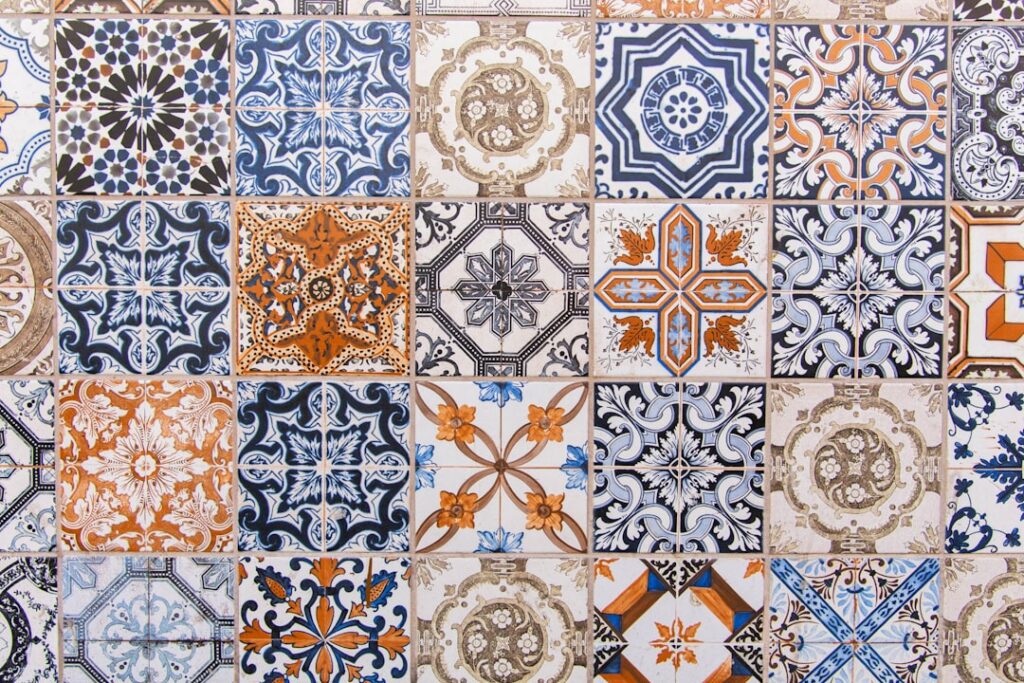
Pattern vinyl sheet flooring delivers the look of patterned tile, geometric mosaics, herringbone wood, or vintage encaustic designs in continuous rolls up to 12 feet wide, giving you a bold decorative floor with almost no seams and a fully waterproof surface. Because the pattern is printed and sealed under a tough wear layer, you get the visual punch of a designer tile floor without grout lines to scrub or the high cost of laying real ceramic. It is one of the most underrated ways to add character to a kitchen, bath, or laundry room on a modest budget.
What Pattern Vinyl Sheet Flooring Is
Sheet vinyl is a flexible flooring sold in large rolls, typically 6 or 12 feet wide, that is cut to fit and laid in one or two pieces. Pattern versions feature a printed design layer, anything from classic black-and-white checkerboard to Moroccan tile, hexagon mosaics, terrazzo, marble, or wood parquet, protected by a clear wear layer. The result mimics expensive tile or stone while remaining soft, warm, and waterproof underfoot. Modern printing and embossing make the better products surprisingly convincing, with texture that lines up to the printed pattern.
The Pros
- Waterproof by nature. A continuous sheet has few or no seams, so water cannot seep between pieces. That makes it excellent for bathrooms, kitchens, laundry rooms, and mudrooms.
- Bold design at low cost. You get a high-impact patterned floor for a fraction of what real encaustic or cement tile would cost.
- No grout to clean. The printed pattern needs no real grout lines, eliminating the mold and scrubbing that come with tile.
- Soft and warm underfoot. Vinyl is more comfortable to stand on and warmer than ceramic or stone.
- Quiet and forgiving. It absorbs sound and is gentler on dropped dishes than hard tile.
- Easy maintenance. A damp mop keeps it clean, with no sealing required.
The Cons
- Visible seams on large rooms. Spaces wider than the roll need a seam, which interrupts the pattern and can let water in if not sealed well.
- Tricky installation. Cutting one big sheet to fit a room precisely, especially around toilets, cabinets, and odd angles, is harder than clicking planks together.
- Can tear and gouge. A thin sheet can be punctured by sharp objects or heavy furniture legs, and a serious tear usually means replacing the whole sheet.
- Hard to patch. Unlike plank or tile, you cannot swap a single damaged piece invisibly.
- Pattern alignment limits. Matching a bold pattern across a seam can be difficult and wastes material.
- Resale perception. Some buyers still view sheet vinyl as budget flooring, though premium patterned products have narrowed that gap.
Popular Pattern Styles
The design range is the whole appeal. Common favorites include:
- Classic checkerboard: Black-and-white squares for a retro diner or farmhouse kitchen look.
- Encaustic and Moroccan tile: Intricate, colorful motifs that bring artisan flair to baths and entryways.
- Hexagon and penny mosaic: Small-tile patterns popular in vintage-style bathrooms.
- Herringbone and parquet wood: Warm wood-look geometry without the cost of real wood inlay.
- Terrazzo and marble: Speckled or veined stone looks that feel modern and high-end.
- Geometric and Art Deco: Bold repeating shapes for a statement floor.
Understanding Construction and Quality
Sheet vinyl comes in two broad constructions. Felt-backed sheet is thinner and usually glued down fully, offering the lowest cost. Fiberglass-backed sheet is more dimensionally stable, lies flatter, can often be loose-laid or perimeter-bonded, and resists curling. For quality, look at the thickness of the clear wear layer, which determines scratch and scuff resistance, and the overall gauge of the sheet. A thicker wear layer means a floor that keeps its pattern looking crisp for years rather than dulling in traffic lanes. Premium products also add a polyurethane top coat for extra stain and scuff protection.
Cost Expectations
Across the US market, pattern vinyl sheet flooring generally runs from about $1 to $4 per square foot for the material, with designer patterns and thicker, fiberglass-backed products at the higher end. Professional installation typically adds $1 to $2 per square foot, though many homeowners install smaller rooms themselves. Compared with real patterned tile, which can run several times higher once you add labor, setting materials, and grout, patterned sheet vinyl is a dramatic saving for a similar visual effect.
Where It Works Best
Pattern sheet vinyl is ideal for small to medium rooms that can be covered with a single sheet, no seams, full waterproofing, and maximum design impact. Bathrooms, powder rooms, laundry rooms, kitchens, mudrooms, and entryways are natural fits. It is also a smart choice for rentals and quick refreshes where you want big style for little money. In very large or oddly shaped rooms that require multiple sheets and seams, plank or tile flooring may be a better long-term choice.
Installation Considerations
Sheet vinyl rewards careful preparation. The subfloor must be clean, dry, and very smooth, because any bump, nail head, or debris will telegraph through the thin sheet and may eventually wear or tear there. Many installers underlay with a smooth plywood or specialized underlayment to create a flawless surface. The sheet is then templated to the room, cut precisely, and either fully glued, perimeter-bonded, or loose-laid depending on the product. Seams, where unavoidable, are heat-welded or chemically seam-sealed to lock out water. Because one mistake can ruin a whole sheet, many homeowners hire a professional for anything beyond a simple rectangular room.
Cleaning and Care
- Sweep or vacuum regularly to remove grit that can scratch the wear layer.
- Damp mop with a mild pH-neutral cleaner; avoid abrasive scrubbers and harsh solvents.
- Use floor protectors under furniture legs and avoid dragging heavy appliances across the surface.
- Wipe spills promptly even though the floor is waterproof, to keep the pattern looking fresh.
- Place mats at entrances to trap grit and reduce wear in traffic lanes.
Pros and Cons Recap
Pattern vinyl sheet flooring gives you waterproof performance, bold designer patterns, soft comfort, grout-free maintenance, and a low price, which is a compelling combination for kitchens and baths. The drawbacks are seams in large rooms, demanding installation, vulnerability to tears, and difficulty patching damage. For the right room, the strengths far outweigh the weaknesses.
The Bottom Line
Pattern vinyl sheet flooring is one of the best values in decorative flooring, letting you bring tile, stone, and geometric looks into wet and high-traffic rooms without grout, high cost, or cold underfoot. Choose a thicker, fiberglass-backed product with a robust wear layer, prep the subfloor meticulously, and keep room size within a single roll width when you can. Get those details right and you will have a striking, waterproof floor that holds up for years. D and G Flooring recommends ordering a full-size pattern sample and viewing it in your room’s light before committing to a bold design.
Prefer to explore on your own?
See how new flooring looks in your actual room in seconds — free, no signup.
Try the free Floor Studio →