Urine is one of the hardest stains to truly eliminate because the smell can linger long after the spot looks clean. The right pee stain remover does two jobs at once: it lifts the visible stain and it breaks down the odor-causing compounds at the source. Whether it is a puppy accident on the carpet, a child’s nighttime mishap on the mattress, or a cat marking the couch, the wrong product can actually set the stain or, worse, signal pets to return to the same spot. Here is how to remove urine the right way.
Why Urine Is So Stubborn
Fresh urine is acidic, but as it dries it turns alkaline and forms crystallized uric acid salts. Those crystals bond tightly to fibers and reactivate with humidity, which is why a “clean” spot can smell again on a humid day. Ordinary soap-and-water cleaning lifts the surface but leaves the crystals behind.
This is also why pets keep returning to the same place. They smell residual urine that human noses cannot detect, so neutralizing the odor completely is essential to breaking the cycle.
Enzyme Cleaners: The Gold Standard
The single most effective pee stain remover is an enzymatic cleaner. These products contain enzymes and beneficial bacteria that literally digest the uric acid crystals and organic matter, eliminating both the stain and the odor rather than masking it.
Popular options include Nature’s Miracle, Rocco and Roxie, and Angry Orange. To work, enzyme cleaners need contact time. Saturate the area, then let it sit for 10 to 15 minutes (or longer for set stains) before blotting. Do not rush this step; the enzymes need time to break down the crystals.
Step-by-Step on Carpet
Carpet is the most common battleground. Act fast for the best result, but these steps work on dried stains too.
- Blot, don’t rub — Press a clean cloth or paper towels into a fresh stain to absorb as much liquid as possible. Rubbing spreads it deeper.
- Rinse with cool water — Lightly dampen the area and blot again to dilute remaining urine.
- Apply enzyme cleaner — Saturate down to the carpet pad where urine soaks, and let it dwell per the label.
- Blot dry — Press with dry towels to lift the cleaner and dissolved residue.
- Air dry — Let it dry fully, then sniff-test. Repeat if any odor remains.
DIY Pee Stain Remover
If you do not have an enzyme cleaner on hand, a homemade solution handles fresh, light stains. Mix one part white vinegar with one part water and spray it onto the blotted area; the acidity neutralizes alkaline salts. Blot, then sprinkle baking soda over the damp spot to absorb odor.
For a stronger DIY treatment, combine the baking soda with a small amount of hydrogen peroxide (3 percent) and a drop of dish soap, apply, let it fizz and dry, then vacuum. Always spot-test peroxide on an inconspicuous area first, since it can lighten some carpets and fabrics.
Removing Urine from a Mattress
Mattresses cannot be soaked or rinsed, so the approach is different. Blot up as much as possible, then mist the area with an enzyme cleaner or the vinegar solution rather than drenching it. Press with towels to lift moisture.
Cover the damp spot generously with baking soda, let it sit for several hours or overnight to draw out moisture and odor, then vacuum it away. A waterproof mattress protector afterward prevents the next accident from reaching the foam.
Cleaning Upholstery and Couches
Check the furniture’s cleaning code first: “W” means water-based cleaners are safe, “S” means solvent-only, and “WS” allows either. For W and WS fabrics, an enzyme cleaner is again the best choice. Mist, dwell, and blot, working from the outside of the stain inward to avoid spreading.
Avoid over-wetting cushion foam, which is slow to dry and can mildew. For delicate or “S”-coded fabrics, call a professional rather than risk water rings.
Mistakes That Make It Worse
A few common errors actually lock in the problem. Steer clear of these:
- Ammonia-based cleaners — Urine contains ammonia, so this scent draws pets back to remark.
- Heat too early — Steam cleaning or hot water before the protein is gone can permanently set the stain.
- Rubbing — It frays fibers and pushes urine deeper into padding.
- Skipping dwell time — Wiping enzyme cleaner away too soon stops it from working.
Removing Set-In and Old Stains
Old, dried urine is the toughest case because the crystals have fully bonded to the fibers and often the padding beneath. For these, a single enzyme treatment usually is not enough. Saturate generously, cover the spot with plastic wrap to keep it from drying out, and let the enzymes work for several hours, even overnight, before blotting.
For carpet where urine soaked through to the pad and subfloor, surface cleaning will never fully kill the smell. In severe cases you may need to lift the carpet, treat or replace the affected pad section, and seal the subfloor with a stain-blocking primer before relaying. It is more work, but it is the only way to truly eliminate a deep, repeat-offender odor.
Hard Floors and Grout
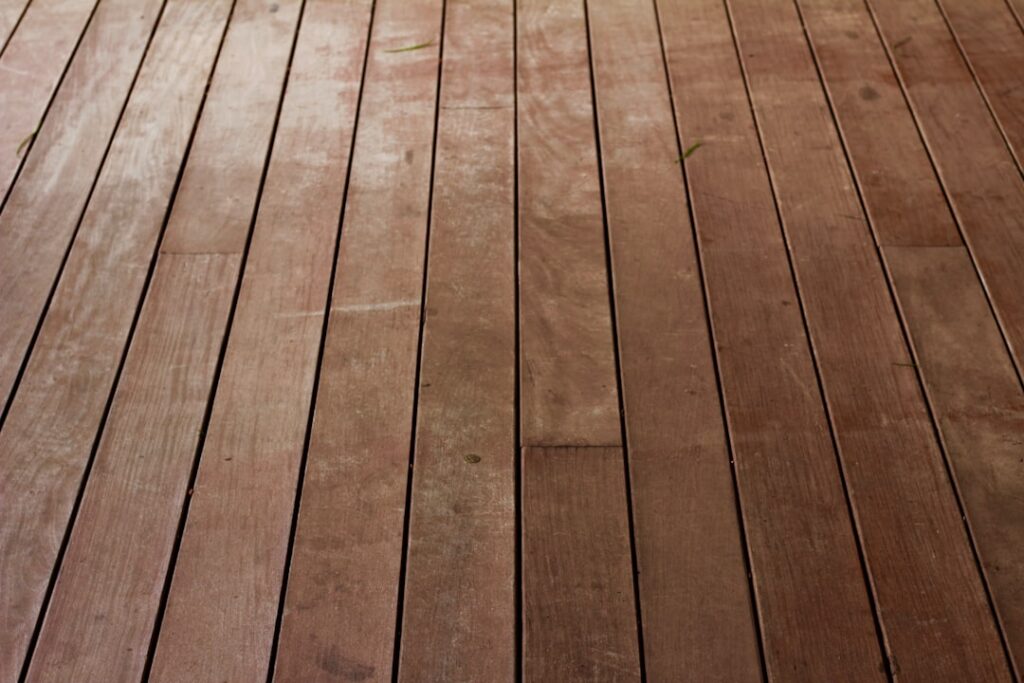
On sealed hardwood, tile, or vinyl, urine sits on the surface, so cleanup is faster, but do not wait, because liquid can seep into seams and grout lines. Wipe up the bulk immediately, then clean with an enzyme cleaner or a vinegar-water solution and dry thoroughly. On hardwood, avoid letting liquid stand, since urine can penetrate the finish and darken or warp the wood.
Grout is porous and traps odor like carpet does. Scrub grout lines with an enzyme cleaner or a baking-soda paste, let it dwell, then rinse. Resealing the grout afterward helps prevent future stains from soaking in.
Keeping Stains from Coming Back
Once you have neutralized the area, a UV blacklight helps you find any spots you missed, since dried urine glows under it. Treat every glowing area to fully break the odor cycle. For repeat pet accidents, protect the spot with a washable rug or pad while you address the behavior. With an enzyme-based pee stain remover, proper dwell time, and patience, you can remove both the mark and the smell for good and keep your floors, mattress, and furniture fresh.