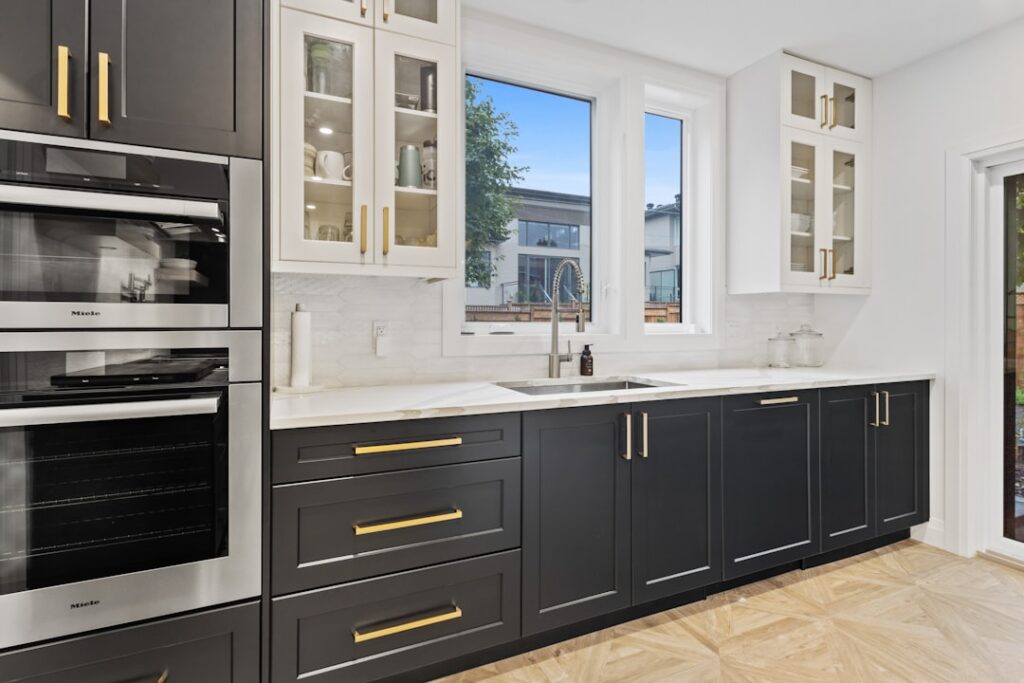
Scroll through enough pictures of kitchens with dark cabinets and you will notice something surprising: the most striking ones almost never go dark on every surface. The secret to a rich, magazine-worthy dark kitchen is contrast, not saturation. A wall of charcoal or navy cabinetry looks best when it is balanced by light countertops, warm wood floors, and metal that catches the eye. Done thoughtfully, dark cabinets read as sophisticated and grounding rather than heavy or cave-like. This guide breaks down the color choices, pairings, and layout tricks that make a dark-cabinet kitchen sing.
- Why Dark Cabinets Are Having a Moment
- Popular Dark Cabinet Colors
- Countertops That Balance the Dark
- Backsplash and Wall Color Choices
- Hardware: Brass, Black, and Beyond
- Flooring for a Dark-Cabinet Kitchen
- Upper vs. Lower Dark Cabinets
- Small-Kitchen Tips
- Cost Considerations
- Common Mistakes to Avoid
- Frequently Asked Questions
Why Dark Cabinets Are Having a Moment
For years white kitchens dominated, and they are still beautiful, but homeowners increasingly want warmth and character. Dark cabinets deliver both. Deep colors hide fingerprints and everyday wear far better than white, they photograph with a moody, high-end feel, and they instantly give a kitchen a custom, designed look. A dark island or a full run of navy lowers can transform an ordinary layout into a focal point.
The other draw is versatility. Dark cabinetry works in traditional Shaker kitchens, sleek European flat-panel designs, and cozy farmhouse spaces alike. The finish and hardware you pair with the color do most of the work in steering the style one direction or another.
Popular Dark Cabinet Colors
Dark does not have to mean black. The best cabinet colors carry enough pigment to feel intentional while still reading as a color rather than a void.
- Navy blue: The crowd favorite. Benjamin Moore Hale Navy (HC-154) and Sherwin-Williams Naval (SW 6244) are two of the most-used cabinet navies. They feel classic, calming, and endlessly pairable.
- Charcoal grey: Sherwin-Williams Peppercorn (SW 7674) and Benjamin Moore Kendall Charcoal (HC-166) give a soft, sophisticated darkness that is easier to live with than true black.
- Dark green: Benjamin Moore Essex Green and Sherwin-Williams Pewter Green (SW 6208) bring an organic, earthy richness that pairs beautifully with brass and wood.
- Black: Benjamin Moore Black (2132-10) or Tricorn Black (SW 6258) for a dramatic, ultra-modern or elegant traditional statement.
- Espresso and warm brown: Deep stained wood cabinets that feel timeless and cozy, especially in transitional kitchens.
Countertops That Balance the Dark
Countertops are the single biggest lever for keeping a dark kitchen from feeling heavy. Light, bright tops create the contrast that makes the cabinets pop.
Quartz and Marble
A white or soft-grey quartz with subtle veining is the most popular choice, and for good reason. Against navy or charcoal, a crisp white counter looks fresh and clean while being nearly maintenance-free. Marble, or a marble-look quartz like Calacatta patterns, adds elegant movement and a luxury feel. For a moodier, more dramatic look, some homeowners choose a dark counter, but that requires very careful lighting to avoid a flat, closed-in result.
Butcher Block and Wood
Warm butcher-block counters against dark green or navy cabinets create a cozy, farmhouse-meets-modern warmth that feels inviting. Wood tops also soften the hard edges of a dark scheme and bring in natural texture. They do require sealing and occasional oiling, so factor in the upkeep.
Backsplash and Wall Color Choices
With dark cabinets doing the heavy lifting, the backsplash is your chance to add light and personality. A classic white subway tile keeps things crisp and lets the cabinets stay the star. For more interest, a zellige tile in cream or pale green adds handmade texture and shimmer, while a marble slab backsplash carried up from the counter looks seamless and expensive.
Wall color should generally stay light to preserve contrast. Warm whites like Benjamin Moore White Dove (OC-17) and soft greiges keep the room bright. If you want a tonal, enveloping look, you can paint the walls a lighter version of the cabinet color, but keep the ceiling white and add plenty of task lighting to prevent the space from feeling dim.
Hardware: Brass, Black, and Beyond
Hardware is the jewelry of a dark kitchen, and the finish you choose sets the entire mood. Unlacquered or satin brass is the reigning favorite against navy and dark green, adding warmth and a touch of glamour that keeps the darkness from feeling cold. Aged brass patinas beautifully over time.
Matte black hardware creates a bold, monochromatic modern look, especially on charcoal or black cabinets, though you need enough lighting so the pulls do not disappear. Polished nickel and chrome lean cooler and more traditional, pairing cleanly with navy. A popular designer trick is mixing metals intentionally, such as brass cabinet pulls with a black faucet, to add layered, collected depth. Whatever you choose, buy one sample knob and hold it against your cabinet color before ordering a full set.
Flooring for a Dark-Cabinet Kitchen
Flooring is where you reintroduce warmth and light from the ground up. Light and medium wood floors are the go-to pairing because they provide contrast and stop the dark cabinets from anchoring the room too heavily. A honey oak, white oak, or warm hickory floor glows against navy or charcoal and keeps the whole kitchen feeling grounded but bright.
Luxury vinyl plank in a light-to-medium wood tone offers the same look with better water resistance and a friendlier budget, which matters in a hardworking kitchen. For a more classic feel, large-format porcelain tile in a warm greige or wood-look finish is durable and timeless. Avoid going dark on both cabinets and floor unless the room has abundant natural light and light counters to open it back up, since a dark floor plus dark cabinets can quickly feel closed in.
Upper vs. Lower Dark Cabinets
You do not have to commit to dark everywhere. One of the most flattering approaches is a two-tone kitchen: dark lower cabinets with light or white uppers. This keeps the eye level bright and airy while grounding the room with color below, and it makes small kitchens feel larger. A dark island paired with light perimeter cabinets is another crowd-pleaser that adds a strong focal point without overwhelming the space.
If you love the full-drama look of floor-to-ceiling dark cabinets, reserve it for kitchens with good natural light and generous square footage. In those spaces, wrapping the whole room in navy or charcoal reads as bold and luxurious. In a small or windowless galley kitchen, the two-tone route is almost always the safer, brighter choice.
Small-Kitchen Tips
Dark cabinets can absolutely work in a compact kitchen, but strategy matters. Keep upper cabinets light or skip them in favor of open shelving to prevent the walls from closing in. Choose a bright countertop and backsplash to reflect light, and invest heavily in layered lighting, including under-cabinet strips, so shadows do not collect. Reflective finishes such as glossy tile, polished counters, and shiny hardware bounce light around and make the darkness feel deliberate rather than cramped.
Cost Considerations
If you already have solid cabinet boxes, painting them dark is the most affordable transformation. A professional cabinet painting job typically runs $3,000 to $8,000 depending on kitchen size and cabinet count, while a determined DIYer can do it for the cost of primer, paint, and supplies, roughly $200 to $400 plus a lot of careful prep time.
New custom dark cabinetry is a bigger investment, generally $15,000 to $40,000 installed for an average kitchen, with semi-custom and stock options coming in lower. Hardware adds up too: quality pulls and knobs run $5 to $25 each, so a full kitchen can total $300 to $1,000 in hardware alone. Countertops in quartz typically land at $60 to $120 per square foot installed. Budget for good lighting as part of the project, not an afterthought, because it makes or breaks a dark kitchen.
Common Mistakes to Avoid
The biggest misstep is under-lighting. Dark cabinets absorb light, so a kitchen that felt bright with white cabinets can turn gloomy without added fixtures and under-cabinet lighting. The second common error is pairing dark cabinets with dark counters and dark floors, which erases contrast and makes the room feel like a cave.
Other pitfalls include choosing a trendy color you may tire of quickly, skipping cabinet-color samples before committing, and forgetting to introduce warmth through wood tones, brass, or greenery. A dark kitchen with zero warm elements can feel cold and severe. Layer in natural materials, live plants, and at least one warm metal to keep the space inviting.
Frequently Asked Questions
Do dark cabinets make a kitchen look smaller?
They can if the room is already small and poorly lit, but plenty of light counters, a bright backsplash, and strong layered lighting keep even a compact dark kitchen feeling open. A two-tone layout with light uppers is the safest choice for small spaces.
What countertop looks best with dark cabinets?
A light quartz or marble-look surface offers the crisp contrast that makes dark cabinets pop, while warm butcher block creates a cozier farmhouse feel. Both are far more forgiving than a dark-on-dark pairing.
What hardware goes with navy or dark cabinets?
Brass and gold add warmth and glamour, matte black creates a bold modern look, and polished nickel keeps things clean and traditional. Mixing brass pulls with a black faucet is a popular designer move.
What flooring works with dark kitchen cabinets?
Light-to-medium wood floors, wood-look luxury vinyl plank, and warm greige porcelain tile all provide grounding contrast. Avoid dark floors under dark cabinets unless the kitchen has abundant natural light and light countertops.