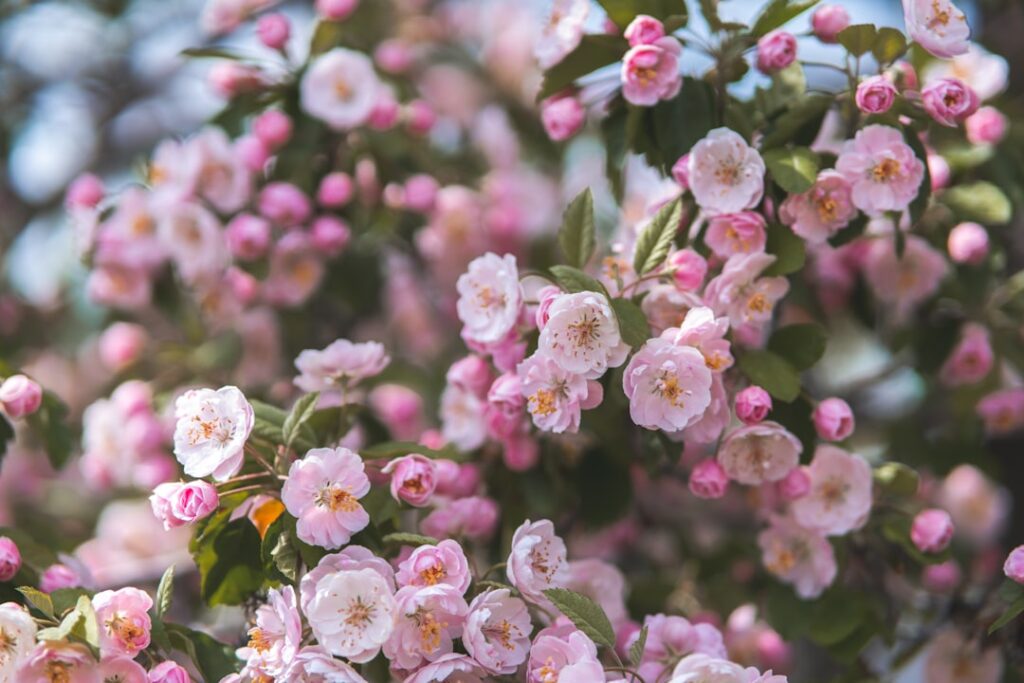
Pink is the color that softens a landscape, and a well-placed pink flowering shrub can pull an entire bed together the way a single lamp warms a room. The palette runs enormous, from the pale blush of a spring quince to the hot magenta of a late-summer rose of Sharon, so the real skill is choosing plants whose bloom seasons overlap rather than pile up in one two-week rush. Do that and you get pink somewhere in the yard from April through September. Below are the shrubs I rely on, with the zone, size, and pruning details you need before you dig.
- Weigela: Trumpet Blooms and Burgundy Leaves
- Flowering Quince: Early Blush on Bare Branches
- Spirea: Flat-Topped Clusters All Summer
- Rhododendron and Azalea: Big Spring Trusses
- Hydrangea: Pink Mopheads You Can Tune
- Rose of Sharon: Pink Into Early Fall
- Deer, Disease, and Other Real-World Concerns
- Designing a Pink Border That Never Goes Quiet
- Planting, Spacing, and Long-Term Care
Weigela: Trumpet Blooms and Burgundy Leaves
Weigela is my go-to when a client wants pink that reads from across the street. ‘Wine & Roses’ pairs rosy-pink, trumpet-shaped flowers with deep burgundy foliage, so it looks good even between bloom flushes. It grows 4 to 5 feet tall and wide, and hummingbirds work the flowers all through late spring. Space plants about 4 feet apart for a loose informal hedge.
This shrub is hardy in USDA zones 4 through 8 and flowers heaviest in full sun; too much shade and both the blooms and the leaf color fade. The main bloom comes in May and June, with lighter repeat flowering into summer if you shear off the spent flowers. Weigela blooms on old wood, so prune right after the main flush by removing a few of the oldest canes at the base. Leave the hard cutting for after flowering, never in fall.
Flowering Quince: Early Blush on Bare Branches
Chaenomeles, the flowering quince, opens its coral-pink to salmon blossoms in March and April on bare, thorny branches, one of the earliest color shows of the year. The Double Take series, such as ‘Pink Storm’, is thornless with full camellia-like flowers and reaches about 4 to 5 feet tall and wide. Older varieties can spread wider and sucker, so give them room.
Quince is tough, thriving in zones 4 through 9 in full sun to light shade and tolerating poor, dry soil once established. It flowers on old wood, so prune after bloom if you need to shape it. Cut branches early and force them into bloom indoors, a classic use for this shrub. Keep it away from tight walkways if you plant a thorny type.
Spirea: Flat-Topped Clusters All Summer
For a compact plant that flowers for months, Japanese spirea is hard to beat. ‘Anthony Waterer’ carries flat clusters of rosy-pink blooms from June into August on a rounded shrub about 3 to 4 feet tall and wide. The new growth often flushes reddish, and many varieties color up gold or orange in fall. Set plants 30 to 36 inches apart for a low massed border.
Spirea is hardy in zones 4 through 8 and wants full sun for the best flowering. It is one of the easiest shrubs to maintain: shear the whole plant back by about a third in early spring, and deadhead the first flush of flowers to trigger a second round in late summer. It blooms on new wood, so that early-spring cut only makes it fuller.
Rhododendron and Azalea: Big Spring Trusses
Few shrubs match the sheer flower power of a rhododendron in May. Cold-hardy varieties like ‘English Roseum’ produce huge rounded trusses of pink bloom on plants that reach 6 to 8 feet over time, while compact azaleas such as the Encore series stay 3 to 4 feet and, in the case of Encores, rebloom in fall. Both belong in zones 5 through 8, though hardiness varies by variety, so check the tag.
These acid-lovers demand the right soil: moist, well-drained, humus-rich, and on the acidic side around pH 4.5 to 6.0. They perform best in dappled or morning-sun shade, protected from harsh afternoon heat and winter wind. Amend the planting area with pine bark fines, keep the shallow roots under 2 to 3 inches of mulch, and never let them dry out in their first two seasons. Prune only right after flowering.
Hydrangea: Pink Mopheads You Can Tune
Bigleaf hydrangeas give you the biggest pink flower heads in the garden, and the mophead types bloom from midsummer into fall. In alkaline soil above about pH 6.0, varieties like ‘Endless Summer’ hold their pink; drop the pH and they turn blue, which is worth knowing if pink is the goal. They grow 3 to 5 feet tall and wide and want morning sun with afternoon shade in zones 5 through 9.
Hydrangeas are thirsty, as the name suggests, so plant them where you can water during dry spells and mulch generously to hold moisture. To keep the flowers pink, add garden lime to raise soil pH and avoid aluminum-heavy fertilizers. Reblooming types flower on both old and new wood, so light pruning is forgiving, but with older mophead varieties prune only right after bloom to protect next year’s buds.
Rose of Sharon: Pink Into Early Fall
When most shrubs have finished, rose of Sharon, Hibiscus syriacus, keeps going. Its wide pink flowers open from July into September, filling the late-summer gap better than almost anything. Upright and vase-shaped, it reaches 8 to 12 feet tall and 6 to 10 feet wide, so use it as a screen or a back-of-border anchor. Newer varieties like the Chiffon series are nearly seedless, which spares you the volunteer seedlings older types scatter.
Rose of Sharon is hardy in zones 5 through 9 and blooms best in full sun. It flowers on new wood, so prune it hard in late winter or early spring to control size and boost flower size. It tolerates heat, humidity, and average soil once established, making it one of the most forgiving pink bloomers you can plant.
Deer, Disease, and Other Real-World Concerns
Pink shrubs vary widely in how much wildlife bothers them. Rhododendrons and azaleas are frequent deer targets, so in heavy-browse areas either fence them, spray a repellent on a regular schedule, or lean on the more resistant choices like spirea and weigela. Rabbits will nibble young stems of almost anything over winter, which is one more reason to protect new plantings their first year or two.
Disease is mostly a matter of air and water. Powdery mildew shows up on crowded, poorly ventilated spirea in humid summers, so give plants their full spacing and avoid overhead watering late in the day. Hydrangeas wilt dramatically in afternoon heat but usually recover by morning; if a plant wilts and stays wilted, check that it is not sitting in soggy, poorly drained soil. Choose disease-resistant cultivars where you can, and most of these problems never rise above cosmetic.
Designing a Pink Border That Never Goes Quiet
The payoff of knowing each shrub’s bloom window is that you can chain them into a border with continuous color. Lead off in March and April with flowering quince on its bare branches, hand the show to weigela and rhododendron in May and June, let spirea and hydrangea carry the heart of summer, and finish with rose of Sharon from July into September. Repeat one or two plants down the length of the bed to tie it together visually.
Mix in a range of pinks rather than a single shade, and vary the flower shapes, spikes, mopheads, trumpets, and flat clusters, so the planting reads as rich instead of monotonous. Set taller anchors like rose of Sharon and rhododendron toward the back, mid-height weigela and hydrangea in the middle, and compact spirea along the front edge. Layered and staggered this way, a pink border delivers months of color from a handful of easy, long-lived shrubs.
Planting, Spacing, and Long-Term Care
Plant every one of these shrubs with the top of the root ball level with or slightly above the surrounding grade, in a hole two to three times as wide as the ball. Backfill with native soil, water deeply to remove air pockets, and mulch 2 to 3 inches deep while keeping the mulch off the stems. For the acid-loving rhododendrons and hydrangeas, test your soil pH first and amend accordingly, because that single factor decides whether they thrive or sulk.
The rule that keeps all of these blooming is pruning at the right time. Cut spring bloomers, weigela, quince, rhododendron, and azalea, right after their flowers fade. Cut summer bloomers, spirea and rose of Sharon, in early spring before growth starts. Water new plants about an inch a week their first season, feed once in spring with a slow-release fertilizer, and stagger bloom times across the bed so your pink flowering shrubs hand off color from one to the next all season long.