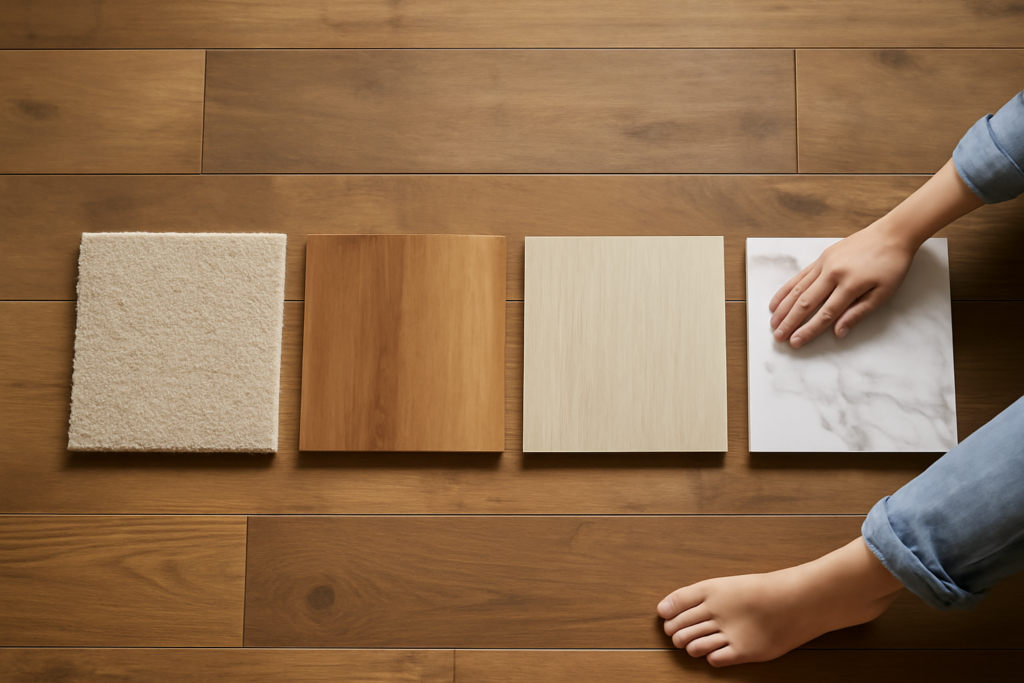
With so many choices on the market, picking a new floor can feel overwhelming. The good news is that most homeowners ultimately choose from a handful of proven materials. Understanding the popular flooring options available today, along with their honest pros, cons, and price ranges, makes it far easier to match the right product to each room and budget. There is no single best floor for every home, only the best floor for your specific space, traffic, and lifestyle.
This guide walks through the leading flooring categories, what each does well, where each falls short, and roughly what you can expect to pay installed.
Hardwood Flooring
Solid hardwood remains the benchmark for warmth, beauty, and resale value. It can be sanded and refinished multiple times over its life, which means a quality wood floor can last generations.
Pros: Timeless look, refinishable, adds home value, available in many species and stains.
Cons: Sensitive to moisture and humidity, can scratch and dent, higher cost.
Typical installed cost: roughly $8 to $15 per square foot, more for exotic species.
Hardwood is ideal for living rooms, dining rooms, and bedrooms but should be kept out of bathrooms and basements.
Luxury Vinyl Plank and Tile (LVP/LVT)
Luxury vinyl has surged in popularity because it is waterproof, durable, and remarkably realistic in mimicking wood and stone. Rigid-core versions like SPC and WPC add stability and comfort underfoot.
Pros: Fully waterproof, scratch and dent resistant, easy to install, comfortable underfoot.
Cons: Cannot be refinished, lower-end products can look artificial, adds less resale value than wood.
Typical installed cost: roughly $4 to $9 per square foot.
This is an excellent all-purpose option, especially for kitchens, basements, mudrooms, and homes with kids or pets.
Laminate Flooring
Laminate offers a wood look at a budget price using a photographic layer over a dense fiberboard core. Modern laminate is tougher and more water-resistant than older generations.
Pros: Affordable, scratch resistant, easy click-lock installation, wide style selection.
Cons: Susceptible to water damage at seams if not water-resistant rated, cannot be refinished, can sound hollow.
Typical installed cost: roughly $3 to $7 per square foot.
Laminate suits bedrooms, hallways, and living areas where budget matters and moisture exposure is low.
Tile Flooring
Porcelain and ceramic tile are the most water-resistant and durable everyday flooring you can buy, which is why they dominate bathrooms and kitchens.
Pros: Waterproof, extremely durable, low maintenance, works with radiant heat.
Cons: Hard and cold underfoot, grout requires upkeep, professional installation recommended.
Typical installed cost: roughly $7 to $15 per square foot, higher for natural stone or intricate patterns.
Tile is the go-to for bathrooms, kitchens, laundry rooms, and entryways in any climate.
Carpet
Carpet still has its place, offering softness, warmth, and sound absorption that hard surfaces cannot match.
Pros: Comfortable and warm, reduces noise, affordable, huge color range.
Cons: Stains easily, traps allergens, shorter lifespan, not for wet areas.
Typical installed cost: roughly $3 to $7 per square foot including pad.
Carpet shines in bedrooms, family rooms, stairs, and basements where comfort is the priority.
How to Choose Among the Options
Rather than searching for one perfect material, think room by room. A few guiding questions help narrow the field:
- How much moisture? Wet areas call for tile or luxury vinyl.
- How much traffic? High-traffic zones favor durable LVP, tile, or hardwood.
- What is the budget? Laminate and carpet stretch dollars; hardwood and stone cost more.
- Pets and kids? Scratch- and stain-resistant LVP or tile holds up best.
- Resale plans? Hardwood and quality tile add the most lasting value.
Mixing Materials Throughout the Home
Most homes use more than one flooring type, and that is perfectly fine. A common approach pairs hardwood or luxury vinyl in main living areas, tile in wet rooms, and carpet in bedrooms. Keep the palette coordinated so transitions feel intentional, and use proper transition strips where two materials meet.
Installation: DIY or Professional
Some of these options are genuinely approachable for a handy homeowner, while others reward professional skill. Click-lock laminate and floating luxury vinyl plank are the most DIY-friendly, since they require no glue or nails and go down over a clean, level subfloor. Carpet and tile, by contrast, are best left to professionals. Tile demands precise layout, mortar work, and grouting, and poor carpet seaming or stretching shows quickly.
Solid hardwood installation also benefits from professional tools and experience, especially nail-down methods and finishing. When budgeting, remember that professional installation can add a few dollars per square foot, but it often pays for itself in a longer-lasting, better-looking result, particularly with tile and stone.
Lifespan and Long-Term Value
Thinking beyond the purchase price helps you judge true value. Hardwood and quality tile can last decades, and hardwood can be refinished several times, which is why they hold the strongest resale appeal. Luxury vinyl typically lasts 15 to 25 years and rarely needs more than replacement when worn. Laminate runs a similar range but cannot be refinished, and carpet usually needs replacing every 5 to 15 years depending on traffic and quality. A floor that costs more upfront but lasts twice as long often wins on lifetime cost.
Trends Shaping Flooring Choices Today
Beyond the core materials, a few trends are influencing what homeowners pick. Waterproof flooring has driven much of luxury vinyl’s rise, as buyers prioritize floors that survive spills, pets, and basements without worry. Wider planks and longer boards are popular for the open, spacious look they create, while lighter wood tones and warm neutral colors dominate current design. Texture is also in demand, with wire-brushed and matte finishes hiding scratches better than glossy ones.
Sustainability has become a real consideration too, pushing interest in responsibly sourced hardwood, recycled-content carpet, and low-emission products. When you shop, you will notice these trends reflected across every category, which can help you choose a floor that feels current and resells well.
Final Thoughts
The most popular flooring options earned their popularity for good reason, each balancing cost, durability, and appearance in its own way. Hardwood delivers timeless value, luxury vinyl offers worry-free waterproof versatility, laminate stretches a budget, tile conquers wet rooms, and carpet adds cozy comfort. Match each material to the room’s demands and your budget, and you will end up with floors that look great and perform for years.
Prefer to explore on your own?
See how new flooring looks in your actual room in seconds — free, no signup.
Try the free Floor Studio →