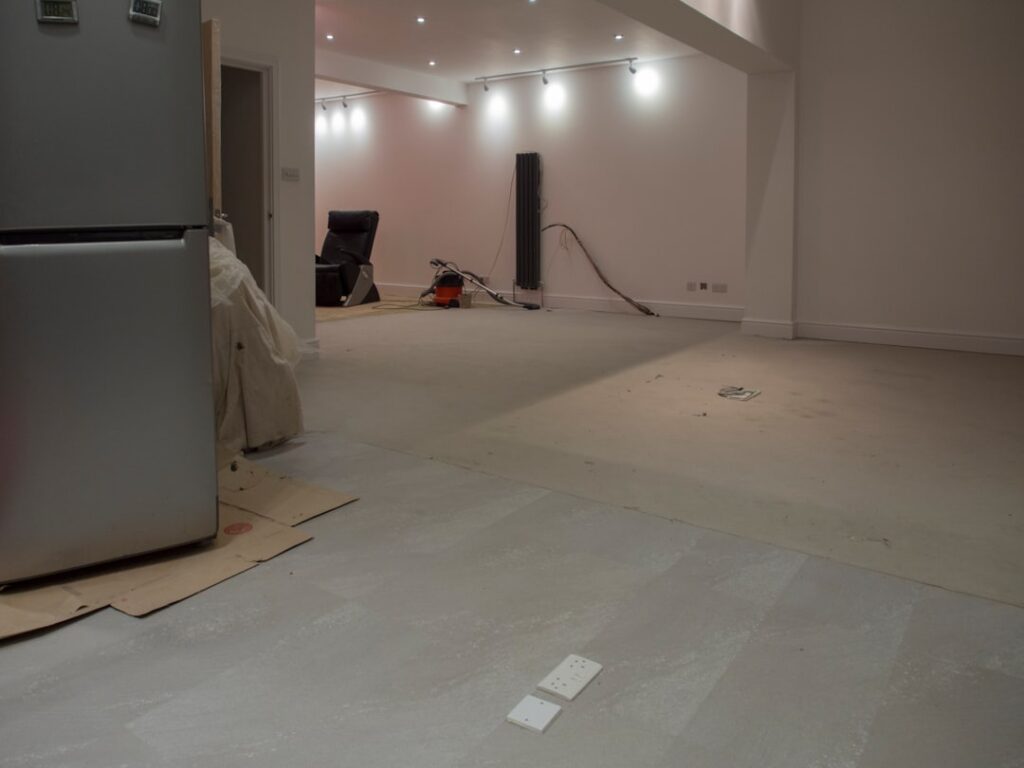
Professional carpet installation is one of the few flooring projects where paying for expertise almost always beats the do-it-yourself route. Unlike click-lock vinyl or peel-and-stick tile, wall-to-wall carpet demands specialized tools, precise stretching, and clean seaming that take years to master, which is why professional carpet installation remains the standard even for otherwise handy homeowners.
This guide walks through what installers actually do, what it costs, how long it takes, and how to prepare your home so the job goes smoothly. Understanding the process also helps you spot a quality crew from a rushed one before problems show up as wrinkles and lifting seams a year later.
What Professional Carpet Installation Costs
Labor for carpet installation typically runs $1 to $2 per sq ft, though complex rooms and premium carpet push that higher. For a 15-by-20-foot living room of 300 sq ft, expect roughly $300 to $600 in labor alone. Many retailers bundle installation into the carpet price, so read the quote carefully.
Beyond base labor, budget for these common add-ons:
- Padding: $0.30 to $0.60 per sq ft for the cushion beneath the carpet.
- Old carpet removal and haul-away: $0.25 to $0.50 per sq ft.
- Furniture moving: $25 to $100 per room if you do not clear it yourself.
- Tack strips and materials: often included, but confirm.
- Stairs: $5 to $15 per step, since each tread requires custom fitting.
All in, a mid-grade carpet installed in a typical bedroom runs $700 to $1,500 depending on square footage and material grade.
The Tools and Components Involved
Quality installation depends on a handful of specialized components most homeowners never see. Tack strips, thin wood strips studded with angled pins, are nailed around the room perimeter to grip the carpet backing and hold it under tension. Padding is stapled or glued to the subfloor to add cushion, extend carpet life, and improve insulation.
The signature tool is the power stretcher, a long telescoping pole that pulls carpet drum-tight across the entire room. A knee kicker handles smaller adjustments and corners, while a carpet iron and seaming tape join sections invisibly. Skipping the power stretcher, a common shortcut, is the leading cause of the ripples and buckling that appear months later.
What to Expect on Installation Day
A single average room usually takes 1 to 2 hours to install, while a whole house of 1,500 sq ft can take a full day with a two-person crew. Here is the typical sequence:
- Clear and prep: Installers move remaining furniture, pull up old carpet, and remove the existing padding and tack strips.
- Subfloor check: They inspect for squeaks, protruding nails, and moisture, addressing problems before covering them.
- New tack strips and padding: Fresh strips go around the perimeter, then padding is cut, stapled, and seamed.
- Carpet layout and cutting: Carpet is rolled out, rough-cut, and positioned with pile direction consistent across seams.
- Stretching and seaming: The power stretcher pulls the carpet tight, seams are ironed together, and edges are tucked and trimmed at the walls.
Expect noise, some dust, and open doorways during the job. Most crews clean up debris and vacuum before leaving, but confirm haul-away is part of your agreement.
Understanding Seams and Placement
Carpet comes in 12-foot-wide rolls, so any room wider than 12 feet requires at least one seam. A skilled installer plans seam placement to fall in low-traffic, low-light areas, never across a main walkway or directly in front of a doorway where wear and light reveal them fastest.
Good seams are nearly invisible when done with hot-melt seaming tape and a carpet iron. Pile direction must run the same way across the seam so the nap catches light uniformly. During your walkthrough, get down at floor level and view seams from several angles. Slight visibility is normal, but gaps, fraying, or peaking ridges signal poor workmanship worth flagging immediately.
Why Stretching Matters So Much
Proper stretching is the single biggest predictor of how long your carpet stays flat and attractive. When carpet is installed under correct tension with a power stretcher, the fibers stay anchored to the tack strips and the surface remains smooth for the life of the product, often 10 to 15 years.
Under-stretched carpet relaxes over time and forms waves and ripples, especially in rooms with temperature swings or heavy furniture. Fixing this later requires a re-stretch service costing $100 to $300 per room, so it pays to ensure your installer uses a power stretcher on the first pass rather than relying only on a knee kicker.
How to Prepare for Professional Carpet Installation
You can lower costs and speed the job with a little prep. Remove small furniture, breakables, and electronics yourself, and empty closets that will be carpeted. Vacuum the old carpet before removal to reduce airborne dust. Plan for pets and children to be out of the work area, and clear a path from the driveway to the room for hauling rolls.
Confirm ceiling-height clearance for doors, since new carpet and pad may raise the floor by up to half an inch, occasionally requiring doors to be trimmed. Ask whether that trimming is included. Finally, let the carpet acclimate in your home for 24 to 48 hours before install so it adjusts to indoor temperature and humidity.
Choosing a Qualified Installer
The crew matters as much as the carpet. Look for installers certified by the Certified Flooring Installers program or affiliated with a reputable retailer that stands behind the labor. Ask how many years they have installed carpet, whether they use a power stretcher on every job, and what the labor warranty covers. A confident, experienced installer will answer these without hesitation.
Get at least three written, itemized quotes and be wary of any bid far below the others, since it often signals skipped steps like power stretching or reused padding. Read recent reviews specifically mentioning seams and stretching, not just friendliness. Confirm the quote includes removal, disposal, tack strips, transitions, and door trimming so no surprise charges appear on install day.
Warranty and Aftercare
Carpet carries two separate warranties: the manufacturer’s warranty on the product and the installer’s warranty on the labor. The manufacturer warranty often requires professional installation with an approved pad to stay valid, which is another reason to hire a pro rather than cut corners. Keep your receipts and any registration paperwork in a safe place, since a claim years later will require proof of both the purchase date and professional installation.
After installation, vacuum lightly for the first week to remove loose fibers, a normal shedding process called fuzzing that stops on its own. Wait 24 hours before heavy foot traffic and a few days before placing heavy furniture, using floor protectors under legs to prevent permanent crushing. Schedule professional hot-water extraction every 12 to 18 months, which most manufacturers require to keep the stain and wear warranty in force.
Final Thoughts
Booking professional carpet installation protects the investment you make in new flooring. Between accurate power stretching, planned seam placement, and proper padding, a skilled crew delivers a smooth, durable result that a rented knee kicker rarely matches. Get itemized quotes from at least three installers, confirm what is included, and prioritize experience and warranty over the lowest bid. Do that, and your carpet will look tight, seamless, and comfortable underfoot for well over a decade.