Professional cleaners are not faster because they work harder; they are faster because they work in a system. The best professional cleaning tips come down to cleaning in the right order, using the right tool for each surface, and never doing the same job twice. Most homeowners waste time backtracking, spreading dirt around, and reaching for harsh products that damage finishes. With a handful of pro habits, you can cut your cleaning time and get noticeably better results. Here is how the people who clean for a living actually do it.
- Work Top to Bottom, Left to Right
- Dry Before Wet
- Let Products Do the Work
- Use Microfiber, and Use Many of Them
- Match the Product to the Surface
- Keep the Right Tools Within Reach
- Build a Realistic Routine
- Declutter Before You Clean
- Tackle the Two Hardest Rooms First
- Floors Last, Always
- The Bottom Line
Work Top to Bottom, Left to Right
The most important rule in professional cleaning is direction. Always clean from high to low so that dust and debris fall onto surfaces you have not cleaned yet, never the reverse. Start with ceiling fans and shelves, move to counters and furniture, and finish with the floor. Within a room, move in one consistent direction, left to right, so you cover every surface once and never wonder what you have already done.
This single change eliminates the most common waste in home cleaning: wiping a counter, then dusting a shelf above it, and having to wipe the counter again.
Dry Before Wet
Pros dust and dry-clean a room before introducing any moisture. Wet dust turns into mud that smears and clings. Vacuum or sweep first, dry-dust surfaces, then bring out sprays and damp cloths. On floors especially, sweep or vacuum thoroughly before mopping; mopping over grit just pushes it around and can scratch hardwood and vinyl.
Let Products Do the Work
The biggest amateur mistake is spraying and immediately wiping. Cleaning products need dwell time, the minutes they spend sitting on a surface, to break down grime. Spray the shower, the toilet bowl, the stovetop, and any heavily soiled area first, then leave the room to clean something else. When you return, the dirt wipes away with almost no scrubbing.
A practical routine in a bathroom: spray the tub, toilet, and sink, then go clean the mirror and wipe surfaces while those products sit. By the time you circle back, the hard part is done.
Use Microfiber, and Use Many of Them
Microfiber cloths trap dust and lift grime far better than cotton rags or paper towels, and they work with just water on most surfaces. Professionals carry a stack and switch frequently rather than re-rinsing one dirty cloth all day. Color-code them to avoid cross-contamination, for example yellow for bathrooms and blue for kitchens, so you never wipe a counter with the cloth that cleaned a toilet.
- Use a damp microfiber for dusting so particles stick instead of scattering.
- Fold each cloth in quarters; that gives you eight clean surfaces before you need a fresh one.
- Wash microfiber without fabric softener, which clogs the fibers and ruins their grip.
Match the Product to the Surface
Using the wrong cleaner is how finishes get ruined. A few rules protect your home’s surfaces:
- Natural stone (granite, marble, quartzite) needs a pH-neutral stone cleaner. Acids like vinegar and citrus etch the surface permanently.
- Hardwood and laminate floors should be cleaned with minimal water and a product made for them; standing water and harsh degreasers cause swelling and dullness.
- Stainless steel wipes streak-free with a little water and microfiber, finishing in the direction of the grain.
- Glass and mirrors clean best with a dedicated glass cleaner and a dry microfiber buff, not paper towels that leave lint.
Never mix cleaning chemicals. Combining bleach with ammonia or with acidic cleaners produces toxic fumes. When in doubt, use one product at a time and ventilate the room.
Keep the Right Tools Within Reach
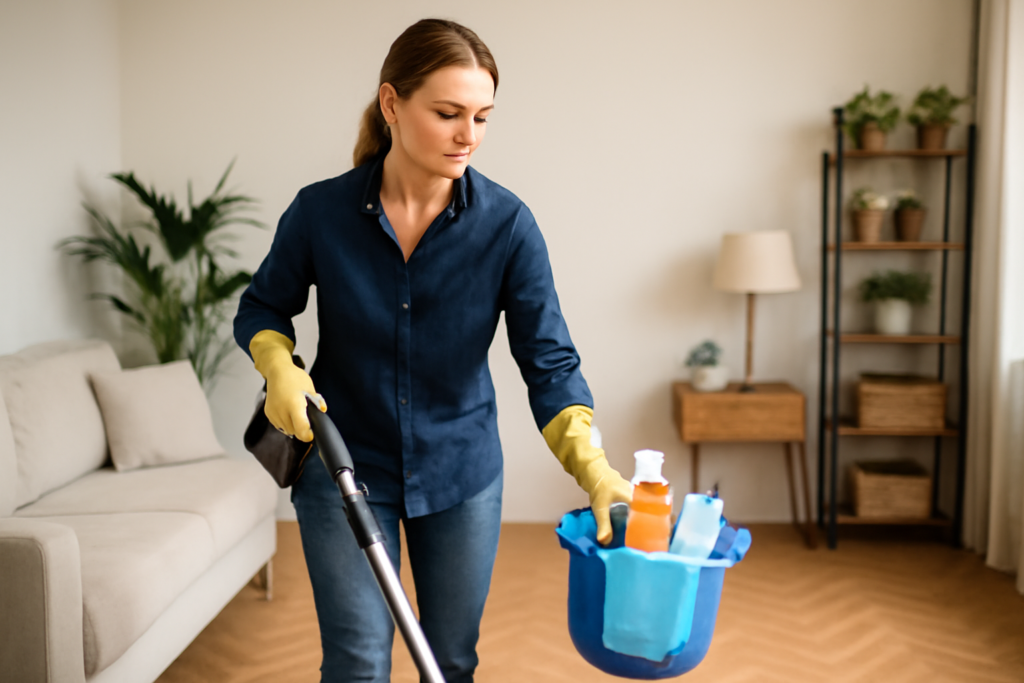
Professionals carry a caddy so they never leave a room to fetch supplies. Stock yours with two or three sprays, a stack of microfiber, a scrub brush, glass cleaner, and a roll of disposable gloves. The fewer trips you make, the faster the whole house goes. A good vacuum with attachments handles floors, upholstery, and baseboards, doing the work of several tools.
Build a Realistic Routine
Deep cleaning everything at once leads to burnout. Pros maintain homes with a rhythm: daily quick tidying, weekly surface cleaning, and rotating deep tasks like baseboards, inside the oven, and behind appliances on a monthly schedule. Spreading the heavy jobs across weeks keeps any single session short and keeps the home consistently clean rather than swinging between spotless and chaotic.
A simple weekly order that mirrors how a pro moves through a house: declutter first, dust top to bottom, clean kitchen and bathrooms with dwell time, then vacuum and mop your way out the door so you never walk back across wet floors.
Declutter Before You Clean
Professionals never clean around clutter, because it doubles the work and hides dirt. Before any deep clean, do a fast pass to clear surfaces: pick up items, toss trash, and relocate anything that does not belong in the room. A clear counter cleans in seconds; a cluttered one takes minutes of lifting and replacing. This is also why pros work in zones, finishing one defined area completely before moving on, rather than darting around the house. A clear, contained space lets the actual cleaning go fast.
Tackle the Two Hardest Rooms First
Kitchens and bathrooms are where germs and grime concentrate, so they deserve your freshest energy and the most dwell time. In the kitchen, spray the stovetop, sink, and any greasy surfaces early and let them sit while you wipe cabinets and appliances. Degrease range hoods and backsplashes regularly, since airborne grease builds an invisible film that dulls every surface. In the bathroom, disinfect high-touch points, faucet handles, flush levers, and light switches, that ordinary cleaning often skips. Letting disinfectant sit the full contact time listed on the label is what actually kills germs; wiping it off immediately does not.
Floors Last, Always
There is a reason pros save floors for the end of every room and the end of the house. Cleaning floors first means re-dirtying them with dust knocked down from higher surfaces, then walking across them while you finish. Vacuum or sweep thoroughly to remove grit, then mop your way toward the exit so you never step on a wet, clean floor. Use the right amount of water for the floor type, damp, not soaking, especially on hardwood, laminate, and vinyl, where standing water causes damage over time.
The Bottom Line
The fastest way to clean better is to clean smarter: declutter first, work top to bottom and left to right, dry before wet, give products time to dwell, use plenty of microfiber, and match each cleaner to its surface. Tackle kitchens and bathrooms with full dwell time, save floors for last, and lean on a stocked caddy and a routine that spreads the heavy jobs out. Do that and you will get professional-level results in less time, with less effort, and without damaging the surfaces you are trying to protect.