Every big-box retailer keeps a house brand at the bottom of the price ladder, and at Lowe’s that shelf belongs to Project Source. A Project Source faucet costs $25 to $80 where a comparable Delta or Moen runs $90 to $250, and the obvious question is what disappears along with the price. The answer, after enough installs and enough service calls, is nuanced: these are functional, code-compliant fixtures that make genuine sense for rentals, flips, and low-use bathrooms — and poor sense for the kitchen sink your family runs forty times a day. Here is an honest accounting of who makes them, how they hold up, what breaks first, and where the budget play is actually the smart play.
- What Project Source Is — and Who Really Makes It
- Construction: Where the Cost Savings Live
- Real-World Durability: What the Track Record Shows
- Repairs and Parts: The Real Cost of a House Brand
- Where the Budget Buy Is Genuinely Smart
- Installation Notes and Small Upgrades That Help
- How It Stacks Up Against the Other Budget Brands
- Verdict: A Tool for Specific Jobs
What Project Source Is — and Who Really Makes It
Project Source is not a manufacturer. It is Lowe’s private label for entry-level home essentials — faucets, toilets, shelving, blinds, light fixtures — sourced from contract factories, overwhelmingly in China, and specced by Lowe’s to hit aggressive price points. The faucet lineup covers the basics: single- and two-handle bathroom faucets ($25 to $50), kitchen faucets with or without sprayers ($40 to $80, including pull-down models around $60 to $70), tub-and-shower valves, laundry faucets, and utility fixtures.
Despite the budget positioning, the fixtures clear the regulatory bar. Current models are certified lead-free under NSF/ANSI 372, meet the 1.2 gpm bathroom and 1.8 gpm kitchen flow limits where required, and carry the standard 1/2-inch or 3/8-inch supply connections that fit any US rough-in. Lowe’s backs them with a limited lifetime warranty on parts for the original residential purchaser — though, as we will see, the warranty’s practical value differs from a Delta warranty in one important way: parts ecosystems.
Construction: Where the Cost Savings Live
Cut open the price gap and the differences are concrete. Project Source bodies use more zinc alloy and plastic where mid-tier brands use brass — waterways on the cheapest bathroom models are plastic, spout shells may be zinc with a chrome plate, and pull-down hoses are lighter-gauge with plastic quick-connects. Cartridges are generic ceramic-disc or compression units rather than branded mechanisms like Moen’s 1225 or Delta’s diamond-seal. Aerators are standard-thread but the housings are thin. Finish options run chrome, brushed nickel, and sometimes matte black, applied thinner than premium lines — brushed finishes in particular show wear at the handle contact points within a few years of heavy use.
None of this makes the fixtures junk. Ceramic-disc cartridges — even generic ones — drip far less than the rubber-washer valves budget faucets used a generation ago, and a chrome finish over any substrate resists water spotting the same way. The savings show up at the margins: connection robustness, hose longevity, finish depth, handle feel, and the long-term availability of a specific replacement cartridge.
Real-World Durability: What the Track Record Shows
Patterns emerge clearly from landlord forums, review histories, and service experience. In light-duty roles — a guest bathroom lavatory, a basement bar sink — a Project Source faucet routinely delivers 5 to 10 quiet years, which at $30 is unbeatable cost-per-year math. In heavy-duty roles the story compresses: kitchen pull-downs are the weak class, with sprayer hoses, retraction weights, and spray-head diverters generating most complaints inside 2 to 4 years of daily family use. Two-handle bathroom models outlast single-handle ones on average, simply because there is less to go wrong.
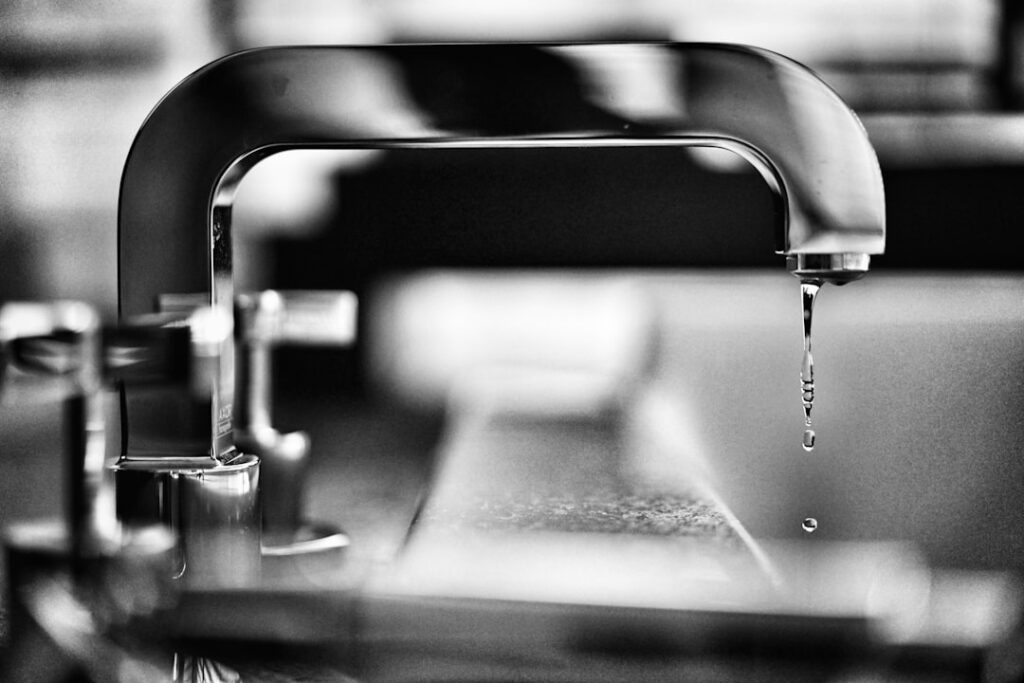
The most common specific failures, in rough order: dripping from a worn generic cartridge, pull-down heads that no longer dock or that leak at the hose crimp, handles developing slop as zinc splines wear, and finish wear on brushed nickel around the handle base. Catastrophic failures — cracked bodies, burst hoses — are rare but not unheard of on the oldest plastic-waterway models, which is a reason some plumbers steer rentals toward the metal-bodied SKUs within the line. Spending $10 to $15 more inside the Project Source range to get the all-metal variant is consistently worth it.
Repairs and Parts: The Real Cost of a House Brand
Here is the trade nobody mentions at the shelf. When a Moen drips, you buy a 1225 cartridge at any hardware store for $15 and fix it in twenty minutes; the part will exist for decades. When a Project Source faucet drips, you are hunting a generic cartridge with no famous number — sometimes a standard 35mm or 40mm ceramic cartridge that a universal replacement fits, sometimes not. Lowe’s warranty support will ship parts if you have the model number and receipt, and turnaround is typically one to two weeks, but many owners conclude that a $30 faucet with a $0 warranty part and a two-week wait loses to simply buying a new $30 faucet — which is exactly the disposable economics the price implies.
Practical advice if you own one: photograph the model sticker on the supply line or box before installing, keep the receipt stapled to the manual, and try a universal ceramic cartridge (measure the old one’s diameter and stem spline) before assuming the faucet is dead. Aerators are standard 15/16-inch or 55/64-inch threads and swap freely with any brand’s.
Where the Budget Buy Is Genuinely Smart
Match the fixture to the duty cycle and Project Source earns its shelf space:
- Rental units: the canonical use case — low cost, decent tenant-proof simplicity (favor two-handle models), and cheap identical replacement when a unit turns over.
- Flips and pre-sale refreshes: a matched set of new chrome fixtures for under $150 photographs like a renovation.
- Low-traffic bathrooms: guest baths and powder rooms may see the faucet a few times a week; a decade of service is realistic.
- Utility, laundry, and garage sinks: nobody needs a $200 faucet over a mop sink.
- Temporary kitchens: bridging a year until a full remodel replaces everything anyway.
Where to spend up instead: the primary kitchen faucet (the hardest-working fixture in the house — a Delta Essa or Moen Adler at $120 to $180 buys a proven cartridge and real hose hardware), the primary shower valve (buried in the wall, where failure means tile surgery), and any fixture in a house you plan to keep for twenty years.
Installation Notes and Small Upgrades That Help
Installation is standard and DIY-friendly — plan on 45 to 90 minutes with a basin wrench, plumber’s grease, and fresh braided stainless supply lines (spend the $12; never reuse old supplies). Three budget-brand-specific tips: snug the plastic mounting nuts firmly but do not gorilla them, because the threads strip more easily than brass; wrap the sprayer hose quick-connect with a zip tie as cheap insurance against pop-off; and run both temperatures for a full minute on first use to flush manufacturing debris that would otherwise lodge in the cartridge — the number-one cause of a brand-new faucet dripping on day two. If the aerator flow seems weak later, that same debris is usually sitting in the screen.
How It Stacks Up Against the Other Budget Brands
Project Source does not compete against Delta and Moen so much as against the rest of the sub-$80 shelf, and the comparison is closer than brand loyalists admit. Glacier Bay — Home Depot’s equivalent house brand — is the most direct rival, with a nearly identical price ladder and, by most accounts, a slight edge in parts support through Home Depot’s dedicated parts hotline. Amazon’s imports (WEWE, OWOFAN, and a rotating cast) sometimes offer more style per dollar but with warranty support that evaporates when the storefront does. The value sleeper is the entry tier of the name brands: a Delta Foundations or Moen Adler frequently dips to $60 to $90 on sale, buying branded cartridge availability for barely more than house-brand money. If the timing of your project lets you wait for that sale, it is the better buy; if you need six faucets for a rental turnover this weekend, Project Source on the shelf beats a better faucet that is not.
Verdict: A Tool for Specific Jobs
A Project Source faucet is best understood as honest commodity plumbing: certified, functional, and priced for situations where longevity past a decade is not the goal. Used deliberately — rentals, flips, light-duty and utility sinks — it is one of the best value plays at Lowe’s, especially the all-metal SKUs. Used as the daily-driver kitchen fixture in a forever home, it will likely cost you a second purchase and an afternoon under the sink within five years, erasing the savings. Buy it for what it is, keep the receipt, and put the money you saved toward the fixtures that actually work for a living.