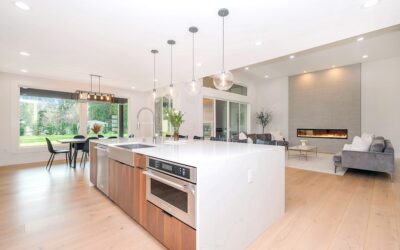
San Antonio kitchens face a specific challenge that coastal buyers never think about: hard, mineral-heavy water that leaves chalky spots on anything porous. That single fact is why quartz countertops San Antonio homeowners choose so often outperform natural stone here — quartz is non-porous, so it shrugs off the mineral staining that plagues sealed granite in this region. This guide covers what you can expect to pay locally, which colors and brands move fastest in South Texas, and how to work with a fabricator to get a clean install.
- Why Quartz Suits South Texas Homes
- What Quartz Costs in the San Antonio Market
- Popular Brands and Colors Locally
- Choosing a Local Fabricator
- Measuring and Planning Your Project
- Installation Day and Aftercare
- Quartz vs. Granite in the Local Market
- Timing Your Project in San Antonio
- Is Quartz the Right Call for You?
Why Quartz Suits South Texas Homes
Engineered quartz is made from roughly 90 percent ground natural quartz bound with resin and pigment. The result is a slab that never needs sealing, resists staining from coffee and red wine, and holds up to heavy daily use. In a market with hard water and a lot of Tex-Mex cooking — think citrus, tomato, and oil — that stain resistance matters. Granite and marble require periodic sealing to fend off the same spills, and in San Antonio’s climate that maintenance schedule is easy to forget. Quartz removes the guesswork.
The one caution is heat. Quartz resins can scorch under a hot pan straight off the burner, so trivets are non-negotiable. Beyond that, the material is close to maintenance-free, which is a large part of its appeal in busy family kitchens across the metro.
What Quartz Costs in the San Antonio Market
Pricing here tracks national trends but tends to run slightly friendlier than in coastal metros because the local fabrication market is competitive. Expect installed costs in these general ranges:
- Builder-grade quartz: roughly $45 to $65 per square foot installed
- Mid-range designer colors: about $65 to $90 per square foot installed
- Premium marble-look and high-movement patterns: $90 to $130 per square foot installed
For a typical San Antonio kitchen with 40 to 55 square feet of counter, most homeowners land between $2,800 and $5,500 installed. Those numbers usually bundle template, fabrication, edge profile, and standard installation, but always confirm what is included. Sink cutouts, upgraded edges, and cooktop cutouts can add a few hundred dollars, and tearing out old counters is sometimes billed separately.
Popular Brands and Colors Locally
The major engineered quartz brands are all readily available through area distributors and fabricators. Caesarstone, Silestone, Cambria, MSI Q, and Corian Quartz all show up regularly in local showrooms. Color-wise, South Texas taste leans bright and warm to suit open floor plans and abundant natural light.
- Crisp whites and off-whites with subtle gray veining — the dominant request for modern kitchens
- Warm greiges and soft tans that pair with the region’s Saltillo and wood-tone floors
- Bold marble-look patterns with dramatic veining for islands and feature walls
Because quartz is engineered, the slab you see in the showroom matches what arrives at your home far more closely than natural stone, where every slab is unique. That predictability makes it easier to plan a kitchen remodel with confidence.
Choosing a Local Fabricator
The fabricator matters as much as the slab. A great slab installed poorly looks worse than a modest slab installed well. When you evaluate quartz countertops San Antonio shops, look for a few things: an in-house fabrication facility rather than outsourced cutting, digital templating for accurate measurements, and clear written quotes that spell out edge profile, seam placement, and cutout charges. Ask to see seam samples in person, since seam quality is where budget installs most often fall short.
Reputable shops will walk you through slab selection, template your space with a laser tool, and give a firm timeline. From template to installation, two to three weeks is a common window in this market, though in-stock colors sometimes move faster.
Measuring and Planning Your Project
You can rough-estimate your own square footage before you call anyone. Measure the length of each counter run in inches, multiply by the depth (standard is 25.5 inches with overhang), and divide by 144 to get square feet. Add the island separately. Sharing an approximate number when you request quotes helps fabricators give you a realistic ballpark over the phone.
Think about seams early. Slabs typically top out around 120 by 55 inches, so a large kitchen will need seams. A skilled fabricator places them where they are least visible — away from the sink and at inside corners — and color-matches the epoxy so the joint nearly disappears.
Installation Day and Aftercare
Installation itself is usually a half-day job for a standard kitchen. The crew removes old counters if that was part of your contract, dry-fits the pieces, glues and clamps the seams, secures the slabs to the cabinets, and connects the sink and cooktop cutouts. Plan to keep the kitchen clear and avoid heavy use of the counters for 24 hours while the seam adhesive fully cures.
Aftercare could not be simpler: wipe with warm water and a little dish soap, or a pH-neutral cleaner. Skip abrasive pads and harsh chemicals, use a cutting board to protect your knives and the finish, and always set hot cookware on a trivet. With that routine, a quartz counter in San Antonio will look showroom-new for well over a decade.
Quartz vs. Granite in the Local Market
Granite still has a loyal following in South Texas, and the two materials often land in the same price bracket here. The deciding factor for most local buyers comes down to maintenance. Granite is a natural stone that must be sealed periodically to resist stains, and in an area with hard water and heavy cooking, a lapsed seal shows up quickly as darkened rings and mineral spotting. Quartz sidesteps that entirely because it is non-porous from day one. Granite fans point to its natural, one-of-a-kind veining and its higher heat tolerance, both legitimate advantages. But for homeowners who would rather not track a sealing calendar, quartz wins on convenience — and that convenience is why it now outsells granite in many area showrooms.
If you love the drama of natural stone but want low upkeep, quartz’s marble-look and granite-look patterns close much of the visual gap. You get consistent slabs, predictable pricing, and a surface that behaves the same way on year ten as it did on day one.
Timing Your Project in San Antonio
Remodeling demand in the metro tends to spike in spring and again ahead of the holidays, so lead times stretch during those windows. If your timeline is flexible, scheduling fabrication in late summer or midwinter can mean faster turnaround and occasionally better pricing as shops fill slower weeks. In-stock colors always move quickest, while special-order slabs may add a week or two for delivery. Plan the countertop phase around your cabinet installation, since fabricators template only after the cabinets are set and level — measuring too early leads to costly refits.
Is Quartz the Right Call for You?
If you want a low-maintenance surface that ignores hard-water spotting and heavy cooking, quartz is hard to beat in this region. Choosing quartz countertops San Antonio buyers can rely on comes down to matching a durable slab with a fabricator who templates accurately and finishes seams cleanly. Get two or three itemized quotes, compare what each includes rather than just the headline price, and you will end up with a kitchen surface built for South Texas living.