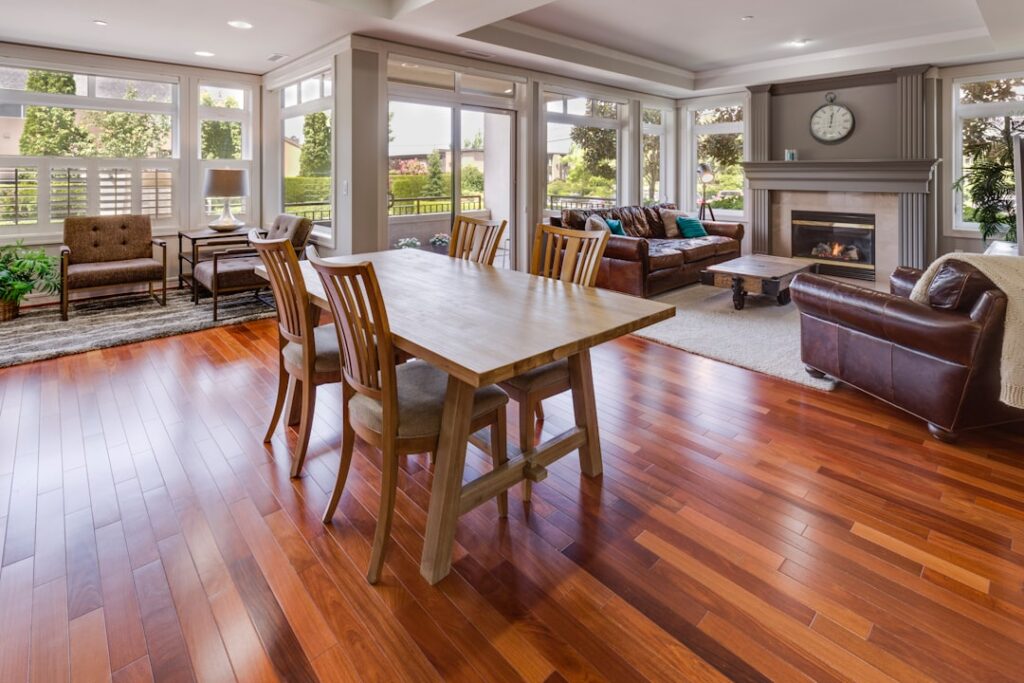
Few flooring choices carry the timeless appeal and resale value of oak, which is exactly why it has anchored American homes for more than a century. Real oak wood flooring offers a rare combination of hardness, availability, and classic grain that pairs with almost any decor, from farmhouse to modern. Before you buy, though, you should understand the difference between red and white oak, weigh solid against engineered construction, and know what installation and upkeep truly demand. This guide covers everything you need to make a confident decision.
Why Oak Dominates American Floors
Oak became the default hardwood in the United States for practical reasons, not just tradition. It grows abundantly across the eastern and central states, keeping supply steady and prices reasonable compared to exotic species. Its open, pronounced grain also hides scratches and everyday wear better than smoother woods like maple, which matters enormously in a floor that has to look good for decades.
The wood is genuinely tough, too. On the Janka hardness scale, which measures resistance to denting, red oak registers around 1,290 and white oak about 1,360. Those numbers set the industry benchmark that other species are compared against, and they explain why oak handles kids, pets, and heavy furniture without constant babying.
There is a supply-chain benefit that quietly works in your favor as well. Because oak is so widely harvested and milled domestically, you can find matching boards years down the road when you extend a floor into a renovated room or repair a damaged section. Try that with a rare imported species and you may face long lead times, color mismatches, or discontinued lines, which is why contractors so often steer homeowners toward oak for whole-home consistency.
Red Oak Versus White Oak
Choosing between the two species is the first real decision, and it comes down to color and grain more than performance. Red oak leans warm, with pinkish and amber tones and a busy, swirling grain that reads traditional. It also takes stain in a slightly blotchier way, though its active grain camouflages minor imperfections and dents beautifully.
White oak trends cooler and more contemporary, with grayish-brown undertones and a tighter, straighter grain that today’s designers favor. It is marginally harder and, thanks to closed cellular structures called tyloses, far more water resistant, which is why it dominates wide-plank and European-style floors. Expect to pay a modest premium for white oak given its current popularity.
Solid Versus Engineered Oak
The next fork in the road is construction. Solid oak is milled from a single 3/4-inch-thick piece of lumber, and its headline advantage is longevity: you can sand and refinish it six to ten times over an 80- to 100-year lifespan. That refinishing capacity makes solid oak the choice for homeowners who plan to stay put and want a true heirloom floor.
Engineered oak bonds a real oak veneer, typically 2mm to 4mm thick, over a plywood or high-density core. This layered build resists the expansion and contraction that plagues solid wood, so it performs better over concrete slabs, in basements, and with radiant heat. You give up some refinishing potential, generally one to three light sandings, but you gain dimensional stability and often easier installation.
What Real Oak Wood Flooring Costs
Budgeting starts with material, and oak spans a wide band. Solid red oak strips run $3 to $7 per square foot, while solid white oak and wider planks climb to $5 to $10. Engineered oak lands anywhere from $4 to $12 depending on veneer thickness and finish quality, with premium wire-brushed and wide-plank European lines pushing past $12.
Installation adds meaningfully to the total. Professional installers charge $3 to $8 per square foot for nail-down solid oak, plus sanding and finishing if you buy unfinished boards. All in, a completed oak floor typically runs $8 to $20 per square foot, positioning it above vinyl and laminate but below most exotic hardwoods and premium stone.
Do not overlook the extras that shape the final invoice. Subfloor prep, moisture testing over concrete, and removal of old flooring each add to the base rate, and unfinished floors carry the added cost and time of on-site sanding, staining, and multiple coats of polyurethane with drying days between them. Prefinished boards trade a higher material price for lower labor and no downtime, which is why they have become the default choice for busy households that cannot lose a room for a week.
The Real Pros and Cons
The upside list is long and genuine. Oak looks classic, lasts generations, refinishes to erase decades of wear, and consistently ranks among the top features buyers want, often returning 70 to 80 percent of its cost at resale. Its hardness and forgiving grain make it one of the most livable hardwoods for busy households.
Honesty demands the downsides, too. Oak is sensitive to moisture and can cup or gap if humidity swings outside the ideal 30 to 50 percent range, so it is a poor fit for bathrooms and unsealed basements. It costs more than vinyl or laminate lookalikes, and solid versions demand periodic refinishing to stay pristine.
- Best for: living rooms, bedrooms, hallways, and dining areas in climate-controlled homes.
- Think twice for: full bathrooms, laundry rooms, and below-grade basements prone to moisture.
Finishes, Grades, and Plank Widths
Beyond species and construction, the details shape both look and price. Prefinished boards arrive with a factory-cured aluminum-oxide topcoat that resists wear and lets you walk on the floor immediately, while site-finished floors offer a seamless, custom look at the cost of dust and days of drying time. Matte and satin sheens hide scuffs better than high gloss.
Grade and width matter as well. Select and clear grades minimize knots for a uniform appearance, while character and rustic grades embrace knots and mineral streaks for a lived-in feel at a lower price. Narrow 2 1/4-inch strips read traditional and cost less, whereas 5-inch to 8-inch wide planks feel current and command a premium.
Caring for Your Oak Floor
Maintenance is simple but non-negotiable if you want your investment to last. Sweep or vacuum with a soft brush head regularly to keep grit from acting like sandpaper underfoot, and wipe spills promptly since standing water is oak’s worst enemy. Use only cleaners formulated for hardwood and skip steam mops entirely, because forced moisture and heat can damage the finish and swell the boards.
Protect the surface proactively for the best results. Felt pads under furniture legs, walk-off mats at entries, and a stable indoor humidity around 40 percent prevent most long-term problems. Do that faithfully and real oak wood flooring will reward you with a warm, durable surface that can outlast the house itself, adding character and value with every passing year.
Plan for the occasional deeper refresh, too. Every seven to fifteen years, depending on traffic, a solid oak floor benefits from a screen-and-recoat, a light buffing that adds a fresh layer of finish without a full sanding for a few hundred dollars. This inexpensive touch-up renews the protective topcoat before scratches reach the raw wood, stretching the interval between full refinishes and keeping your floor looking showroom-fresh for a fraction of the cost of starting over.
Prefer to explore on your own?
See how new flooring looks in your actual room in seconds — free, no signup.
Try the free Floor Studio →