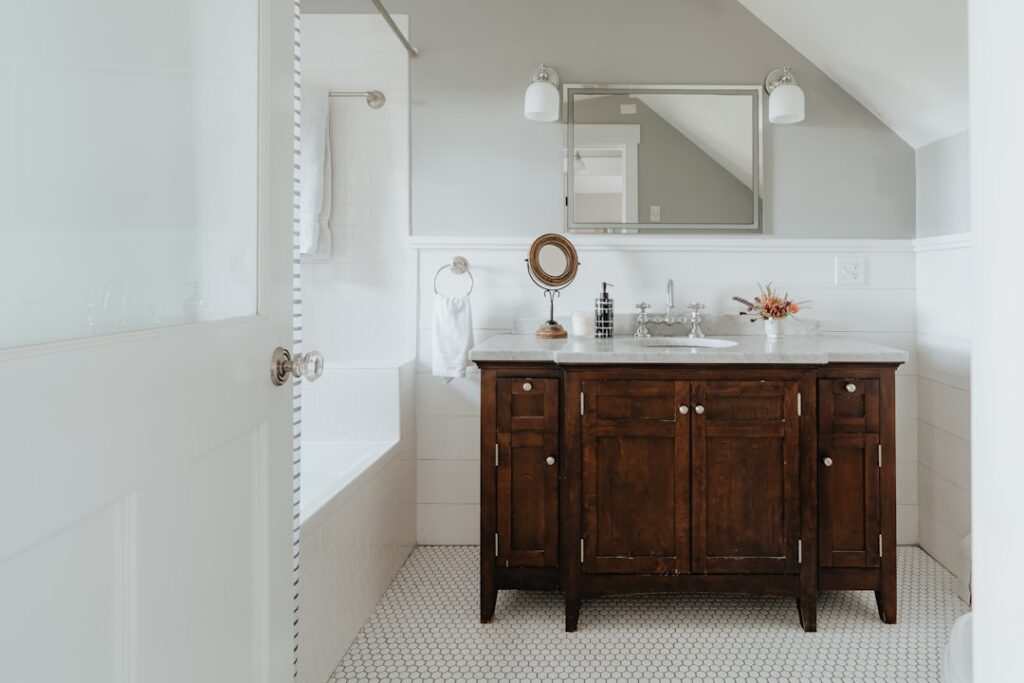
Few pieces define the high-end bathroom look like a Restoration Hardware bathroom vanity, with its weathered oak, aged-metal hardware, and furniture-grade proportions. Restoration Hardware, now branded RH, built its reputation on vanities that look like reclaimed antique dressers converted into washstands, and the marble tops and hand-finished wood back up the price. But that price is steep, often $2,000 to $6,000 or more for a single vanity, and once you add the top and shipping the number climbs. Having installed both the real thing and a stack of look-alikes, I can tell you where the money goes and where you can capture 90 percent of the look for a third of the cost.
This review covers what you actually get, the sizing, and the dupes that hold up.
What You Get for the Money
An RH vanity is genuinely well built. The signature collections use solid and veneered hardwood over sturdy cases, hand-applied finishes that give each piece slight variation, and heavy cast or forged hardware that feels substantial in the hand. The marble tops are real stone, typically Carrara or a honed marble, cut thick with a proper undermount or integrated basin. Soft-close drawers on metal glides are standard on current models. This is furniture-grade construction, not the stapled particleboard you find in a bargain vanity.
Where the value gets debatable is the markup for the brand and the styling. You are paying for a specific aesthetic and a showroom experience, and RH prices accordingly.
The Signature Looks
RH vanities cluster into a few recognizable styles that dupes tend to copy:
- Weathered/reclaimed oak: gray-brown driftwood tones, the most imitated look
- French/European antique: ornate carved detail with aged white or natural finishes
- Industrial metal: steel frames with wood or marble tops, riveted detailing
- Classic dresser-style: paneled fronts with metal cup pulls and marble tops
The weathered-oak washstand is the one clients most often ask me to replicate, and it is also the easiest to dupe convincingly.
Sizes and Configurations
RH offers vanities in single and double configurations, commonly around 30 to 40 inches for a single and 60 to 84 inches for a double. Depth runs standard at roughly 21 to 24 inches, and heights sit at comfort height near 34 to 36 inches to the top. Many come as a base with the marble top sold separately, so factor that into any price you see. Freestanding and wall-mount versions both exist depending on the collection.
The Honest Drawbacks
Beyond price, there are real tradeoffs. Lead times can stretch to weeks or months for certain finishes, and freight shipping on a heavy marble-topped vanity adds a meaningful cost and the risk of transit damage. Marble is porous and stains from toothpaste, makeup, and acidic products if not sealed and wiped promptly, so the very tops that look stunning need babying in a busy family bath. And the weathered finishes, while beautiful, are hard to touch up if scratched because each was hand-applied.
Dupes That Actually Hold Up
The look is very reproducible because it comes down to three things: a weathered wood tone, aged-metal hardware, and a stone top. You can hit all three for far less. Several strategies work:
- Furniture-store and online lookalikes: retailers like Wayfair, Home Depot, and Pottery Barn carry reclaimed-oak and dresser-style vanities in the $600 to $1,500 range that echo the RH silhouette
- Convert a real dresser: a solid vintage dresser fitted with a vessel or drop-in sink and a cut stone top nails the antique-washstand look for $300 to $800 all in
- Cabinet plus remnant top: buy a weathered-finish cabinet-only vanity and top it with a marble or quartz remnant for a fraction of RH’s stone pricing
The dresser conversion is my favorite, because a genuine old piece has real character that a factory “weathered” finish only imitates.
How to Get the Look for Less
If you dupe it, sweat the three details that read as expensive. Match the wood tone to that gray-brown driftwood range, because color is what the eye registers first. Swap whatever hardware comes on a budget cabinet for heavy aged-bronze or oil-rubbed cup pulls, a $40 to $80 upgrade that transforms a cheap vanity. And use real stone, even a remnant, since a quartz or marble top signals quality far more than the cabinet does. Nail those three and most people cannot tell your $900 setup from a $4,000 one.
Who Should Buy the Real Thing
The genuine RH vanity makes sense if you want turnkey furniture-grade construction, value the exact hand-finished look, and have the budget to match. In a primary bath in a high-end home, the quality and cohesion justify the spend for many buyers. But in a secondary bath, a rental, or any project where the budget is tight, a well-chosen dupe delivers the same visual impact.
The Bottom Line
A Restoration Hardware bathroom vanity is a legitimately well-made, beautiful piece, and the construction and stone are not hype. The question is whether the brand premium fits your budget. If it does, you will get a vanity that looks like restored antique furniture and holds up for decades. If it does not, the weathered-oak-and-marble look is one of the most dupable styles out there, and a cabinet with the right finish, upgraded hardware, and a stone remnant gets you there for well under half the price.
Caring for the Marble Top
If you buy the real thing or a marble-topped dupe, understand that marble demands care the finish repays. Marble is a calcium-based stone that etches when it meets acid, so toothpaste, mouthwash, and many cleaners leave dull spots if left to sit. Seal a marble vanity top on installation and reseal it every six to twelve months in a busy bathroom. Wipe spills immediately, use only pH-neutral stone cleaner, and never scrub with abrasive pads. Many owners actually come to appreciate the soft patina marble develops over years, treating the etches and slight wear as part of the antique character. If that patina is not for you, a honed quartz in a marble-look pattern gives you the appearance with none of the maintenance, which is exactly what many dupe builds use.
Delivery, Assembly, and What to Expect
Ordering a genuine RH vanity is a bigger commitment than clicking a home-center product into a cart. These ship freight, often on a pallet, and a marble top adds weight and fragility that make transit damage a real possibility, so inspect every piece on delivery before signing. Lead times can run weeks to months for certain finishes, so order well ahead of a remodel deadline. Some collections arrive as a base with the top boxed separately, requiring assembly and a careful two-person set of the stone. Budget for professional installation if you are not comfortable maneuvering a heavy marble top, because a dropped slab erases any savings and then some. None of this is a dealbreaker, but it is worth knowing that a designer vanity is a project, not a same-day purchase.
Building the Dupe Step by Step
If you decide to replicate the look, here is the path I use with clients. Start by sourcing the base, either a weathered-oak cabinet-only vanity or a solid vintage dresser with good bones. If it is a dresser, cut the top for a drop-in or vessel sink and notch the back for plumbing, sealing all the raw wood against moisture. Next, top it with a marble or quartz remnant from a local fabricator, which is where you save the most versus RH’s stone pricing. Swap any factory hardware for heavy aged-bronze or oil-rubbed cup pulls to nail the antique feel. Finally, seal the wood and stone, and add a matching mirror and sconces in the same finish. The whole build often lands between $400 and $1,200, delivering the RH silhouette for a quarter to a half of the original’s price.