Black-and-white checkerboard kitchens are back on design feeds, and the cheapest, most authentic way to get the look is the same material that created it seventy years ago. Retro vinyl sheet flooring delivers mid-century patterns — checkerboard, hex mosaics, boomerang motifs, faux terrazzo — in modern fiberglass-backed sheet goods that cost $1 to $5 per square foot and go down in a day. Today’s product is a far better floor than what was in your grandmother’s kitchen: waterproof through its full thickness, softer underfoot, and free of the asbestos that haunts genuine vintage material. Here is what is actually available, what it costs, and where sheet vinyl’s old weaknesses still apply.
The Patterns That Define the Look
Retro is a family of specific visuals, and knowing the vocabulary helps you search product catalogs effectively:
- Checkerboard: the icon. Black-and-white is classic; red-and-white reads 1950s diner, and softer combinations like sage-and-cream or navy-and-bone give the geometry a current feel. Printed sheet versions come in 9, 12, and 18 inch square repeats — larger squares look more modern, smaller more period-correct.
- Faux terrazzo and confetti: speckled chip patterns straight out of 1948, now trending hard because they hide crumbs and match mid-century modern furniture.
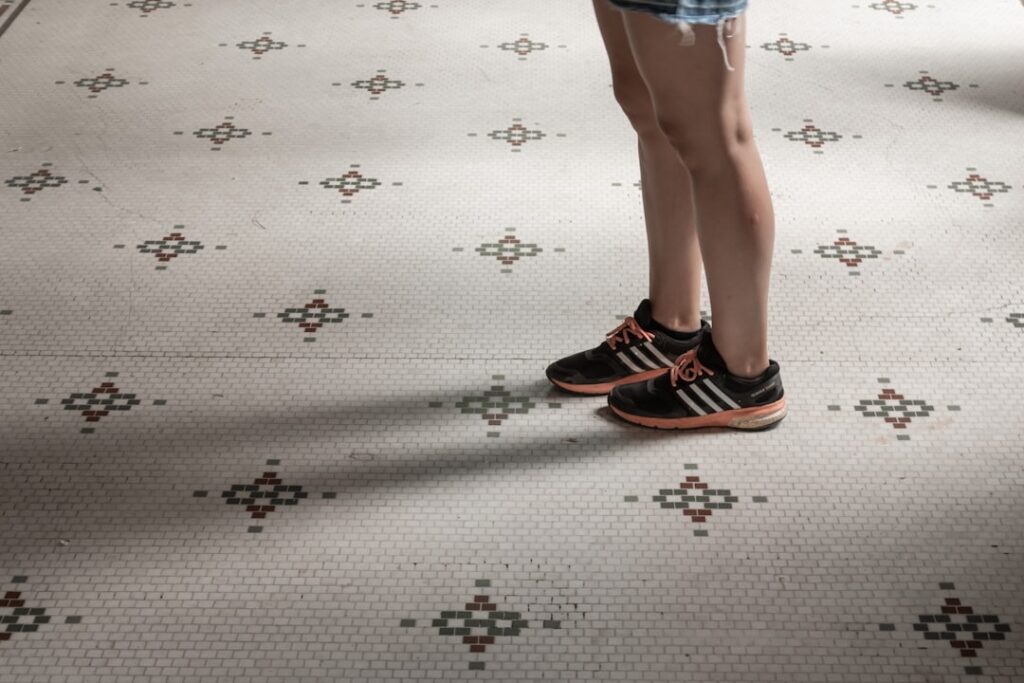
- Hex and penny mosaic prints: sheet vinyl printed to mimic the small-format tile of pre-war bathrooms, minus the grout maintenance.
- Boomerang, atomic, and linoleum-look marbling: smaller-batch patterns, mostly from specialty and European makers, for full-commitment vintage kitchens and Airstream renovations.
Mainstream mills (Armstrong Flooring, Tarkett, Mannington, IVC) each keep a handful of geometric and checkerboard patterns in their sheet lines, while specialty retailers aimed at the retro renovation market carry the deeper cuts. Genuine period patterns also survive in commercial VCT catalogs, but that is tile, not sheet, and needs waxing.
Modern Sheet Vinyl Is Not the Old Stuff
Two construction changes matter. First, most quality sheet vinyl today is fiberglass-backed (“IVC-style” cushion sheet) rather than the old felt-backed goods: it lies flatter, resists tearing, can be installed with modified loose-lay or perimeter adhesive, and will not curl at seams the way felt products did. Second, wear layers are now clear urethane, 6 to 20 mils, so the pattern does not scrub off in front of the sink the way printed patterns did in the 1970s. A 12 mil or better wear layer is worth seeking out for kitchens.
And the health note that belongs in every retro flooring article: if your house still has its original 1950s-70s sheet flooring or 9-inch tiles, assume they may contain asbestos. Do not sand or rip them out dry. Encapsulating them under new flooring is often the safest, cheapest path — and sheet vinyl over old resilient flooring is an approved application when the existing floor is well adhered and flat.
Why Sheet Beats Tile for This Look
You can build a checkerboard from LVT squares or real VCT, so why sheet? Waterproofing and speed. A sheet floor in a 12-foot-wide kitchen can be seamless — zero joints for water to find, which is why sheet remains the practical choice in bathrooms, laundry rooms, and rentals. Installation is hours, not days. And printed patterns arrive perfectly aligned; a DIY checkerboard laid from individual tiles telegraphs every layout error diagonally across the room. The trade-offs run the other way too: a gouge in sheet means a patch or replacement, while a damaged tile swaps individually, and sheet’s resale cachet is lower than tile even when the pattern is identical.
What It Costs
- Budget printed sheet: $0.80 to $1.50 per sq ft — thin wear layers, fine for low-traffic rooms and rentals.
- Mid-range fiberglass-backed sheet: $1.50 to $3.50 per sq ft — the sweet spot for kitchens.
- Premium and specialty retro patterns: $3.50 to $6 per sq ft, plus shipping; small-batch patterns often sell by the linear foot from 6 or 12 foot rolls.
- Professional installation: $1.50 to $4 per sq ft depending on seams, pattern matching, and floor prep. A seamless single-sheet room is the cheap end; a patterned floor with seams that must align costs more because layout consumes material.
Order 10 to 20 percent extra for pattern matching — geometric repeats are unforgiving, and a checkerboard that runs out of square with the cabinets is the most common DIY regret in this category.
Installation Notes
Sheet vinyl telegraphs everything beneath it. The substrate needs to be smooth — not just flat — because a nail head or a chip in old flooring will read through within weeks. Skim-coat plywood seams and old floor texture with floor patch. Let the roll relax at room temperature (65°F minimum) for 24 hours, dry-fit with the pattern squared to the longest sight line (usually the cabinet run, not the wall), and choose the adhesive approach the manufacturer specifies: full-spread for heavy traffic, perimeter-fastened or modified loose lay for many fiberglass products. Seams get seam sealer, full stop. In bathrooms, a neat silicone bead where the sheet meets the tub keeps the one vulnerable edge dry.
Living With It
Maintenance is the easy part: sweep, damp mop with neutral cleaner, no wax needed on urethane wear layers. Use felt pads under chrome dinette chairs — the authentic ones dent vinyl exactly like they did in 1962. Sunlight is the pattern’s enemy; bold blacks and reds can soften after years in a south-facing room, so pull the curtains or accept gentle fading as patina. Expect 10 to 20 years of service from mid-range product, longer in low-traffic rooms.
Pulling the Room Together
A retro floor asks the rest of the room to play along at least a little, and the good news is a little goes far. Checkerboard reads best with simple, solid-color surroundings: white or cream cabinets, a colored appliance or dinette set as the single accent, open shelving over busy upper cabinets. Faux terrazzo is more flexible — it behaves like a neutral and pairs with wood tones, brass, and modern slab-front cabinetry without any theming. Scale matters more than color: in kitchens under 120 sq ft, choose 9 or 12 inch checker squares and lay them diagonally to widen the room; 18 inch squares need at least a mid-size kitchen to breathe. And resist matching everything to one decade — a checkerboard floor under otherwise current finishes reads as a confident design choice, while a full 1955 set-piece reads as a diner. The floor should be the wink, not the whole costume.
The Bottom Line
Retro vinyl sheet flooring is one of the few design-forward flooring choices that is also the budget choice. For under $500 in materials, a 150 sq ft kitchen gets a seamless, waterproof checkerboard floor that looks intentional rather than cheap — something no other $2-per-foot material can claim. Buy fiberglass-backed product with a 12 mil or better wear layer, order extra for pattern matching, square the layout to the cabinets, and the hardest part of the whole project will be choosing between black-and-white and sage-and-cream.
Prefer to explore on your own?
See how new flooring looks in your actual room in seconds — free, no signup.
Try the free Floor Studio →