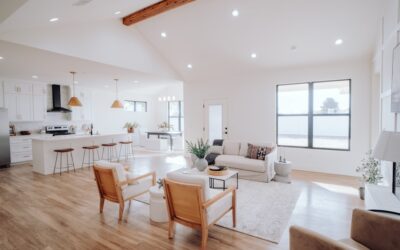
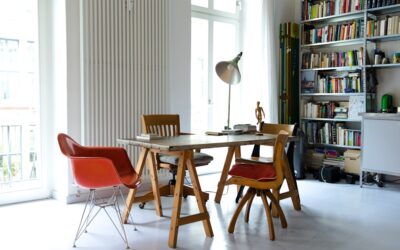
High-altitude homes have a flooring problem that low-elevation contractors rarely see. Rocky Mountain flooring installs face winter humidity that drops to 12 percent in heated homes, summer humidity that can hit 60 percent during monsoon season, and temperature differentials of 50°F between sunlit south rooms and shaded north corners. The combined cycling pushes solid hardwood past its dimensional limits and turns mid-tier laminate into a gap-and-buckle problem within two seasons. The right pick depends on understanding altitude, dry air, and the regional dealers who actually stock products specced for it.
- What Makes High-Altitude Installs Different
- Engineered Hardwood Is the Right Default
- LVP Picks for Cabins and Rentals
- The Humidity Problem Most Buyers Miss
- UV Stability Is Non-Negotiable
- Tile and Stone Picks
- What to Avoid
- Install Considerations That Save Callbacks
- Regional Dealers Worth Knowing
- Should You Buy Solid or Engineered?
What Makes High-Altitude Installs Different
Three factors drive Rocky Mountain flooring decisions. Indoor relative humidity drops below 20 percent for most of winter in unhumidified homes — well below the 35 to 55 percent range manufacturers spec for solid hardwood. Pellet stoves and wood-burning fireplaces compound the problem by pulling more moisture from the air. UV exposure runs about 20 percent higher per altitude foot than at sea level, fading anything not stabilized for it. And large temperature swings between conditioned and unconditioned spaces (mudrooms off ski-cabin great rooms, for example) create movement that floating floors absorb better than glued or nailed assemblies.
Engineered Hardwood Is the Right Default
Engineered hardwood handles altitude conditions far better than solid plank. The cross-laminated core resists the dimensional movement that opens 1/8-inch gaps in solid oak by February. Wear layers of 4 to 6mm allow refinishing once or twice, matching the lifespan most homeowners want without the maintenance headaches of solid.
Specs that work in Rocky Mountain climates:
- 7-layer Baltic birch plywood core (more stable than 5-layer)
- 4mm or thicker wear layer for refinish potential
- White oak, hickory, or wire-brushed Eastern maple species
- UV-stabilized finish, matte or low-sheen (reduces dust visibility in dry air)
- 5 to 7-inch plank width (wider planks gap more visibly)
Brands that hold up locally include Hallmark Courtier, Provenza Affinity, DuChateau, and Bruce Premium Engineered. Expect $7 to $14 per square foot installed.
LVP Picks for Cabins and Rentals
Short-term rentals and ski cabins push toward LVP because the use is heavier and the maintenance is lower. Rigid-core SPC handles dry winter air and bright summer UV without dimensional issues, and the 20-mil wear layer takes ski-boot grit and dog claws without showing wear. COREtec Pro Plus Enhanced, Karndean Korlok Reserve, and Mannington Adura Rigid all carry suitable specs.
For Vail, Aspen, and Park City rental cabins specifically, the design preference leans toward 7 to 9-inch wide planks in light to medium oak tones with strong grain definition — Galaxy Oak, Margate Oak, and Limed Oak patterns photograph well on rental listings and live well under turnover traffic.
The Humidity Problem Most Buyers Miss
NWFA guidelines call for 35 to 55 percent indoor humidity for solid hardwood. Most unhumidified Rocky Mountain homes run 12 to 25 percent in winter, well outside spec. Two solutions:
- Whole-house humidifier on the furnace — Aprilaire Model 600 or Honeywell HE360 add about 12 gallons per day, $400 to $900 installed.
- Pick a floor that does not require humidification — engineered hardwood, rigid-core LVP, porcelain tile.
Solid hardwood without humidification will gap, cup, or both. There is no install technique that compensates.
UV Stability Is Non-Negotiable
High-altitude UV exposure fades non-stabilized flooring within 18 to 30 months. Test the manufacturer’s spec sheet for UV stability — look for FloorScore certification plus a stated UV-resistance claim. Most premium LVP carries UV protection in the wear layer; budget LVP often does not. Engineered hardwood finishes split — waterborne polyurethanes from Bona and Loba hold color well, while older oil-modified urethane finishes amber visibly under intense UV.
Tile and Stone Picks
Porcelain tile is the most durable Rocky Mountain flooring option for kitchens, mudrooms, and entryways. Through-body porcelain handles freeze-thaw cycling on covered porches, and the material does not fade, swell, or absorb moisture. DCOF ratings above 0.42 are mandatory for safety, and through-body coloring (not just glaze) ensures chips do not show against light-color slab patterns.
Natural stone — slate, travertine, limestone — works in interior locations but should be sealed twice yearly in dry climates to prevent micro-cracking. Avoid stone on covered patios where night temperatures drop below freezing.
What to Avoid
Several flooring categories underperform in Rocky Mountain conditions. Solid hardwood without humidification will gap and cup. Mid-tier laminate with HDF cores swells at seams under monsoon-season humidity spikes. Glue-down LVT in cabins with intermittent heating fails at adhesive bonds when temperatures drop below 50°F. Bamboo flooring (strand or solid) is highly sensitive to humidity swings and rarely holds up two full years.
Install Considerations That Save Callbacks
Three details matter more here than in flatland installs. First, acclimation periods stretch — solid and engineered hardwood need 7 to 14 days in the install space at target humidity, not the 48 hours that adequate at sea level. Second, expansion gaps need to be at least 3/8 inch on every wall and 3/4 inch on long runs. Third, transitions between conditioned and unconditioned spaces (entries from outside) should always use T-molding, never flush thresholds.
Regional Dealers Worth Knowing
Front Range and mountain-corridor dealers tend to stock product specced for local conditions. Denver, Boulder, Colorado Springs, Park City, and Jackson Hole all have independent flooring shops with deep experience in cabin and mountain-home installs. Three quotes from local specialists outperform any single big-box estimate because the local dealers know which products fail at altitude and steer customers away from them.
Should You Buy Solid or Engineered?
For year-round occupied homes with whole-house humidification, solid hardwood is feasible. For seasonal cabins, second homes, or any property without active humidity control, engineered hardwood or rigid-core LVP is the safer pick. The right Rocky Mountain flooring choice prioritizes dimensional stability and UV resistance over species exotic factor, and that calculus consistently lands buyers at engineered white oak or premium SPC LVP.
Prefer to explore on your own?
See how new flooring looks in your actual room in seconds — free, no signup.
Try the free Floor Studio →