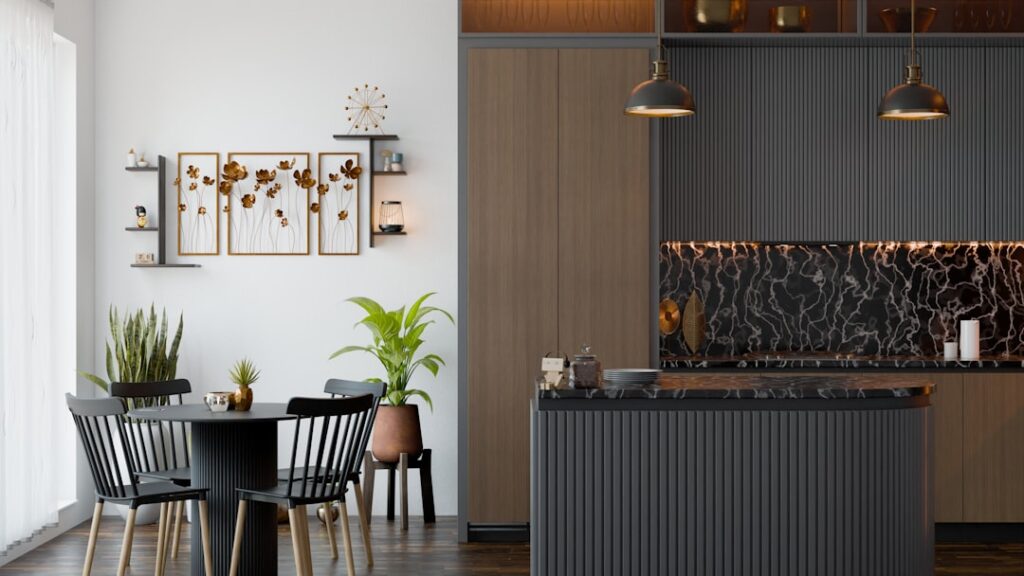
Small kitchens don’t lack storage so much as flexible workspace — and a built-in island isn’t an option when you rent or when the floor plan is tight. A rolling kitchen island cart delivers the counter space, storage, and prep surface of a fixed island without the permanence or the price tag. Roll it next to the stove while cooking, park it against a wall when you need the floor, or wheel it out as a serving station when guests arrive. It’s the single most versatile piece of furniture you can add to a working kitchen.
- Why a Rolling Cart Beats a Fixed Island for Many Homes
- Countertop Materials Compared
- Storage Features to Look For
- Wheels and Locking Casters
- Sizing the Cart to Your Kitchen
- Popular Types and Price Ranges
- Assembly and Care
- Creative Uses Beyond Prep
- Matching the Cart to Your Kitchen Style
- Final Thoughts
Why a Rolling Cart Beats a Fixed Island for Many Homes
A permanent island requires floor space you can’t reclaim and often costs thousands to build. A rolling cart runs $100 to $600, needs no installation, and moves wherever the work is. For apartments, galley kitchens, and open-plan spaces that change function through the day, the mobility is the whole point. When you move, the cart comes with you — try that with a built-in.
Countertop Materials Compared
The work surface is where you’ll notice quality most, and materials vary widely in durability and use.
- Solid wood / butcher block — warm, attractive, and knife-friendly. You can cut directly on it, though it needs periodic oiling. The most popular choice.
- Stainless steel — hygienic, heat-resistant, and pro-kitchen in look. Ideal if you set down hot pans, but it scratches and shows fingerprints.
- Granite or marble — luxurious and heat-proof, great for rolling out dough. Heavier, which affects portability.
- Laminate or engineered wood — the budget option; fine for light use but not for cutting or hot pans.
For an all-purpose prep cart, butcher block hits the best balance of function and looks. If you sear and set down hot cookware constantly, stainless is worth the trade-off.
Storage Features to Look For
The best carts pack real storage into a small footprint. Prioritize the features that match how you cook.
- Drawers for utensils, towels, and small tools
- Open shelves for baskets, mixing bowls, and small appliances
- Cabinet with a door to hide clutter and store pantry items
- Towel bars and hooks on the ends for dish towels and utensils
- Spice racks and wine storage built into the sides
- A drop-leaf extension that folds out for extra surface, then tucks away
A drop-leaf model is a smart pick for very tight kitchens, adding a foot or more of counter only when you need it.
Wheels and Locking Casters
The wheels are what separate a good cart from a frustrating one. Look for four casters where at least two lock, so the cart stays put while you chop or knead. Rubber or polyurethane wheels roll smoothly and won’t scratch hardwood or tile — cheap hard-plastic casters can mar floors and stick. Larger-diameter wheels handle thresholds and transitions between rooms better than tiny ones. Always lock the casters before doing any real prep work; an unlocked cart shifts under pressure.
Sizing the Cart to Your Kitchen
Measure before you buy, accounting for the clearance you need to move around it. Standard carts range from compact 20-by-16-inch units to substantial 48-inch-wide islands. Keep these clearances in mind:
- Leave at least 36 inches of walkway around the cart when it’s in its main position
- Match the cart height to your counters — 36 inches is standard, while 34 to 42 inches covers most options
- Confirm the parked position, often against a wall or beside the fridge, has room for the cart’s full depth
A cart that blocks a walkway or a cabinet door quickly becomes an annoyance, so plan its home base before buying.
Popular Types and Price Ranges
Rolling carts come in a few tiers to match budget and use.
- Budget metal-and-wire carts: $80 to $150, great for light-duty storage and serving
- Mid-range butcher-block carts: $150 to $350, the everyday workhorse with drawers and shelves
- Premium wood or stainless islands: $350 to $700, larger, sturdier, and more furniture-grade
Names like Winsome, Crosley, and Home Styles dominate the mid-range, offering solid wood tops and real drawers at reasonable prices.
Assembly and Care
Most carts ship flat and require an hour or two of assembly with basic tools. Tighten every bolt fully — a wobbly cart usually just needs its hardware snugged after a few weeks of use. For butcher-block tops, apply food-safe mineral oil monthly at first, then every few months, to prevent drying and cracking. Wipe stainless with the grain to avoid streaking, and never leave standing water on a wood top overnight.
Creative Uses Beyond Prep
A rolling island earns its keep in more ways than food prep. Use it as a coffee and beverage station, a bar cart for entertaining, extra pantry storage in a small kitchen, or even a mobile workspace that rolls out of the kitchen entirely. The mobility that makes it useful for cooking makes it adaptable to whatever your home needs at the moment.
Matching the Cart to Your Kitchen Style
A rolling cart doesn’t have to look like an afterthought. Coordinating it with your existing kitchen makes it read as intentional. Match the wood tone of a butcher-block top to your cabinets or dining table, or pick a painted base that ties into your wall color or backsplash. In a farmhouse kitchen, a distressed white cart with a natural wood top fits right in; in a modern space, a stainless or black metal cart with clean lines looks deliberate. If the cart will live in an open sightline from the living room, treat it as a piece of furniture, not just a utility item — the finish and hardware you choose set the tone.
Final Thoughts
A rolling kitchen island cart is one of the highest-value additions you can make to a kitchen short on built-in workspace. Choose a countertop material that matches how you cook, prioritize the storage features you’ll actually use, and insist on smooth locking casters and the right dimensions for your floor plan. Get those right, and you’ll have a flexible prep, storage, and serving surface that adapts to your kitchen instead of forcing your kitchen to adapt to it.