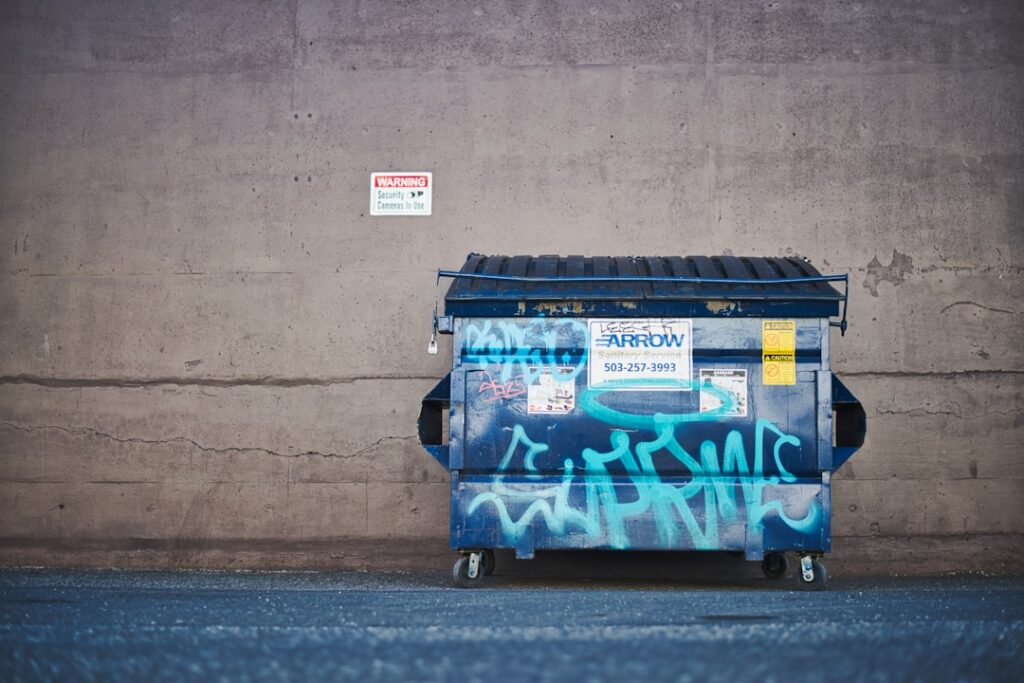
Tear-off from an average roof weighs more than a pickup truck — a 25-square asphalt roof sheds roughly 5,000 to 7,500 pounds of shingles, felt, and nails. Getting a roofing dumpster rental sized and scheduled correctly is the difference between a clean two-day job and a yard full of debris waiting on a second haul. Expect to pay $300 to $600 for a typical rental in most markets, with weight allowances mattering far more than container volume. This guide covers the sizes, the real cost drivers, shingle-weight math, and the fees that catch homeowners by surprise.
- Why Shingle Weight, Not Volume, Drives Everything
- Dumpster Sizes for Roofing Jobs
- What Roofing Dumpster Rental Costs
- Overage Fees and the Fine Print
- Placement: Protecting the Driveway and Feeding the Can
- What Can and Cannot Go in a Roofing Dumpster
- Timing the Rental Around the Job
- Shingle Recycling: Cheaper and Cleaner Where Available
- DIY Alternatives for Small Jobs
Why Shingle Weight, Not Volume, Drives Everything
Roofing debris is dense. A cubic yard of torn-off asphalt shingles weighs 400 to 600 pounds, so even a small container hits highway weight limits long before it looks full. That is why dumpster companies quote roofing jobs by squares of shingles rather than just container size. The working numbers: three-tab shingles weigh about 230 to 250 pounds per square (100 sq ft) per layer, and architectural shingles run 300 to 430 pounds per square. Add roughly 10 to 15 percent for felt, ridge caps, flashing, and nails. A 30-square roof with one layer of architectural shingles is therefore around 4.5 to 6.5 tons of debris — and a second layer doubles it. Always tell the rental company the roof size in squares and the number of layers; they will match the can and the included tonnage.
Dumpster Sizes for Roofing Jobs
Four standard roll-off sizes cover nearly every residential project:
- 10-yard (12 ft long): handles 25 to 35 squares of single-layer tear-off by weight. The go-to roofing size — low sides make it easy to toss debris in from the roof edge. Typical cost: $300 to $450.
- 15-yard: 35 to 45 squares, or smaller roofs with two layers. Around $350 to $500.
- 20-yard (22 ft): 45 to 60 squares, big two-layer tear-offs, or roofing plus other renovation debris. About $375 to $550.
- 30-yard: rarely needed for shingles alone because it hits weight limits half-full; used when a reroof coincides with gut-renovation debris. $450 to $650.
Counterintuitively, many companies steer roofers to smaller cans. A 30-yard filled to the brim with shingles can exceed 10 tons — beyond what a roll-off truck can legally haul — so haulers cap shingle loads or specify heavy-debris containers with reinforced floors.
What Roofing Dumpster Rental Costs
National averages for a 7-day rental with 2 to 3 tons included run $300 to $550, but regional spread is wide. Rural Midwest markets see 10-yard cans for $250; metro Northeast and West Coast markets routinely quote $450 to $700 for the same container because landfill tipping fees there run $80 to $150 per ton versus $30 to $50 in cheaper regions. Flat-rate pricing (container, haul, and a set tonnage bundled) is the norm and the safest structure for roofing. The alternative — a low base rate plus per-ton billing — looks cheap until 5 tons of shingles land on the scale. When comparing quotes, ask three questions: how many tons are included, what is the per-ton overage rate (typically $50 to $100), and is there a shingle-only discount? Some markets recycle asphalt shingles into road base, and dedicated shingle loads can tip cheaper than mixed waste.
Overage Fees and the Fine Print
Overage charges are where roofing rentals go sideways. If your can includes 2 tons and the load scales at 4.6 tons, a $75-per-ton overage adds $195 to the invoice — common on two-layer tear-offs that were quoted as one layer. Other fees to ask about before signing: trip fees ($75 to $150) if the driver arrives and cannot place or retrieve the can because cars block the driveway; extension fees ($5 to $15 per day) beyond the rental window; contamination fees if prohibited items end up in the load; and fees for overfilled cans — debris must stay below the rim or the driver legally cannot tarp and haul it. Never load a roofing can past level-full. If in doubt between two sizes, take the bigger can with the higher included tonnage; the price difference is usually $50 to $75, cheaper than one ton of overage.
Placement: Protecting the Driveway and Feeding the Can
Roll-offs arrive on trucks that weigh 25,000-plus pounds loaded, and a filled 10-yard shingle can concentrates several tons on small steel rails. Protect concrete or paver driveways with plywood — lay 4×8 sheets of 3/4-inch plywood where the rails and rear rollers land, about $50 of insurance against cracked flatwork. Position the container as close to the roof edge as the driver can manage, ideally directly below the eave on the tear-off side. Crews then toss or chute debris straight in; a rented debris chute or a simple plywood slide keeps shingles from raining past the can and shredding flower beds. Check clearance before delivery day: trucks need roughly 60 feet of straight approach and 20 to 25 feet of overhead clearance to tilt the bed, so power lines and mature trees over the driveway can force a street placement — which in many cities requires a right-of-way permit at $25 to $100 per week.
What Can and Cannot Go in a Roofing Dumpster
Shingles, underlayment, wood decking, drip edge, flashing, nails, and packaging are all fine and expected. A few materials need special handling. Do not add: asbestos-containing materials (some pre-1980s shingles and old transite — requires licensed abatement and a dedicated disposal stream), paint, sealant cannisters and propane torch cylinders, tires, batteries, or appliances. Ballast gravel from old built-up roofs and heavy tile loads (concrete or clay roof tile weighs 800 to 1,100 pounds per square) must be declared — haulers usually require a dedicated heavy-debris container filled only partway. Mixing a couple of yards of household junk into a shingle load is usually acceptable but tell the company first, since it can void a shingle-recycling rate.
Timing the Rental Around the Job
Schedule delivery for the morning of tear-off day or the afternoon before — not a week early, or you pay extension days while the can sits empty and collects the neighborhood’s mystery trash. A competent two-person crew strips 20 to 30 squares in a day, so most reroofs need the container for only 2 to 4 days; standard 7-day rentals cover this comfortably. Call for pickup the moment loading is done, because a full can in the driveway helps no one and rain adds real weight — saturated shingles and felt can pick up a few hundred extra pounds, occasionally enough to tip an overage. If the roofer is supplying the dumpster within their bid, confirm in writing that disposal, overage, and driveway protection are their responsibility; on a $12,000 reroof, a vague debris clause is the classic source of a surprise $400 back-charge.
Shingle Recycling: Cheaper and Cleaner Where Available
Asphalt shingles are one of the most recyclable demolition materials in America — ground shingles become hot-mix asphalt and road base — and in markets with a shingle recycler, disposal economics improve noticeably. Recyclers typically accept clean shingle loads at $25 to $45 per ton versus $50 to $150 per ton at landfills, and some dumpster companies pass part of that saving through as a shingle-only rate. The catch is load purity: recyclers reject loads contaminated with more than a few percent of wood, plastic wrap, or general trash, so the crew has to keep tear-off disciplined — shingles, felt, and nails in the can (nails are magnetically removed at the plant), lumber and packaging in a separate pile. Ask your hauler two questions when booking: do you offer a recycling rate for source-separated shingles, and what contamination tolerance applies? On a 6-ton tear-off, the difference can be $150 to $300, plus several tons kept out of the landfill.
DIY Alternatives for Small Jobs
For repairs under about 5 squares, a full roll-off is overkill. Options that work: dump-trailer rental at $75 to $125 per day if you have a tow vehicle and a nearby transfer station charging by the ton; bagster-style waste bags ($30 for the bag, $130 to $180 for collection) which accept up to 3,300 pounds — roughly 10 to 12 squares of shingles — where collection service exists; or simply tarping debris into a pickup for two or three transfer-station runs at $40 to $80 per load. Above 10 squares of tear-off, the math almost always swings back to a proper roofing dumpster rental, and the convenience of tossing debris straight off the eave into steel is worth every dollar of it.