A patio or deck can feel like an unfinished room until you add the right rug, and a round outdoor rug brings softness, color, and a natural focal point to outdoor seating. Its circular shape works beautifully under a round table, a bistro set, or a cozy chair grouping, drawing the eye inward and defining the space. But outdoor rugs face sun, rain, and foot traffic, so material and sizing decisions matter. This guide covers what to buy, how big to go, and how to keep it looking good.
Why Choose a Round Shape
Round rugs soften the hard lines of a deck, patio, or balcony and create a sense of intimacy. They are a natural match for round dining tables and circular conversation areas, echoing the furniture shape and pulling the grouping together. In a small space, a round rug can make a tight corner feel more deliberate and styled.
The shape also helps in spots where a rectangle would feel boxy, such as a balcony nook or a curved porch. By breaking up straight lines, a round rug adds visual interest and a more relaxed, organic feel.
Outdoor Rug Materials
The material determines how well the rug survives the elements. Outdoor rugs are built to resist moisture, fading, and mildew far better than indoor rugs.
- Polypropylene (olefin) — the most common; fade-resistant, quick-drying, easy to hose off, and budget-friendly.
- Polyester — soft underfoot with good color retention; dries reasonably fast.
- PET (recycled plastic) — durable and eco-friendly, with a soft hand.
- Natural-look synthetics — woven to mimic jute or sisal without absorbing water like the real fibers.
Avoid true natural fibers like jute and sisal outdoors unless the space is fully covered and dry, since they absorb moisture and break down. For an exposed patio, a UV-stabilized synthetic is the reliable choice.
How to Size a Round Rug
Getting the diameter right is the most common stumbling block. The rug should anchor the furniture, not float beneath it like an afterthought.
- For a round dining table, choose a rug at least 4 feet wider than the table so chairs stay on the rug when pulled out.
- For a seating group, aim for the front legs of all chairs and the sofa to rest on the rug.
- Common sizes run 4, 5, 6, 7, and 8 feet in diameter; measure your space before buying.
- Leave a border of bare floor around the rug, typically 12 to 24 inches, so it reads as intentional.
Tape out the circle with painter’s tape or a string compass before ordering so you can see the footprint in the actual space.
Placement Ideas
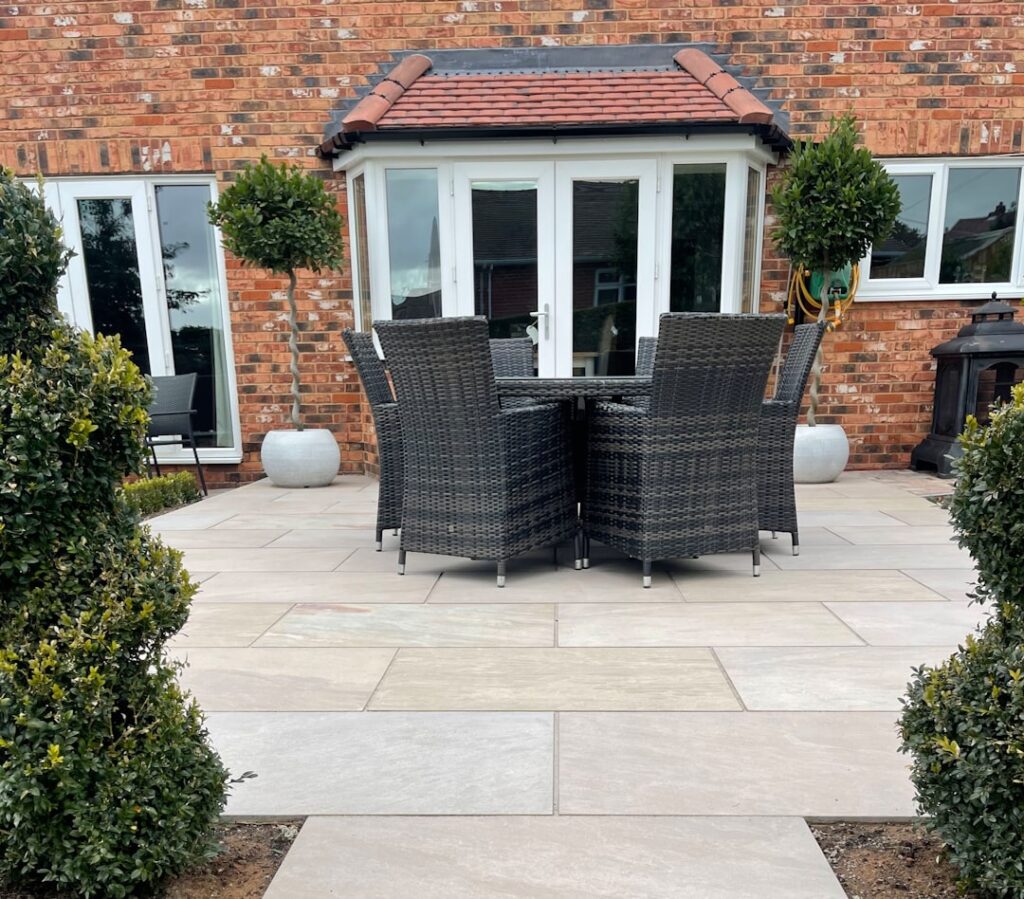
A round outdoor rug works in several settings. Under a bistro table for two, a 4- or 5-foot rug defines a cozy coffee nook. Beneath a round dining table, a 7- or 8-foot rug grounds the whole setup. In a conversation corner with a couple of lounge chairs, a round rug centers the grouping and adds warmth underfoot.
On a balcony or small porch, a single round rug can be the defining design element, instantly making the space feel like an outdoor room rather than leftover square footage.
What You Will Pay
Round outdoor rugs are affordable relative to indoor wool rugs. Smaller 4- to 5-foot synthetic rugs generally run roughly $30 to $80. Mid-size 6- to 7-foot rugs land around $70 to $150. Large 8-foot and premium woven or designer rugs can reach $150 to $300 or more. Recycled-material and higher-end weaves cost a bit more but often last longer in harsh sun.
Care and Maintenance
Outdoor rugs are easy to clean, which is part of their appeal. Shake or sweep off loose debris regularly, and hose the rug down when it gets dirty. For spills and stains, a mix of mild dish soap and water with a soft brush usually does the job; rinse thoroughly and let the rug dry flat or hang it to drain.
- Lift the rug occasionally to let the surface beneath dry and prevent mildew.
- Use a non-slip rug pad rated for outdoor use to keep it from sliding and to improve airflow.
- Roll and store the rug over winter in harsh climates to extend its life.
- Choose UV-stabilized rugs in very sunny spots to slow fading.
Choosing Colors and Patterns
Outdoor settings handle color differently than interiors, since bright sun washes out pale tones and greenery competes for attention. Bold patterns and saturated colors hold their own outside, which is why so many outdoor rugs feature geometric prints, medallions, and rich blues, greens, and terracottas. A patterned rug also hides dirt and the occasional spill better than a solid one.
Match the rug to your surroundings. Cool blues and crisp whites suit a coastal or modern patio, warm terracotta and gold tones complement a Mediterranean or rustic look, and natural-look woven neutrals blend into almost any setting. Coordinate with your cushions and umbrella so the round rug ties the whole seating area together.
Using a Rug Pad and Securing It
Wind and foot traffic can shift an outdoor rug, so a non-slip pad rated for outdoor use is worth adding. Beyond keeping the rug in place, an outdoor pad lifts the rug slightly off the surface, improving airflow underneath so moisture dries faster and mildew has less chance to form. This is especially helpful on a covered porch where water lingers.
In windy areas, consider anchoring the corners with furniture legs resting on the rug or with outdoor-safe rug weights. Placing the seating group on top of the rug naturally holds it down while reinforcing the defined-room effect that makes a round rug so appealing in the first place.
Final Thoughts
A well-chosen round outdoor rug transforms a bare patio or balcony into a finished, inviting space. Pick a weather-resistant synthetic, size it generously so the furniture sits on it, and rinse it off when it gets dirty, and you will add comfort and style that holds up season after season.