Rubber floors are some of the best value in the flooring world, but the price spread is wide enough to confuse anyone shopping for the first time. Rubber flooring cost typically runs from about $1 to $12 per square foot for the material, with most homeowners landing somewhere in the middle once they account for thickness, format, and quality. A budget garage mat is a different animal from a premium poured gym surface, and the format you choose, rolls, tiles, or interlocking pieces, drives both the material price and how much you pay for labor. This guide breaks down realistic prices so you can build an accurate budget before you shop.
Average Rubber Flooring Cost at a Glance
As a rough planning figure, expect $2 to $5 per square foot for material on most residential and light-commercial projects, with installation adding roughly $1 to $4 per square foot if you hire it out. Treat every number here as an approximate range, because pricing shifts by region, supplier, and the specific product. For an exact figure, get two or three local quotes for your actual square footage.
The biggest cost lever is thickness. Thin 3/16-inch or 1/4-inch mats are cheap and fine for a home gym with light free weights. Thicker 3/8-inch to 3/4-inch rubber, built to absorb dropped barbells or heavy machinery, costs noticeably more per square foot.
Rubber Rolls: Lowest Cost Per Square Foot
Rolled rubber is the budget champion for large, open areas. Because it covers ground fast with few seams, it usually delivers the lowest rubber flooring cost per square foot, often $1.50 to $4 for material on common 1/4-inch to 3/8-inch thicknesses. Rolls typically come 4 feet wide in lengths up to 50 feet or more.
The catch is handling. A full roll of 8mm rubber can weigh well over 100 pounds, so installing it usually takes two people, and trimming long runs cleanly takes patience. Rolls shine in commercial gyms, basements, and large workout spaces where you want minimal seams and minimal cost.
Rubber Tiles: Mid-Range and Durable
Interlocking and glue-down rubber tiles cost more per square foot than rolls but are far easier to transport and replace. Material commonly runs $3 to $8 per square foot, with high-density tiles for heavy gym use pushing higher. Standard tile sizes are 2 by 2 feet or 3 by 3 feet, in thicknesses from 3/8 inch up to 1 inch or more for serious lifting platforms.
Tiles are the practical choice when you might rearrange a room or want to swap out a damaged section without redoing the whole floor. They also handle uneven removal better, since you can lift one tile rather than peeling an entire glued roll.
Interlocking Mats: Best for DIY and Renters
Puzzle-style interlocking mats are the easiest format to install yourself. Lightweight EVA-and-rubber blends start around $1 to $3 per square foot, while dense, true-rubber interlocking tiles run $3 to $7. They snap together with no adhesive, which means zero installation labor cost and easy removal, a real plus for renters and temporary setups.
The downside is that the seams are more visible and can shift under heavy dynamic loads. For a kids’ playroom, a light home gym, or a hobby space, interlocking mats hit the sweet spot of low cost and simple DIY.
Cost by Application
Where you are putting the floor changes which product makes sense, and therefore the cost.
- Home gym: 3/8-inch rolls or tiles at roughly $2 to $5 per square foot handle most free-weight workouts. Add thicker tiles under a barbell platform.
- Garage: Interlocking tiles at $2 to $6 per square foot resist oil, chemicals, and dropped tools while hiding floor cracks.
- Playroom: Softer interlocking mats at $1 to $4 per square foot cushion falls and clean up easily.
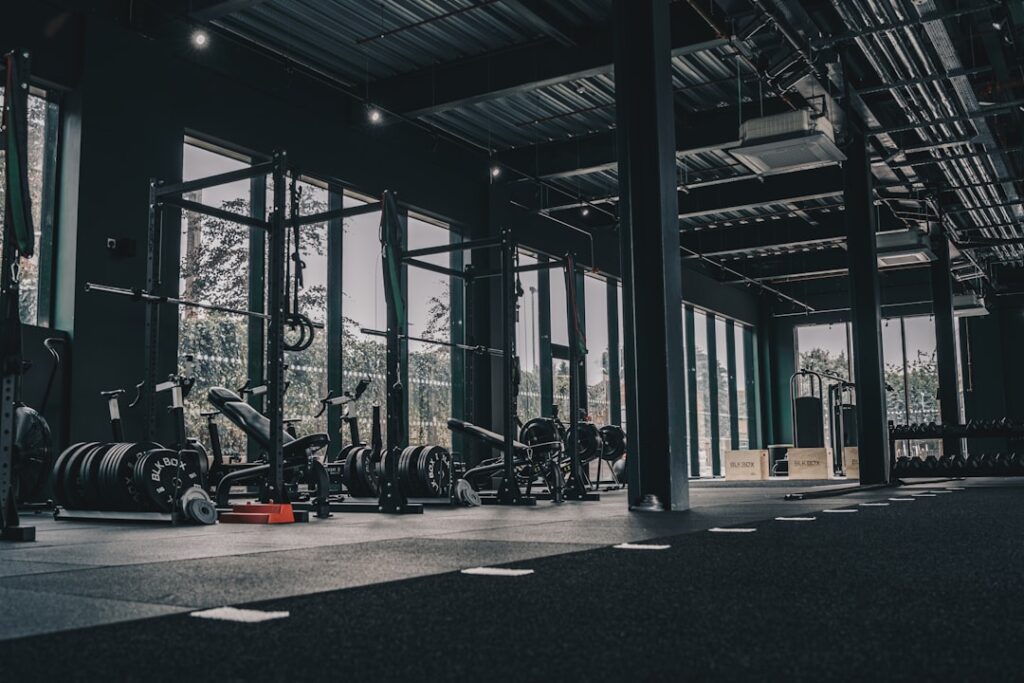
- Commercial fitness: Premium rolls and high-density tiles run $4 to $12 per square foot for heavy daily abuse and dropped weights.
Installation: Hiring Out vs. DIY
Labor is where you can save real money. Interlocking mats and tiles are genuinely DIY-friendly; a fit homeowner can lay a 200-square-foot room in an afternoon with a utility knife and a straightedge, paying nothing for labor. Glue-down rolls and tiles are harder. They require a clean, level, dry subfloor, the right adhesive, and careful seaming.
If you hire a pro, budget about $1 to $4 per square foot for installation, more if the existing floor needs prep, leveling, or old-adhesive removal. Always confirm whether a quote includes adhesive, transition strips, and subfloor prep, because those add-ons quietly inflate a “cheap” bid.
Hidden Costs to Budget For
- Adhesive: A bucket of polyurethane rubber adhesive can run $80 to $150 and covers a limited area.
- Subfloor prep: Self-leveling compound or moisture barriers add cost on concrete.
- Transition strips and edge trim: A few dollars per linear foot, but they add up around the perimeter.
- Delivery: Heavy rolls often carry freight charges.
- Waste: Order 5 to 10 percent extra for cuts and mistakes.
How to Get an Accurate Quote
One more factor that shifts the math is recycled versus virgin rubber. Most economical gym rolls and tiles are made from recycled tire rubber, which is durable, sustainable, and cheaper, but it can carry a stronger initial odor that fades over a few weeks with ventilation. Virgin EPDM rubber, made from new material, comes in brighter colors, smells far less, and costs more per square foot, which is why it shows up in playrooms and finished spaces rather than back-of-house gyms. Color also matters: flecked and colored rubber generally costs a bit more than solid black. Deciding between these options before you shop keeps you from overpaying or being surprised by smell.
To pin down your real rubber flooring cost, measure your space, decide on thickness based on use, and then request itemized quotes from at least two local suppliers and one online retailer. Make sure each quote lists material, adhesive, prep, and labor separately so you can compare honestly. Prices here are approximate ranges meant for planning; your final number depends on your region, the exact product, and current market conditions, so always confirm with a local quote before you buy.
Prefer to explore on your own?
See how new flooring looks in your actual room in seconds — free, no signup.
Try the free Floor Studio →