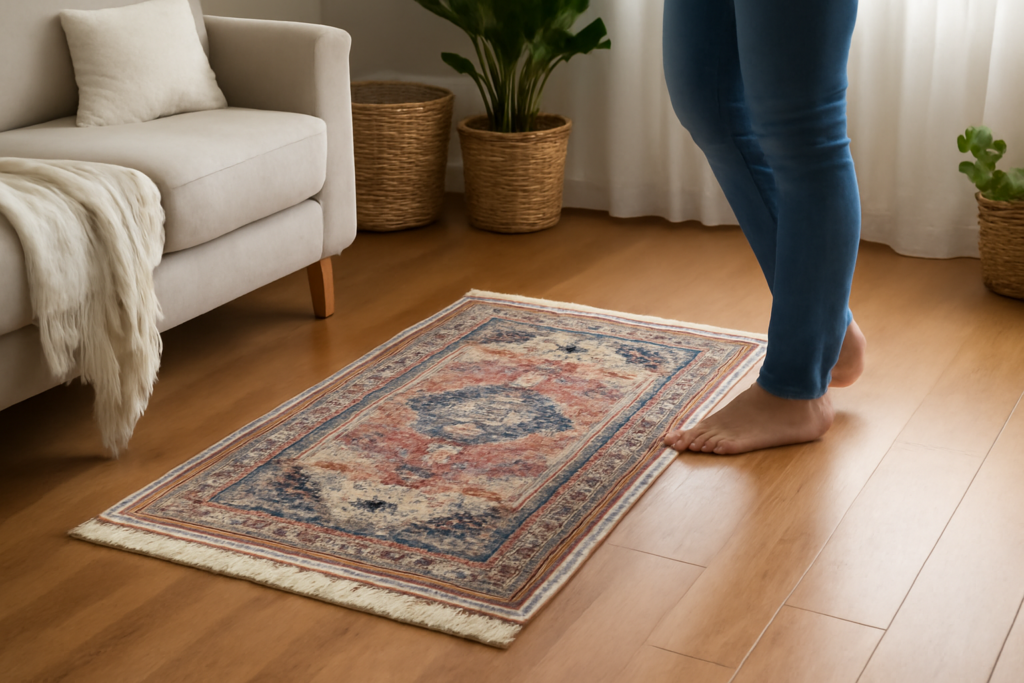
Small rugs solve big problems in tight spots, and the rug 2×4 size is one of the most useful formats you can keep on hand. Measuring roughly 2 feet by 4 feet, it lands between a doormat and a full runner, which makes it perfect for kitchen sinks, entryways, bathroom vanities, and the foot of a bed. This guide explains where a 2×4 rug works best, what materials hold up, and how to choose one that actually fits your space.
What a 2×4 Rug Is
A 2×4 rug is a small accent or utility rug measuring about 24 inches wide and 48 inches long. Some are labeled as 2×3 or 2.5×4 depending on the maker, so always check the exact dimensions before buying. It is large enough to anchor a small zone but compact enough to slide into spots where a bigger rug would crowd the room.
Think of it as the workhorse size. It covers the area where you stand most, without committing to a rug that dominates the floor.
Best Places to Use One
The 2×4 footprint shines in narrow or high-traffic spots:
- Kitchen sink: Cushions your feet during dishwashing and catches splashes.
- Entryway: Traps grit and moisture just inside the door.
- Bathroom: Sits in front of the vanity or tub as a bath mat alternative.
- Bedside: Gives you a soft landing spot at the foot or side of the bed.
- Laundry room: Adds comfort in front of the washer and dryer.
In a galley kitchen, two 2×4 rugs often work better than one long runner because you can place one at the sink and one at the stove.
Runner vs Small Rug
A 2×4 is shorter than a true runner, which usually starts at 2×6 and goes up to 2×10 or longer. If you want to cover the full length of a hallway or galley kitchen, choose a runner. If you only need to define one work zone, the 2×4 is the smarter, less cluttered choice. Measure your space first: leave a few inches of bare floor on each side so the rug looks intentional rather than wall-to-wall.
Material Choices
Pick the fiber based on where the rug will live:
- Cotton: Soft, affordable, and machine washable. Great for kitchens and bathrooms.
- Polypropylene (olefin): Stain- and moisture-resistant, easy to clean, and budget-friendly. Ideal for entryways.
- Wool: Plush and durable but pricier and harder to wash. Best for bedrooms.
- Jute and natural fibers: Add texture but shed and do not love moisture.
For spots that see spills, a washable cotton or polypropylene rug saves you constant stress. Many sell in the $15 to $50 range, so keeping a spare for rotation is easy on the budget.
Washable and Non-Slip Options
Machine-washable rugs have become widely available in the 2×4 size, often with a low pile that dries quickly. Toss them in on a cold, gentle cycle and air dry to protect the backing. Because small rugs slide easily on hard floors, pair yours with a thin non-slip rug pad cut to size. A gripper pad prevents trips and keeps the rug from bunching every time you step on it.
Style and Color Tips
A small rug is a low-risk place to add pattern or color. Busy prints hide crumbs and footprints, which is why they work so well in kitchens. If your room already has a lot going on, a solid or subtly textured rug calms the space. Coordinate with one color already in the room, such as a cabinet hue or a towel set, so the rug looks planned rather than random.
Care and Maintenance
Shake or vacuum the rug regularly to keep grit from grinding into the fibers. Spot-clean spills promptly with mild soap and water. For washable models, follow the care tag and avoid high heat, which can shrink cotton or warp rubber backings. Rotate the rug occasionally so foot traffic wears it evenly. With basic care, an inexpensive 2×4 rug easily lasts several years.
Pile Height and Comfort
For a rug you stand on while doing dishes or cooking, cushioning makes a real difference. Low-profile flatweave rugs lie flat, resist tripping, and slide easily under cabinet toe kicks, but they offer little padding. A thicker pile or a foam-backed anti-fatigue mat in the 2×4 range gives your feet and back relief during long stretches at the sink or stove. In entryways, low pile is smarter because it sheds dirt and dries faster, while bedrooms can handle a plusher, softer rug since the area stays cleaner.
Common Sizing Mistakes
People often buy a 2×4 expecting it to fill a space that really needs a runner, then end up with a rug that looks marooned in the middle of the floor. Before ordering, lay down painter’s tape in a 2-by-4-foot rectangle where the rug will go and live with it for a day. If it covers your standing zone and leaves a tidy border of floor on each side, it is the right size. If large gaps of bare floor surround it awkwardly, step up to a longer runner instead.
How to Choose the Right One
Start with function. Decide whether you need cushioning, spill protection, or just a style accent, then match the material to that job. Measure the space and leave breathing room on the sides. Finally, factor in washability if the rug will sit anywhere near food, water, or muddy shoes. A 2×4 rug is a small purchase, but choosing the right one makes a daily difference in comfort and cleanliness.
Where to Shop and What to Expect
The 2×4 size is widely stocked because it sells so well for kitchens and entryways, so you will find plenty of choices online and in home stores. Read the listed dimensions carefully, since some sellers round 2.3×4 or 27×45 inches up to a friendly label. Check whether the rug is reversible, washable, and whether a non-slip backing is included or sold separately. Reviews are useful for gauging real-world durability and how a color looks in natural light, since screen images often skew brighter or cooler than the actual rug.
Final Thoughts
The 2×4 rug is the quiet overachiever of home textiles. It softens hard floors exactly where you stand, defines small zones without crowding a room, and costs little enough to swap out with the seasons. Match the fiber to the location, add a gripper pad, and you have an easy upgrade that pays off every single day.