Upholstered furniture absorbs everything your household throws at it: spilled coffee, pet dander, body oils, and years of slow-building grime. A rug doctor upholstery cleaner gives you a way to deep-clean sofas, armchairs, and other fabric surfaces without hauling them to a professional service or replacing them outright. Rug Doctor is a well-established cleaning brand that makes both rental machines and consumer products, and many of its carpet machines pair with a dedicated upholstery attachment.
If you have never used one, the process can feel intimidating. This guide walks you through how the system works, when renting beats buying, and exactly how to get furniture clean without leaving it soaked or streaky.
What a Rug Doctor Upholstery Cleaner Actually Does
The tool relies on hot-water extraction, sometimes called steam cleaning, though it is not true steam. The machine sprays a heated mix of water and cleaning solution deep into the fabric, agitates the fibers, then immediately vacuums the dirty liquid back out. That extraction step is what separates a deep clean from a surface wipe-down, because it pulls dissolved soil and detergent residue out of the cushion rather than leaving it behind.
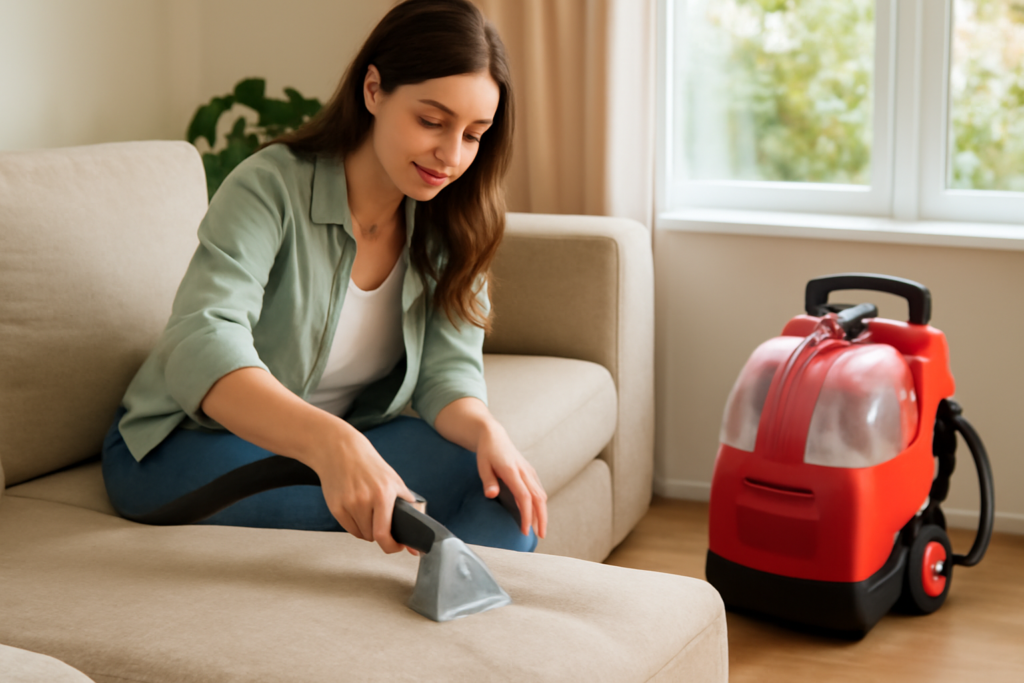
Most Rug Doctor upholstery cleaning happens through a hand tool that connects to a full-size machine with a flexible hose. The hand tool is compact, so you can reach into seat crevices, along arm rests, and across vertical backrests. Some Rug Doctor portable spot machines are designed primarily for upholstery and small messes, which makes them easier to maneuver than a large upright.
Rent or Buy: Which Makes Sense
Rug Doctor built its reputation on rentals, and you will find rental machines at many grocery stores, hardware stores, and big-box retailers. Renting is the smart move if you only need to clean furniture once or twice a year. You pay a daily fee, buy the cleaning solution, and return the machine when you are finished.
- Rent if you clean a few times a year, lack storage space, or want commercial-grade suction without owning a bulky machine.
- Buy if you have pets, kids, allergies, or large furniture that needs frequent attention, since rental fees add up over time.
Prices vary by region and retailer, so check current rental rates locally rather than relying on old figures. The upholstery attachment is sometimes included with a rental and sometimes offered separately, so confirm before you leave the store.
Fabrics You Can and Cannot Clean
Hot-water extraction works well on most synthetic upholstery, including polyester, nylon, olefin, and many microfiber blends. These fabrics tolerate water and dry without shrinking or watermarking. Always check the manufacturer’s care tag first, because it tells you what the fabric can handle.
- W means water-based cleaning is safe, which is what a Rug Doctor uses.
- S means solvent only, so you should not use a water-based machine.
- WS allows either method.
- X means vacuum only, no liquid cleaning at all.
Avoid using the machine on silk, velvet, linen, antique pieces, and anything labeled dry-clean only. When in doubt, test a hidden area first and wait for it to dry before committing to the whole piece.
Step-by-Step: Cleaning a Sofa
- Vacuum the entire piece thoroughly to remove loose crumbs, hair, and dust. Wet cleaning over loose debris just creates mud.
- Pretreat heavy stains with an upholstery-safe spot solution and let it dwell for a few minutes.
- Fill the machine’s clean-water tank with hot tap water and the recommended amount of Rug Doctor solution. Do not overdose the detergent, since excess soap leaves sticky residue.
- Attach the upholstery hand tool and confirm the hose connections are tight.
- Press the trigger to release solution while pulling the tool slowly across the fabric, then release the trigger and pull again to extract.
- Make a final dry pass with no spray, vacuuming up as much moisture as possible.
- Open windows, run a fan, and let the furniture dry completely before sitting on it.
Getting Furniture Dry the Right Way
The most common complaint after cleaning is over-wetting. Upholstery foam holds water, and a soaked cushion can take a long time to dry and may develop odor if it stays damp. Keep your wet passes light, follow each with two or three dry extraction passes, and never saturate the fabric.
After cleaning, increase airflow with fans, a dehumidifier, or open windows. Most synthetic upholstery dries within several hours under good ventilation, though thick cushions in a humid room can take longer. Do not replace removable cushion covers or put pillows back until everything is fully dry.
Tips for Better Results
Work in small sections so you can see your progress and avoid missing spots. Overlap each stroke slightly the way you would when mowing a lawn. Keep the recovery tank from overfilling, and empty it whenever the suction starts to weaken.
For tough pet odors, look for an enzyme-based upholstery solution that targets organic stains, and treat the source before you extract. If a stain persists after one pass, resist the urge to dump on more detergent. Instead, repeat the gentle spray-and-extract cycle, which lifts more soil without leaving residue that attracts new dirt.
When to Call a Professional Instead
A rented or owned machine handles routine maintenance and most everyday messes, but some situations call for an expert. Delicate or expensive fabrics, deep set-in stains, water damage, or large-scale odor problems are worth a professional’s judgment. Pros have stronger extraction, specialized solvents, and the experience to avoid damaging fragile materials.
For the average household, though, a rug doctor upholstery cleaner covers the vast majority of furniture-cleaning needs. Used carefully and with realistic expectations, it refreshes tired sofas and chairs, extends the life of your furniture, and saves you the cost of repeated professional visits. Read the machine’s instructions, respect the care tags, and keep your passes light, and you will see noticeably cleaner upholstery without the risk of over-wetting.
Maintenance Between Deep Cleans
A deep clean every few months goes much further when you stay on top of small messes in between. Keep a fabric-safe spot cleaner on hand and treat spills the moment they happen, blotting from the outside of the stain inward so you do not spread it. Vacuuming upholstery weekly removes the grit and dust that grind into fibers and dull the fabric over time.
Rotating and flipping reversible cushions helps them wear evenly, and keeping furniture out of direct sun slows fading. These simple habits mean that when you do bring out the machine, you are refreshing fabric that is already in good shape rather than fighting deeply embedded grime. Consistent light care almost always beats occasional heavy cleaning, and it keeps your furniture looking newer for longer.