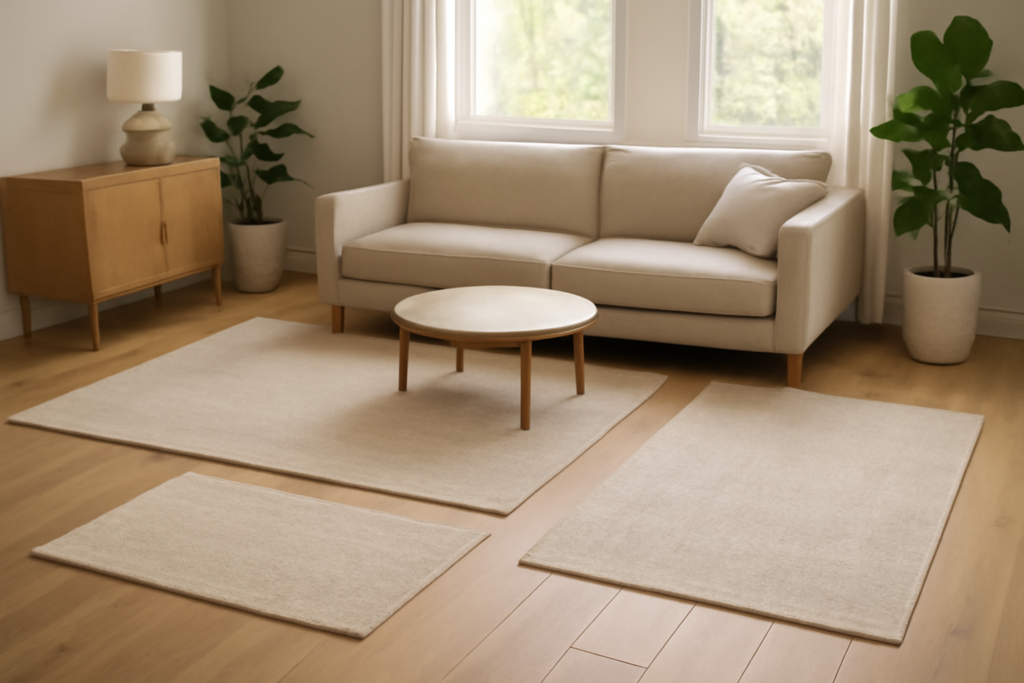
The single most common decorating mistake is buying a rug that is too small, and a clear rug sizes chart is the fastest way to avoid it. The right rug grounds the furniture, defines a space, and makes a room feel finished. The wrong size leaves seating stranded and rooms looking disjointed. This guide lays out the standard rug dimensions, explains which size fits each room, and shows you how to measure with confidence before you buy.
Standard Rug Sizes
Most rugs are sold in a set of common dimensions. Knowing them makes shopping far easier:
- 3×5 feet: entryways, kitchens, accent placement
- 4×6 feet: small seating areas, reading nooks
- 5×8 feet: small living rooms, under a queen bed footprint
- 6×9 feet: medium living and dining rooms
- 8×10 feet: standard living rooms and dining rooms
- 9×12 feet: large living and dining rooms
- Runners (2.5×8 to 2.5×12 feet): hallways, kitchens, bedsides
- Round (6 to 8 feet): round tables, reading corners, entryways
Living Room Rug Sizes
In the living room, the rug should anchor the seating arrangement. The most polished look places all furniture legs on the rug, which usually calls for an 8×10 or 9×12. If budget or space is tight, a 6×9 or 8×10 with just the front legs of each piece on the rug still looks intentional. Aim to leave a consistent border of bare floor around the rug, ideally 8 to 18 inches between the rug edge and the walls.
Dining Room Rug Sizes
For dining rooms, the rule is simple: the rug must extend at least 24 inches beyond the edge of the table on all sides so chairs stay on the rug even when pulled out. A 6-foot table typically needs an 8×10, while an 8-foot table works best with a 9×12. Skip a rug that is too small here, because chairs catching on the edge is both annoying and a tripping hazard.
Bedroom Rug Sizes
Bedrooms offer a few good options depending on how much soft floor you want underfoot. The most luxurious arrangement places a large rug under the bottom two-thirds of the bed, extending well past the sides and foot. General guidelines:
- Queen bed: 8×10 placed under the bed for full coverage
- King bed: 9×12 for the same effect
- Smaller budget: runners on each side of the bed, or a 5×8 at the foot
Entryway and Hallway Rugs
Entryways benefit from a 3×5 or a round rug that defines the threshold and catches debris. Hallways call for runners, sized to leave a few inches of floor at each end and on both sides. A common guideline is to keep about 4 to 5 inches of bare floor between the runner and the walls for a balanced look.
How to Measure Before You Buy
Always measure your space before ordering, not after. Use painter’s tape to outline the rug dimensions directly on your floor so you can see exactly how the size relates to your furniture and walkways. Walk through the space and check that doors clear the rug, that the border of bare floor looks even, and that the rug visually connects your seating or dining pieces.
Office and Kid’s Room Rug Sizes
A home office benefits from a rug large enough to sit under the desk and chair so the chair stays on the rug as it rolls. A 5×8 works for a compact desk, while a larger setup with a credenza may need a 6×9 or 8×10. For rolling chairs, a low-pile or flatweave rug rolls easily and resists crushing. In a kid’s room, prioritize a soft, washable rug sized to create a play zone, often a 5×8 in the center of the room or a smaller accent rug beside the bed. Round rugs and playful shapes work well in nurseries and play spaces where the rug defines an activity area rather than anchoring furniture.
Round and Irregular Spaces
Round rugs follow their own logic. They work best under round tables, in reading corners, and in entryways where they soften a square room. For a round dining table, choose a round rug roughly four feet wider than the table so chairs stay on it. In open-concept homes, use rugs to carve out distinct zones, placing one under the living room seating and another under the dining set, keeping their styles complementary. For oddly shaped rooms, tape out a few size options on the floor and live with the outlines for a day to see which footprint feels right before committing.
Common Sizing Mistakes
The biggest error is buying too small to save money, which leaves furniture floating and shrinks the room visually. Other frequent missteps include choosing a rug that crowds doorways, ignoring the chair-clearance rule in dining rooms, and forgetting that a rug pad slightly affects the footprint. When in doubt, size up; a slightly larger rug almost always looks better than one that is too small.
Don’t Forget the Rug Pad
A rug pad is the unsung hero of proper rug placement. Beyond keeping the rug from sliding, it cushions footsteps, protects the floor from abrasion, and helps the rug lie flat so corners do not curl into tripping hazards. Buy a pad slightly smaller than the rug, roughly an inch shorter on each side, so it stays hidden underneath. The pad does not change which rug size you should buy, but it does affect how the finished rug feels and performs, and skipping it is a common oversight that leads to bunching and premature wear.
The Bottom Line
A rug sizes chart takes the guesswork out of one of the most impactful choices in a room. Match the dimensions to the space, follow the furniture-placement rules, and tape out the size before you commit. Get the size right and even an inexpensive rug looks intentional and complete.
Quick Reference by Room
To make the chart easy to apply, here is a quick recap of the sizes most homeowners reach for in each space. Keep these as starting points, then adjust up if your furniture is large or your room is open-concept.
- Living room: 8×10 for most, 9×12 for large rooms, 5×8 for apartments
- Dining room: 8×10 for a 6-foot table, 9×12 for an 8-foot table
- Bedroom: 8×10 under a queen, 9×12 under a king, runners on the sides for smaller budgets
- Entryway: 3×5 or a round rug to define the threshold
- Hallway: a runner sized to leave a few inches of floor at each end
- Home office: 5×8 to 8×10 so the desk chair stays on the rug
When two sizes seem to fit, the larger one almost always looks more polished, so size up rather than down whenever your budget and floor plan allow.