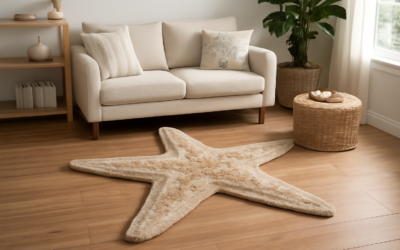
The most common decorating mistake in a living room is a rug that is too small, a postage stamp of fabric floating in the middle of the floor with all the furniture stranded around it. Choosing the right rug sizes for living room spaces is what makes a room feel pulled together, grounded, and intentional. The rule of thumb is simple: bigger is almost always better. This guide breaks down standard dimensions, placement strategies, and how to measure so you buy the right size the first time.
Standard Living Room Rug Sizes
Area rugs come in fairly predictable dimensions. Knowing them helps you shop quickly:
- 5×8 feet: small rooms or apartments, fits under a coffee table and front legs of a loveseat
- 8×10 feet: the most popular size for average living rooms
- 9×12 feet: large living rooms, anchors a full seating group
- 12×15 feet: open-concept or oversized spaces
For most living rooms in standard homes, an 8×10 or 9×12 is the sweet spot. When you are torn between two sizes, size up.
The Three Furniture Placement Rules
How much furniture sits on the rug determines the look and the size you need. There are three classic approaches.
All Legs On
Every piece of furniture sits fully on the rug, including the back legs of the sofa and chairs. This creates the most luxurious, cohesive look but requires the largest rug, typically 9×12 or bigger. Leave at least 8 inches of bare floor between the rug edge and the walls.
Front Legs On
Only the front legs of the sofa and chairs rest on the rug. This is the most versatile and budget-friendly option, works beautifully in medium rooms, and visually connects the seating without demanding the largest rug. An 8×10 usually does the job.
All Legs Off
The rug sits entirely within the seating arrangement, with all furniture legs off it. This works only in small spaces or when defining a compact conversation area. Keep the rug large enough to extend slightly past the coffee table on all sides so it does not look marooned.
How to Measure Your Space
Skip the guesswork. Measure the length and width of your seating area, not the entire room. Then mark out potential rug dimensions on the floor with painter’s tape so you can see exactly how the size reads before you buy. Aim to leave a consistent border of bare floor, roughly 10 to 18 inches, between the rug and the walls so the room still breathes.
Common Sizing Mistakes
The biggest errors are easy to avoid once you know them:
- Too small: a rug that only fits under the coffee table makes the room feel disjointed
- Floating furniture: sofas and chairs with no connection to the rug look unanchored
- Wall to wall coverage: a rug touching every wall reads like wall-to-wall carpet and loses its accent purpose
- Wrong shape: a square rug in a long narrow room fights the proportions
Shape and Special Layouts
Rectangular rugs suit the vast majority of living rooms. Round rugs work well in small spaces, under round tables, or to soften a boxy room. For open-concept homes, use a large rug to define the living zone and separate it visually from the dining or kitchen area. In a long room, consider running the rug lengthwise to follow the natural flow of the space.
Sizing for Common Room Dimensions
It helps to translate sizes into real rooms. In a small 10-by-12-foot living room, a 5×8 or 6×9 rug under the coffee table and front legs of the sofa keeps the space from feeling crowded. A standard 12-by-15-foot room is the natural home of an 8×10, with room to spare around the edges. For larger 14-by-18-foot or open-concept spaces, step up to a 9×12 or even 12×15 so the seating group does not float in an ocean of bare floor.
When in doubt, the rug should be wide enough to sit under and slightly beyond the full width of your sofa. A rug narrower than the sofa it sits in front of almost always looks undersized, no matter how the rest of the layout is arranged.
Layering and Sectional Considerations
Sectionals change the math because they occupy an L-shaped footprint. The rug should be large enough that the front legs of both arms of the sectional rest on it, which often pushes you toward a 9×12 in average rooms. For a chaise or deep sectional, measure the full depth, since the rug needs to reach under the leading edge of the seat.
Layering a smaller patterned or textured rug over a larger neutral one is a popular way to add interest and effectively enlarge a too-small accent rug. Keep the base layer large enough to satisfy the furniture placement rules, then center the smaller rug on top for visual depth.
Budget and Material Considerations
Larger rugs cost more, but they also do more decorating work. A quality 8×10 wool rug might run $300 to $1,200, while synthetic options can land well under $300. Whatever the size and material, add a rug pad underneath. It cushions the rug, prevents slipping on hard floors, and extends the rug’s life by reducing wear.
Runners and Accent Pieces
Beyond the main area rug, smaller pieces can round out a living room. A runner works well in a long, narrow space behind a sofa or in an adjacent hallway, while a small accent rug can warm a reading nook or define a window seat. Just keep these supporting pieces from competing with the main rug; coordinate colors and leave breathing room so the room reads cohesive rather than cluttered. As a rule, one large rug doing most of the grounding work looks more intentional than several small rugs scattered around the floor.
Getting the Size Right
When choosing rug sizes for living room layouts, let your furniture arrangement guide the dimensions, leave a balanced border of bare floor, and lean toward the larger option whenever you hesitate. Tape out the size, picture your furniture on it, and you will end up with a rug that grounds the whole room instead of getting lost in it.