
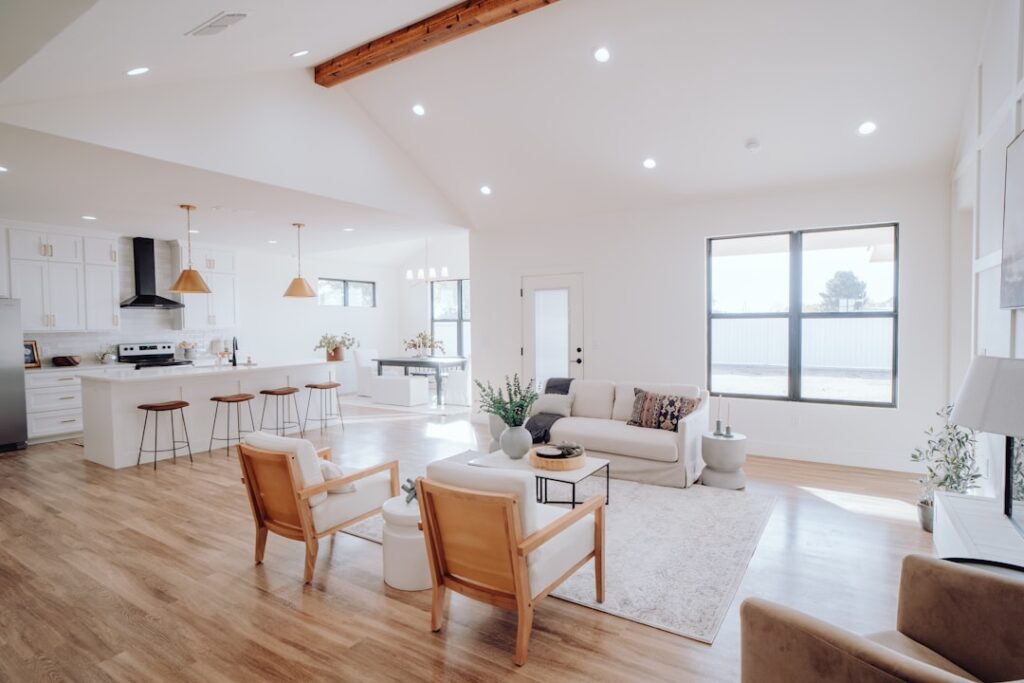
Walk into a regional flooring showroom in California’s Central Valley and you’ll quickly notice the local players outwork the big-box stores on service. Sacramento Valley Flooring is one of those operators — a contractor-leaning dealer that stocks waterproof LVP, engineered oak, and tile across multiple Sacramento-area locations. Before you sign a quote, here’s what experienced installers want you to know about their product mix, install crews, and how their pricing stacks up.
Who Sacramento Valley Flooring Actually Is
Sacramento Valley Flooring operates as a regional retailer and installation outfit serving Sacramento, Roseville, Folsom, and Elk Grove. Their model leans on direct-from-mill purchasing for COREtec, Karndean, Mannington Adura, and select Shaw lines, then bundling material with crews they keep on payroll rather than subcontracting blind. That matters because in California, an unlicensed installer voids most manufacturer labor warranties.
You won’t find a wall of every SKU here. The buyer keeps roughly 40 in-stock SKUs spanning $2.49 to $5.89 per sq ft, with special-order lines pushing past $8.50. For a Sacramento ranch home with 1,400 sq ft of conditioned space, that means a typical job lands between $7,800 and $14,500 fully installed.
Product Lines Worth Considering
Three categories carry the showroom: waterproof rigid-core vinyl, engineered hardwood, and porcelain tile. The vinyl program is the strongest. Expect COREtec Pro Plus at roughly $4.79 per sq ft with a 20 mil wear layer, Mannington Adura Max around $5.49 per sq ft with a 22 mil top coat, and a private-label SPC option near $2.99 per sq ft with a 12 mil wear layer for budget jobs.
Engineered oak runs $5.49 to $9.25 per sq ft. The standout is a 7.5-inch wide European white oak with a 4mm wear layer and matte UV-cured finish — it sits in the $7.89 range and pairs well with Sacramento’s heavy natural light. Janka hardness on white oak runs 1,360, which holds up to a Labrador without telegraphing scratches the way 950-rated American cherry would.
Pros of Buying Local
Regional dealers like this one win on three measurable fronts. First, the showroom carries large sample boards — 12×12-inch panels rather than 3×5 chips — so you can actually see how a plank’s bevel reads at floor level. Second, their install crews carry C-15 California flooring licenses and W-9 employment, which keeps liability inside one company. Third, post-install service is local: a callback for a popped seam happens in 5 to 7 days rather than the 4-week queue typical of national chains.
Pricing on midrange LVP undercuts Home Depot’s installed pricing by roughly 8 to 14 percent on jobs over 1,000 sq ft. That gap closes on small projects where minimum charges eat the savings.
Cons and Real Limitations
The downsides are predictable for a regional shop. Their hardwood selection skews narrow — if you want hickory in a 5-inch plank with a wire-brushed scraped texture, expect a 6 to 10 week special order. Stock on closeout SKUs disappears fast, so a delayed kitchen renovation can leave you scrambling for matching material from the same dye lot.
Showroom hours are tighter than national chains. Saturday closings at 4 PM and no Sunday service can stall a weekend remodel decision. Some online reviews flag invoice surprises — typically transition strips, stair nose pieces, or T-moldings billed separately at $14 to $32 per linear foot rather than included in the per-sq-ft quote.
How Installation Compares to National Chains
Installation quality is where local outfits earn their margin. Sacramento Valley Flooring’s crews follow ASTM F2170 moisture testing protocols on concrete slabs, which is non-negotiable on Sacramento-area slab-on-grade homes built on expansive clay. They pull in-situ relative humidity probes and won’t lay glue-down vinyl above 80 percent RH or floating LVP above 85 percent without a vapor retarder.
Subfloor prep is where corners get cut in the industry. A good crew will skim-coat a slab with Mapei Planipatch or Ardex Feather Finish to a flatness tolerance of 3/16 inch over 10 feet — the standard most floating-floor manufacturers require for warranty coverage. Ask the salesperson directly whether subfloor prep is included or billed by the hour.
Warranty Coverage You Actually Get
Manufacturer warranties pass through cleanly when the dealer’s crew installs. COREtec’s lifetime residential warranty, Mannington’s 25-year wear, and Shaw’s lifetime structural all stay intact. Sacramento Valley Flooring adds their own 1-year labor warranty on top, covering popped seams, hollow spots, and visible installation defects.
Read the fine print on moisture exclusions. Slab-related claims require documented F1869 calcium chloride testing or F2170 RH readings at the time of install — a paper trail the dealer keeps if you ask for the install file.
Realistic Pricing for a 1,200 Sq Ft Job
A typical Sacramento family home renovation — 1,200 sq ft of conditioned space, mostly open-plan, one staircase — quotes out roughly like this with sacramento valley flooring:
- Mid-tier 20 mil LVP, click-lock floating, prep included: $6.89 per sq ft installed, totaling $8,268
- Engineered 7.5-inch white oak, glue-down on slab: $11.49 per sq ft installed, totaling $13,788
- Stairs with custom nosings and risers: $145 per step, typically 13 steps for $1,885
Add roughly 8 percent for waste factor on patterned installs and 12 percent for diagonal layouts. Sacramento County permit fees don’t apply to interior floor replacement, which keeps the budget clean.
Bottom Line
For Sacramento-area homeowners who want a real install warranty and a crew that shows up when they say they will, this dealer earns its keep. The pricing edge on midrange LVP and engineered oak makes it worth a quote against Floor & Decor or Home Depot, especially on jobs over 1,000 sq ft. Just confirm the line-item breakdown before signing and verify subfloor prep is bundled, not billed.
Prefer to explore on your own?
See how new flooring looks in your actual room in seconds — free, no signup.
Try the free Floor Studio →

