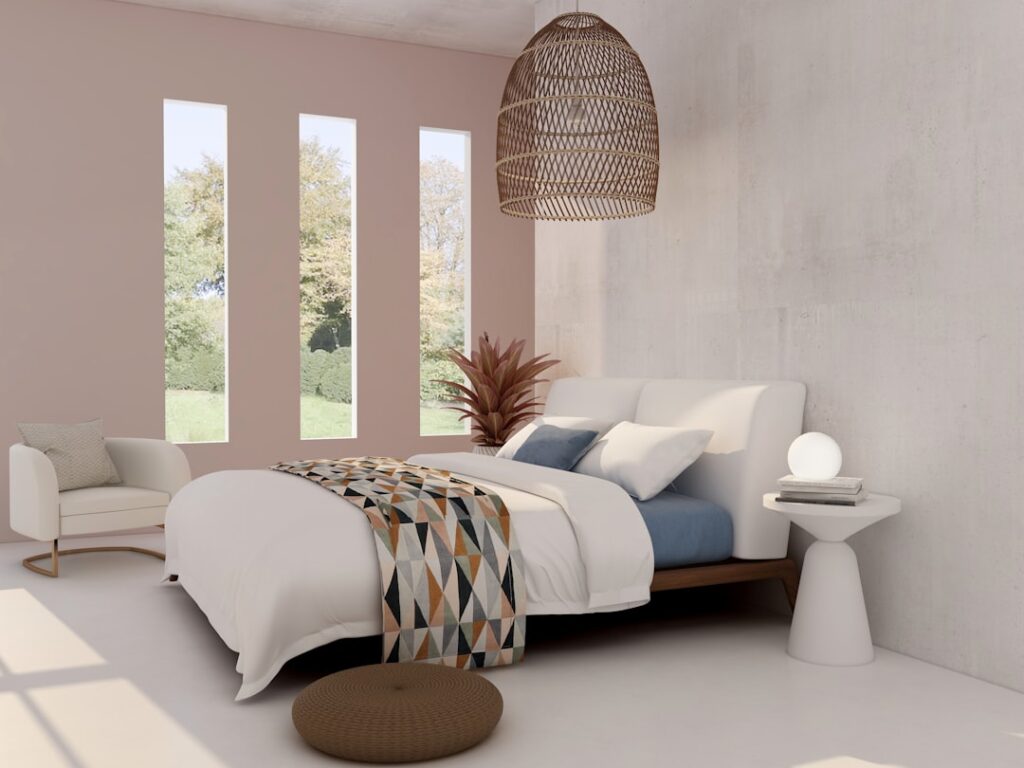
There is a reason sage keeps landing at the top of every trend list for the past few years: it is the rare color that feels both fresh and timeless. Sage green bedroom paint brings the calm of nature indoors without the coldness of gray or the sweetness of pastels, which makes it almost perfect for a room meant for rest. I’ve watched clients hesitate over a green bedroom for years, then fall completely for it the moment the first coat dries. The soft, dusty quality of sage flatters skin tones, works with nearly any wood, and quietly signals that a room was thought through.
Why Sage Works So Well in a Bedroom
Color psychology explains a lot of sage’s appeal. Green sits at the center of the visible spectrum, the wavelength the eye processes with the least strain, which is part of why it reads as restful. Layer in the muted, grayed-down quality of sage specifically, and you get a color that lowers the visual volume of a room. That is exactly what you want in a bedroom, a space designed to help you unwind rather than energize. Sage evokes eucalyptus, moss, and sea glass, all associations that pull the nervous system toward calm.
Sage is also remarkably forgiving. Unlike a saturated emerald or a cool mint, it does not fight with the other elements in the room. It bridges warm and cool palettes, sitting comfortably next to both honey-toned oak and cool white linen. That flexibility means you can often keep your existing furniture and bedding and still end up with a cohesive space, which is a big part of why so many homeowners choose it.
The Best Sage Green Paint Colors
Not all sage is created equal, so the specific shade matters. From Sherwin-Williams, Evergreen Fog (SW 9130) is the runaway favorite, a sage that leans slightly gray-green and was named a color of the year for good reason. It reads sophisticated and adaptable, deep enough to feel intentional but soft enough to stay serene. For a lighter, airier option, Softened Green (SW 6177) delivers a gentle, barely-there sage that keeps small bedrooms feeling open.
Benjamin Moore has its own strong contenders. Saybrook Sage (HC-114) is a classic historical color with a warm, earthy character that glows in rooms with good natural light. October Mist (1495), another color of the year, is a whisper-soft sage-gray that acts almost like a neutral, and Sea Salt (SW 6204) from Sherwin-Williams, while sometimes reading more coastal, gives a similarly soothing sage-green-gray effect. If you want something with more depth for an accent wall, Benjamin Moore Herb Garden or Sherwin-Williams Clary Sage add richness without going dark.
Understanding Sage’s Undertones
The reason a sage swatch can look perfect at the store and disappointing at home almost always comes down to undertones. Sage greens carry either a warm yellow undertone or a cool gray-blue undertone, and the light in your room will amplify whichever one is present. A north-facing bedroom, which receives cooler light, can make a gray-based sage look flat and dull, so a warmer sage like Saybrook Sage tends to perform better there. A bright south-facing room can wash out a pale sage, so a slightly deeper shade holds its color.
Because of this, testing is non-negotiable. Paint a large swatch, at least two feet square, on the wall you look at most and check it in morning light, afternoon light, and under your bedside lamps at night. Warm bulbs will push sage toward yellow-green, while cool LED bulbs will pull it toward gray. Seeing the color in all three conditions before you commit prevents the most common regret with green paint.
Choosing the Right Trim and Ceiling
Sage begs for the right supporting cast, and trim is where it starts. A creamy warm white keeps everything soft and cohesive, and Benjamin Moore White Dove or Sherwin-Williams Alabaster are ideal partners because their gentle warmth complements sage without the harsh contrast a stark bright white would create. Painting the trim, baseboards, and door casings in that warm white frames the sage walls cleanly and keeps the room from feeling heavy.
For the ceiling, you have two good routes. The classic choice is a soft white that lets the sage walls take center stage while brightening the room overhead. The more enveloping choice, especially in a bedroom, is to carry a lighter tint of the sage or a matching warm white up onto the ceiling for a color-drenched, cocooning effect. That approach blurs the line between wall and ceiling and makes the whole room feel like a single calm volume, which is wonderful for sleep.
Pairing Colors, Bedding, and Materials
Sage is a team player, and the palette you build around it decides whether the room feels rustic, modern, or romantic. Warm neutrals like cream, oatmeal, and camel keep things organic and inviting, while crisp white bedding makes the sage feel fresh and clean. For contrast, terracotta, rust, and blush add warmth and a slightly bohemian feel, and black or bronze hardware and light fixtures ground the softness with a bit of structure. Brass, in particular, glows against sage and gives the room a quiet touch of luxury.
Natural materials seal the deal. Rattan, jute, oak, and linen all echo the earthy roots of sage green and make the palette feel intentional rather than accidental. Layer bedding in mixed textures such as a linen duvet, a chunky knit throw, and a couple of velvet pillows, and the sage walls become the backdrop for a room that feels collected over time. If you want a little drama, a single wall of deeper sage behind the headboard creates a focal point without darkening the whole space.
Sage in Different Bedroom Styles
Part of what makes sage so useful is how easily it shifts to support whatever look you are after. In a modern farmhouse bedroom, a warm sage like Saybrook Sage paired with shiplap, aged wood, and cream linens feels grounded and welcoming. Drop that same sage into a mid-century modern room with walnut furniture and clean-lined lighting, and it suddenly reads as sophisticated and retro. The color adapts to its surroundings rather than dictating them, which is exactly why designers reach for it so often.
Sage also works beautifully in traditional and cottage bedrooms, where a color like Clary Sage plays off floral textiles, antique brass, and painted furniture for a soft, timeless feel. For a more contemporary, spa-like bedroom, a pale gray-green such as October Mist paired with matte black fixtures and minimal decor creates a serene, hotel-inspired retreat. Because sage sits comfortably between warm and cool, you are rarely locked into a single aesthetic, and you can evolve the room over time simply by changing the accents around it rather than repainting.
Sheen, Lighting, and Finishing Touches
For bedroom walls, a matte or eggshell finish is the right call. Matte absorbs light and gives sage its softest, most velvety character while hiding minor wall flaws, and eggshell offers a hair more durability if the room sees a lot of activity. Save satin or semi-gloss for the trim and doors, where a light sheen reads as crisp and wipes clean. That contrast in finish between flat walls and slightly glossy trim adds subtle polish.
Lighting is the final variable that can make or break your sage bedroom. Layer it: a central fixture for general light, bedside lamps for warm task light, and ideally a dimmer so you can drop the room into a soft glow at night. Choose warm-white bulbs in the 2700K to 3000K range, because cool daylight bulbs will strip the coziness right out of the color. Done thoughtfully, sage green bedroom paint gives you a space that feels like a deep exhale the moment you walk in, and that is exactly what a bedroom should do.