
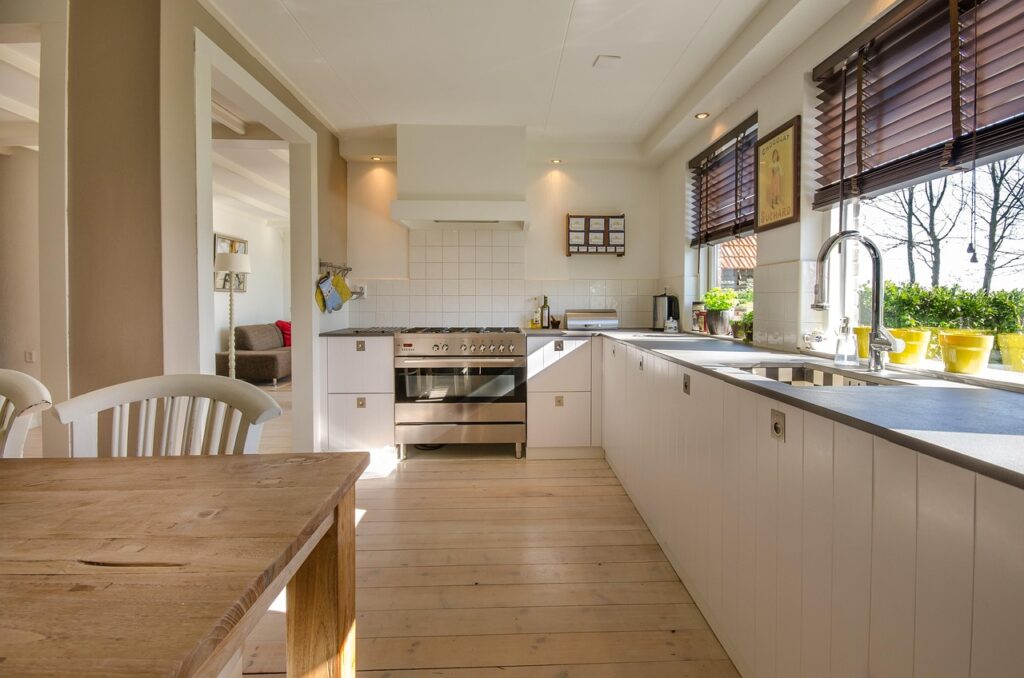
Chrome and stainless will always be safe, but they can also be a little cold and forgettable. A satin brass kitchen faucet brings warmth to the busiest fixture in the house, with a soft, brushed gold tone that reads both classic and current. Unlike shiny polished brass, the satin (or brushed) finish has a low-luster surface that hides water spots and fingerprints, which is exactly what you want on a faucet you touch a hundred times a day.
I’ve installed a lot of these in the last few years as warm metals came roaring back, and they consistently make a kitchen feel more custom. But not all “brass” finishes are created equal, and knowing the difference before you buy saves you disappointment down the road.
- Satin Brass vs. Other Gold Finishes
- Why the Finish Matters for Durability
- What a Satin Brass Faucet Costs
- What to Look For Beyond the Finish
- Matching It to Your Kitchen
- Cleaning and Care
- Installation Notes
- Is Satin Brass a Passing Trend?
- Pull-Down vs. Pull-Out vs. Bridge Styles
- How Satin Brass Ages Over Time
Satin Brass vs. Other Gold Finishes
Faucet marketing throws around a lot of gold-adjacent names, and they aren’t interchangeable. Here’s how they actually differ:
- Satin/brushed brass: Warm gold with a matte, brushed texture. Understated, forgiving of fingerprints, and the most versatile. This is the sweet spot for most kitchens.
- Polished brass: High-shine, mirror-like gold. Bolder and more traditional, but shows every smudge and water spot.
- Champagne bronze: A slightly warmer, pinker gold popularized by Delta. Very close to satin brass but a touch softer.
- Matte gold: Flatter and more contemporary, with almost no sheen.
- Unlacquered (living) brass: Real, uncoated brass that patinas and darkens over time. Beautiful but high-maintenance, and it changes color as it ages.
Most satin brass faucets today use a durable PVD (physical vapor deposition) coating over the finish. PVD bonds the color at a molecular level and is far more scratch- and tarnish-resistant than old-style electroplated or lacquered brass. If longevity matters to you, confirm the faucet is PVD-finished.
Why the Finish Matters for Durability
The single most important spec on a satin brass faucet is how the color is applied. Cheap faucets use a thin lacquer or plating that can chip, peel, or wear through at the handle and spout where you touch it daily. Within a couple of years you’ll see silvery patches bleeding through.
A quality PVD satin brass finish, by contrast, resists corrosion, tarnishing, and abrasion, and it typically carries a lifetime finish warranty from major brands. Spend the extra $50 to $100 for PVD; on a fixture that runs 15-plus years, it’s the cheapest insurance you’ll buy.
What a Satin Brass Faucet Costs
- Budget (thin plated finish, plastic internals): $80 to $150. Skip these unless it’s a short-term rental.
- Mid-range (PVD finish, ceramic-disc cartridge, from Moen, Delta, Kohler): $200 to $400. The value sweet spot.
- Premium (solid brass body, designer brands like Brizo, Kraus, Rohl): $400 to $900-plus.
Warm-metal finishes almost always carry a slight premium over chrome or stainless, often $30 to $80 more for the same model. That’s the cost of the coating and the demand.
What to Look For Beyond the Finish
Color aside, judge the faucet on the same fundamentals as any kitchen faucet:
- Ceramic-disc cartridge: The mechanism that controls flow and temperature. Ceramic lasts far longer than rubber or plastic and won’t drip in a couple of years.
- Solid brass body: A brass (not zinc alloy) body under the finish resists corrosion and lasts decades.
- Pull-down sprayer with a magnetic dock: Keeps the spray head locked in place instead of drooping over time.
- Spout height and reach: A high-arc spout clears large pots; make sure it doesn’t splash in a shallow sink.
- Spray modes: A stream/spray toggle and a pause button add real daily convenience.
Matching It to Your Kitchen
Satin brass is surprisingly flexible, but a few pairings really sing. It looks stunning against dark cabinetry (navy, forest green, matte black) and warm woods, where the gold pops. Over a white or fireclay farmhouse sink it reads timeless. It also plays beautifully with white and marble countertops.
For a cohesive look, echo the finish elsewhere: cabinet pulls, the soap dispenser, pendant lights over an island, or open-shelf brackets. You don’t have to match every metal in the room, and a little mixing (brass faucet with black or matte-black accents) looks intentional and modern. What you want to avoid is one lonely brass faucet in a sea of chrome hardware, which reads like a mistake rather than a choice.
Cleaning and Care
The good news: satin brass with a PVD finish is low-maintenance. The brushed texture hides fingerprints and water spots better than polished chrome, and PVD resists tarnish. For daily care, just wipe it down with a soft, damp microfiber cloth and dry it to prevent mineral spotting, especially if you have hard water.
Avoid these, which can dull or damage the finish:
- Abrasive scrubbing pads or powders
- Ammonia, bleach, or acidic cleaners like vinegar in strong concentrations
- Anything labeled for polishing brass, which is meant for raw, unlacquered brass and can haze a coated finish
For stubborn spots, a little mild dish soap and warm water on a soft cloth handles almost everything. If you have very hard water and see mineral buildup at the aerator, unscrew it and soak it in a mild vinegar solution briefly, then rinse well, keeping the acid off the finish itself.
Installation Notes
A satin brass faucet installs no differently than any other kitchen faucet. Most modern pull-down models are single-hole designs; if your sink has more holes, use the included deck plate to cover them. Confirm your hole count and spacing before ordering. The swap takes one to two hours with a basin wrench, new supply lines, and a little patience under the sink.
Is Satin Brass a Passing Trend?
Pull-Down vs. Pull-Out vs. Bridge Styles
Satin brass comes in every faucet configuration, and the spray style shapes how the faucet works day to day. A pull-down faucet, with a high-arc spout and a spray head that pulls straight down into the sink, is the most popular and best for deep single-bowl sinks and rinsing large pots. A pull-out faucet has a lower profile and a head that pulls toward you horizontally, which suits shallower sinks and spaces under a window where a tall gooseneck won’t fit. For a more traditional or farmhouse look, a bridge faucet joins the hot and cold lines in an exposed bridge above the deck, and it looks especially striking in satin brass, though it needs the right hole configuration and usually a separate sprayer.
Whichever style you choose, check the reach and height against your sink. A high-arc brass gooseneck is gorgeous but can splash in a shallow bar sink or hit a low windowsill, so measure your clearances before ordering.
How Satin Brass Ages Over Time
One of the questions I get most is whether the finish will change color. With a modern PVD-coated satin brass faucet, the answer is no; the color is bonded into the surface and stays consistent for the life of the fixture, which is exactly why PVD is worth paying for. This is different from unlacquered or “living” brass, which is raw metal that deliberately darkens and develops a patina over the years. Some people love that evolving, antique look, but it requires accepting an uneven, shifting color and doing occasional polishing if you want to control it. If you want the warm gold tone to look the same in fifteen years as it does the day you install it, stick with a sealed PVD satin brass finish and simply keep it wiped down.
Warm metals cycle in and out, but brass has been a kitchen staple for over a century, and the muted satin version is far more timeless than high-shine polished gold. It’s warm without being flashy, and it coordinates with a wide range of styles. If you love the look, a quality PVD satin brass faucet will serve you well for the life of the fixture and give your kitchen a warmth that stainless simply can’t. Buy the PVD finish, insist on a ceramic cartridge and brass body, and coordinate at least a couple of other accents in the room to tie it all together.


