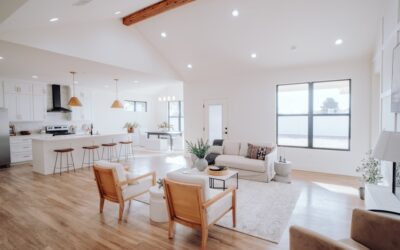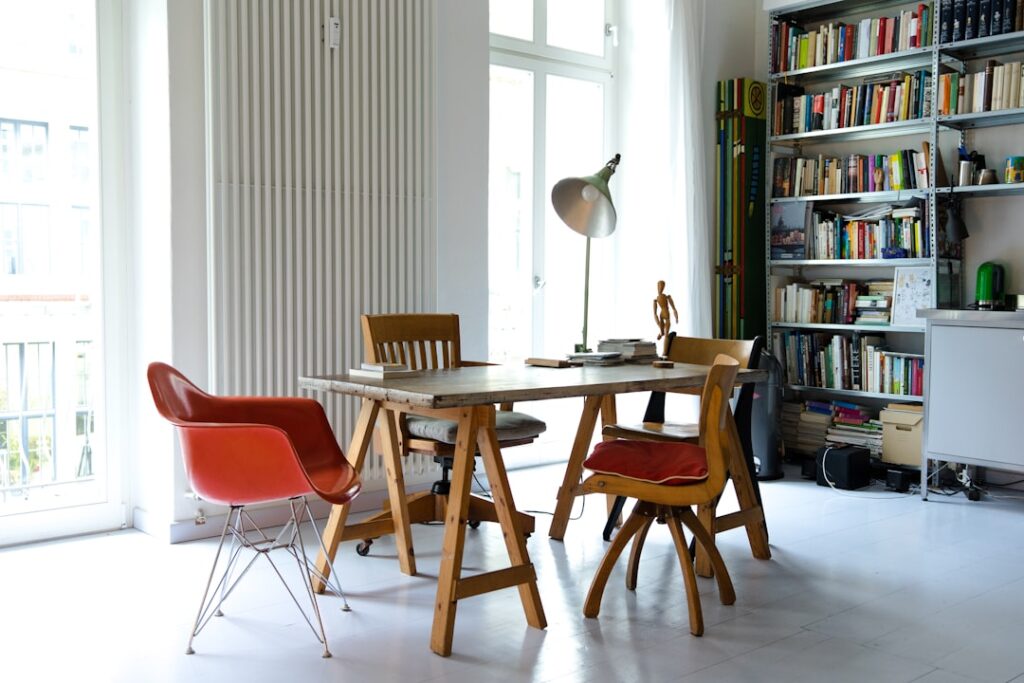
The pale, almost weightless wood floors you see in every Copenhagen design feed are not just bleached oak — they’re a specific finishing system developed to survive long, dark Nordic winters where every photon counts. Scandinavian flooring is built around three principles: maximum light reflection, matte texture that hides micro-scratches, and a calm grain pattern that disappears underneath furniture rather than competing with it. Get the species, finish, and plank size right and the look is timeless. Get any one wrong and you end up with something that reads more “rental flip” than “Stockholm townhouse.”
What Defines the Scandinavian Look
Three signatures separate the real thing from generic light-wood floors. First, European white oak — never American red oak, which has too much pink in the grain. Second, a near-white finish achieved with lye and soap (traditional) or a white-pigmented hardwax oil (modern). Third, a matte or ultra-matte sheen below 5 GU on the gloss meter, so the surface absorbs light evenly instead of bouncing it back in glare.
Plank widths trend wide — 7 to 10 inches is standard — and lengths run long, often 6 to 9 feet. The visual goal is fewer seams, broader sweeps of grain, and a floor that recedes rather than announces itself. Brands like Dinesen, Junckers, and Kährs built their reputations on exactly this aesthetic.
Lye-and-Soap vs. White Oil: The Two Real Finishes
Traditional Nordic-style flooring is finished by neutralizing the tannins in oak with potassium hydroxide (lye), then sealing with white-pigmented soap. The process is labor-intensive — 4 to 6 maintenance treatments in the first year — but produces a chalky, breathable surface that ages beautifully. Expect $14 to $22 per square foot installed for this approach.
The modern shortcut is a factory-applied white hardwax oil, like Rubio Monocoat White or Pallmann Magic Oil 2K Pure. It captures 90% of the look with about 30% of the maintenance — annual touch-up oil instead of quarterly soaping. Quality goods run $9 to $14 per square foot installed. Avoid prefinished urethane in white tints; they look plasticky and yellow within five years.
Engineered vs. Solid for Scandinavian Style
Wide European oak planks expand and contract dramatically with humidity, which is why most of these floors sold in the US come engineered. A 4mm to 6mm oak wear layer over a multi-ply birch core stays flat across seasonal swings. Solid plank works in stable, controlled climates but is risky over radiant heat or in basements.
For homes with humidity swings beyond 30% to 60% RH, engineered is the safer bet. It also lets you install over concrete slabs with a glue-down — common in coastal and southern climates where grade-level living is standard.
Furniture and Light Pairings That Work
The floor is a backdrop, not a feature, in Nordic interiors. Pair pale oak with black-painted window frames, soft white walls (Benjamin Moore Chantilly Lace is a safe pick), and warm-toned textiles in wool and linen. Avoid stark contrasts — a glossy black coffee table on a chalky white-oil floor looks like a showroom mistake. Brushed brass and oxidized bronze hardware bridge the temperature better than chrome.
Lighting matters more than people realize. North-facing rooms turn cool blue under pale floors; warm them up with 2700K to 3000K LED bulbs. Under harsh 4000K kitchen lighting, the same floor reads gray and clinical.
Pros of the Nordic Approach
- Brightens dark rooms — pale finish reflects 60% to 75% more light than mid-tone oak
- Hides dust, hair, and minor scratches better than dark woods
- Timeless aesthetic that doesn’t trend-cycle the way gray-wash floors do
- Pairs with virtually any wall color and any cabinet finish
- Matte sheen reduces glare in sun-drenched rooms
- Engineered construction allows installs over concrete and radiant heat
Cons and Real Trade-Offs
- Premium pricing: $9 to $22 per sq ft installed depending on finish system
- Hardwax oil finishes need annual or biannual refresh treatments
- White-soap finishes require dedicated maintenance products — generic cleaners damage them
- Show pet stains and spills more readily than mid-tone floors
- Wide planks demand near-perfect subfloor flatness, often pushing prep costs higher
- Slow availability — many goods are imported and ship 6 to 10 weeks
Buying Guide: Vetting Specs and Sources
Three checks separate genuine Scandinavian flooring from imitations. Confirm the species is European white oak (Quercus robur or Quercus petraea), not American white or red oak. Verify the finish chemistry — lye-and-soap, hardwax oil, or UV-cured oil are acceptable; aluminum oxide urethane is not authentic. Check that the wear layer is 4mm minimum, ideally 6mm, with a multi-ply birch core.
For installation, hire a contractor who has finished oil floors before. The application technique is different from urethane — you buff the oil in with a Festool or Pallmann machine and remove the excess after 20 to 30 minutes. Botched first applications cause blotchy patches that are nearly impossible to fix without a full sand-and-redo. Expect a quality 800 sq ft project to land between $12,000 and $20,000 turnkey.
Frequently Asked Questions
Does Scandinavian flooring yellow over time?
Quality hardwax oil finishes resist yellowing far better than urethane. Expect minor warm-amber drift over 10 to 15 years, far less than what you’d see with a glossy poly floor.
Can I get the look with a budget engineered oak product?
Partially. Look for white-washed European oak with a matte finish under $7 per square foot — you’ll lose some of the chalky depth, but the visual silhouette holds up. Avoid anything labeled “white oak” with a pink undertone.
How do I clean a hardwax-oil Scandinavian floor?
Dust mop daily, damp mop weekly with a dedicated wood-soap cleaner like Bona Hardwax Oil Soap. Skip vinegar, ammonia, and standard wood cleaners — they strip the oil. Spot-treat with maintenance oil annually in heavy-traffic paths.
Will it work in a southern US climate?
Yes, if you choose engineered construction and run HVAC to keep relative humidity between 30% and 55%. Solid plank wide-board oak in unconditioned vacation homes will cup or gap dramatically.
Prefer to explore on your own?
See how new flooring looks in your actual room in seconds — free, no signup.
Try the free Floor Studio →