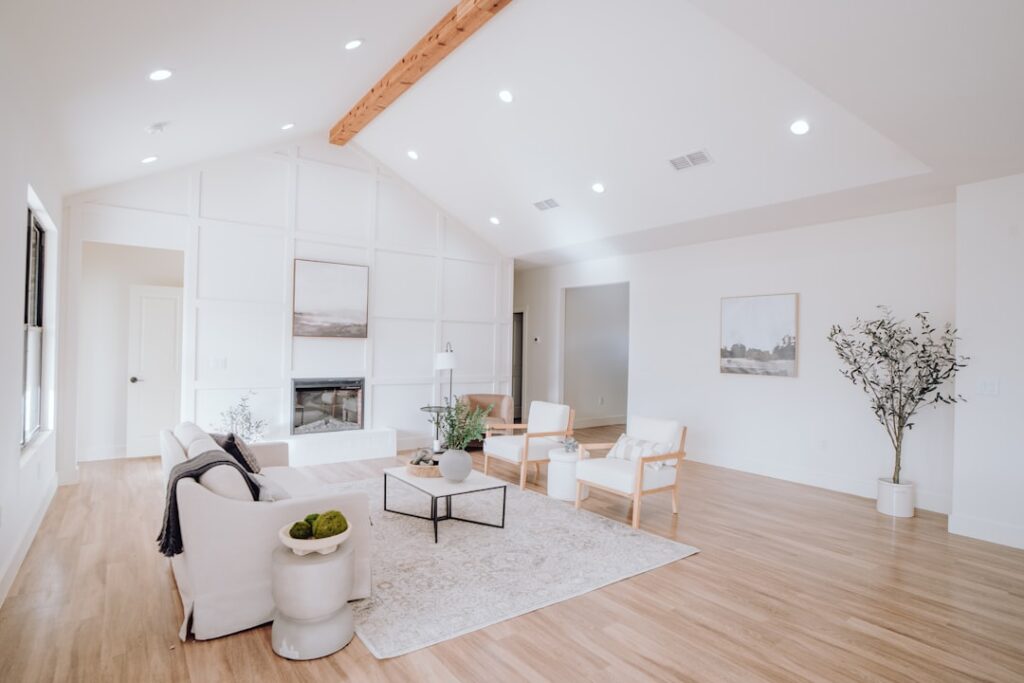
Falls send more than three million older Americans to the emergency room every year, and the floor underneath them is the single biggest variable a facility operator controls. Specifying senior living flooring is not a style exercise. It is a slip-coefficient calculation, a wheelchair-load calculation, and an infection-control calculation rolled into one product spec. Get the call right and you cut incident reports and insurance premiums. Get it wrong and you replace the floor in five years instead of fifteen.
- Why Slip Resistance Trumps Everything Else
- Material Choices That Earn Their Keep
- Wheelchair and Rollator Wear
- Infection Control and Cleanability
- Acoustic Performance for Memory Care
- Pricing Tiers and Lifecycle Cost
- Subfloor Prep and Moisture Testing
- Color, Pattern, and Wayfinding
- Code Compliance and ADA Considerations
- Building the Right Spec for Your Facility
Why Slip Resistance Trumps Everything Else
The number to know is DCOF, the dynamic coefficient of friction measured under ANSI A326.3. Anything below 0.42 wet is considered slick for level interior surfaces. For memory care wings and assisted living common areas, target 0.50 or higher. Mannington Realities sheet vinyl tests around 0.65 wet thanks to a micro-textured wear layer. Karndean Da Vinci LVT runs closer to 0.55. Ceramic tile with a polished finish drops below 0.30 wet and has no business in a corridor where residents walk in slippers.
Glare matters almost as much as friction. High-gloss surfaces look like puddles to residents with cataracts or macular degeneration, and a perceived puddle triggers a guarded gait that increases fall risk on its own. Specify a matte or satin finish across all wet-prone zones.
Material Choices That Earn Their Keep
Three product families do most of the work in senior living: sheet vinyl, luxury vinyl tile (LVT), and high-performance carpet tile.
Sheet vinyl wins in dining rooms, corridors, and bathing rooms because the heat-welded seams keep urine, spilled coffee, and disinfectant out of the subfloor. Armstrong Medintech and Tarkett iQ Granit are the workhorses. Expect 12-foot widths and 20 mil to 80 mil wear surfaces.
LVT covers resident rooms and activity spaces where wood looks matter for the home-like aesthetic mandated by CMS regulations. Shaw Resilient and Mohawk Group Configurations both offer 22 mil wear-layer planks with attached acoustic backings rated IIC 50 or higher.
Carpet tile in modular 24-by-24 squares handles libraries, chapels, and quiet lounges. Replace one stained tile instead of recarpeting a whole wing. Look for solution-dyed nylon with a moisture-impervious back like Interface GlasBac or Milliken WellBAC.
Wheelchair and Rollator Wear
A 250-pound power chair concentrates load through hard rubber wheels into a contact patch the size of a quarter. Over time those tracks polish, scuff, and indent soft flooring. The 22 mil wear layer is the residential cutoff, but for corridors push to 28 mil or higher on LVT and at least 40 mil on sheet vinyl. Avoid embossed-in-register textures along main wheelchair paths because the texture peaks abrade first and the floor develops shiny ruts within two years.
Infection Control and Cleanability
CMS surveyors look at how easily a floor can be disinfected with hospital-grade quaternary ammonium and bleach solutions. Welded seams and integral cove base eliminate the harborage points where C. difficile spores hide. Floor scores from FloorScore IAQ certification and CDPH Section 01350 are baseline requirements for memory care projects funded with state Medicaid dollars.
Skip wax-based maintenance systems if you can. UV-cured urethane wear layers from Tarkett, Mannington, and Armstrong run a no-wax program that saves $0.40 to $0.80 per sq ft per year in stripping and recoating labor.
Acoustic Performance for Memory Care
Hard floors echo. Echo agitates residents with dementia. Specify products with attached acoustic underlayments rated IIC 60 and STC 50 or higher in shared-wall conditions. Mohawk Sound Advance and Shaw Quiet Cover backings hit those numbers without a separate underlayment SKU. In open dining rooms, pair the floor spec with a sound-absorbing ceiling tile rated NRC 0.85 so the surfaces work together.
Pricing Tiers and Lifecycle Cost
- Commercial sheet vinyl: $3.50 to $6.00 per sq ft installed, 12 to 15 year life
- Heterogeneous LVT (22 to 28 mil): $4.50 to $7.50 per sq ft installed, 15 to 20 year life
- Solution-dyed carpet tile: $5.00 to $9.00 per sq ft installed, 10 to 12 year life
- Rubber sheet (Nora, Mondo): $9.00 to $14.00 per sq ft installed, 30 plus year life
The rubber sheet looks expensive until you run a 20-year lifecycle. Nora floors in a Mayo Clinic geriatric wing have logged 25 years without replacement, which puts the annualized cost below the sheet vinyl that needs swap-out at year 14.
Subfloor Prep and Moisture Testing
Every senior living slab project should include ASTM F2170 in-situ relative humidity probes. Concrete above 85 percent RH will blow welded seams on sheet vinyl and lift LVT adhesive within 18 months. Plan on a topical moisture mitigation product like Koster VAP I 2000 or Ardex MC Rapid if probes come back hot. Budget $1.50 to $2.50 per sq ft for the mitigation layer plus a self-leveling underlayment.
Color, Pattern, and Wayfinding
Color does double duty in senior living. Beyond aesthetics, it carries wayfinding information for residents with cognitive impairment. Use distinct floor tones between resident wings, dining rooms, and activity spaces so a resident can orient by floor color rather than reading signage. Avoid busy patterns that residents with dementia may misread as obstacles or holes in the floor. Solid colors and subtle linear visuals work better than aggressive stone and wood mimics.
High contrast between floor and wall base helps residents with depth perception challenges judge transitions. A 4-inch integral cove base in a contrasting color, set against a lighter or darker floor field, makes the room boundary visible from across the corridor.
Code Compliance and ADA Considerations
ADA requires floor transitions under 1/4 inch to be flush, and transitions between 1/4 and 1/2 inch to ramp at no more than 1:2 slope. In practice, that means no thresholds taller than 1/2 inch anywhere wheelchairs go. Plan substrate heights during demo so the finish floor lands within tolerance at every doorway.
Building the Right Spec for Your Facility
Mix product types by use zone rather than chasing one floor for the whole building. Sheet vinyl on corridors and wet areas, LVT in resident rooms and dining, carpet tile in quiet lounges, and rubber in physical therapy and behind nurse stations. That layered approach is how the better senior living flooring specs in the country hit a 15-year replacement cycle without compromising the home-like feel that residents and families expect.
Prefer to explore on your own?
See how new flooring looks in your actual room in seconds — free, no signup.
Try the free Floor Studio →