A bare north-facing wall or a dim fence line under mature trees is not a design dead end; it is an invitation. Shade loving climbing plants transform those overlooked spots into lush vertical gardens, softening brick, screening ugly fences, and adding privacy in exactly the places where sun-hungry vines refuse to grow. The trick is choosing climbers that evolved in woodland understories, where filtered light and cool roots are the norm rather than the exception.
Shade is often treated as a problem, but for the right plants it is home. Many of the most beautiful and vigorous climbers actually prefer their roots cool and shaded even when their tops reach for brighter light. Whether you have deep shade against a building or dappled light beneath a canopy, there is a climber that will flourish and reward you with foliage, flowers, or both.
Climbing Hydrangea: The Shade Star
If you plant only one shade climber, make it climbing hydrangea (Hydrangea anomala petiolaris). This self-clinging deciduous vine thrives on north and east-facing walls, attaching by aerial rootlets without any support wires. In early summer it covers itself in flat, lacy white flower clusters that glow against a shaded wall, followed by handsome heart-shaped leaves and attractive peeling bark in winter.
Patience is the price of admission. Climbing hydrangea is famously slow to establish, often sulking for two or three years before it takes off, after which it grows vigorously and can reach 30 to 50 feet over time. Give it rich, moist, well-drained soil and it will become the anchor of your shade garden for decades. It is worth every season of the wait.
Ivies for Reliable Evergreen Cover
For fast, dense, year-round green in shade, ivies are hard to beat. English ivy (Hedera helix) tolerates deep shade, clings to almost any surface with adhesive rootlets, and stays evergreen through winter, making it the classic choice for cloaking a shaded wall or covering difficult banks. Persian ivy and Irish ivy offer larger, glossier leaves for a bolder look.
Ivy’s vigor is both its strength and its caution. It grows aggressively and can damage soft mortar, wooden siding, or gutters if left unchecked, and in some regions it is considered invasive, so plant responsibly and keep it trimmed away from structures you want to protect. Grown on a sturdy masonry wall or a dedicated fence and pruned yearly, ivy delivers unmatched evergreen coverage in spots nothing else will fill.
Flowering Options for Shade
Shade need not mean a garden without blooms. Several clematis varieties, particularly the vigorous montana types and many large-flowered hybrids, flower well in partial shade as long as their roots stay cool, which shade naturally provides. Plant a clematis with its base shaded and mulched, let it climb toward brighter light, and you get a curtain of flowers on a wall many gardeners write off as hopeless.
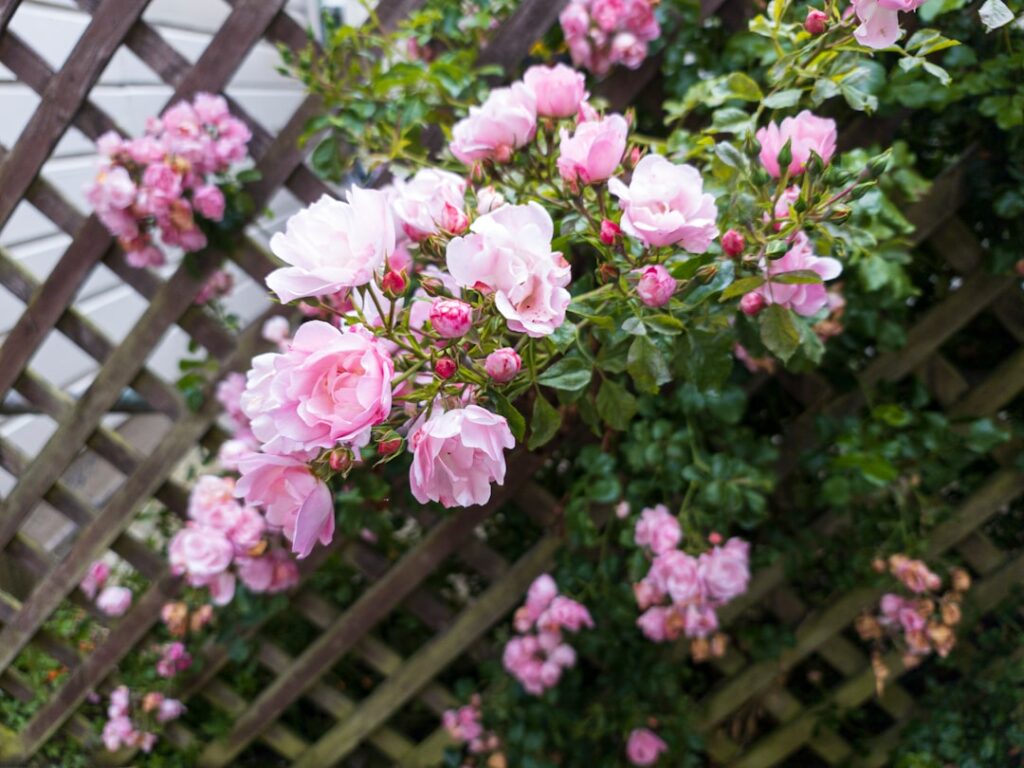
Climbing roses labeled for shade tolerance, such as certain older ramblers, will bloom respectably with just a few hours of sun, though flowering is always more generous with more light. For dappled woodland edges, the flowering vine akebia (chocolate vine) offers unusual maroon spring blooms and semi-evergreen foliage. Pairing a flowering climber with a foliage climber gives you both seasonal color and dependable green.
Foliage Climbers That Shine in Shade
Sometimes leaves do more than flowers ever could. Virginia creeper (Parthenocissus quinquefolia) is a tough, self-clinging native that tolerates shade and blazes fiery red and orange in autumn, covering large walls and fences quickly. Its cousin Boston ivy performs the same trick with a slightly neater habit and is the classic vine of shaded college campuses for good reason.
For evergreen structure, wintercreeper (Euonymus fortunei) climbs and sprawls in shade with glossy foliage, and variegated forms brighten dark corners with cream and gold edges. Star jasmine will grow in partial shade in mild climates, trading some flowering for its handsome glossy leaves. These foliage climbers give a shaded space year-round substance without depending on a fleeting bloom period.
Getting Climbers Established in Shade
Shade climbers succeed or fail in the first two seasons, so plant them well. Dig a generous hole enriched with compost, since shaded soil under trees is often dry and root-choked. Set the plant about a foot out from the base of a wall, where rain-shadowed soil stays perpetually dry, and lean it toward the surface it will climb. Water deeply and consistently through the first two summers.
Mulch is essential for these woodland natives. A 2 to 3-inch layer of organic mulch keeps roots cool and moist, exactly the condition most shade climbers crave, while suppressing competing weeds. Self-clinging types like ivy and climbing hydrangea need no support, but twining and tendril climbers such as clematis and akebia require wires, trellis, or netting to grab onto. Install that support before planting so you are not wrestling stems later.
Supporting Structures and How Climbers Attach
Choosing the right support is as important as choosing the plant, because climbers attach in fundamentally different ways. Self-clinging types like ivy, climbing hydrangea, Virginia creeper, and Boston ivy grip surfaces directly with adhesive pads or aerial rootlets and need no trellis, though they should go only on sound masonry, never on painted wood or soft mortar they can damage. Twining climbers such as akebia wrap their stems around a support and want vertical wires, a trellis, or a pergola post to spiral up. Tendril climbers like clematis grab thin supports with curling tendrils and do best on netting, mesh, or closely spaced wires.
For walls, a simple system of stainless steel wires held a couple of inches off the surface by eye bolts, spaced 12 to 18 inches apart, supports most twining and tendril climbers for years and costs little. Fixing the support before planting saves you from wrestling established stems onto wires later. Keep any vigorous climber trained away from gutters, roof edges, and window frames, where even foliage climbers can work into gaps and cause damage over time.
Caring for Climbers Through the Seasons
Shade climbers are generally low-maintenance once established, but a seasonal rhythm keeps them healthy and in bounds. In spring, feed with a balanced slow-release fertilizer and refresh the mulch layer to lock in moisture through summer. During the first two years especially, water deeply in dry spells, since the rain-shadowed soil at the base of a wall dries out faster than open ground. Tie in new growth of twining and tendril types as it extends so the plant covers evenly rather than bunching.
Pruning timing depends on the plant. Prune spring-flowering climbers like climbing hydrangea and akebia right after they bloom, and cut back foliage climbers like ivy and Virginia creeper in late winter before growth resumes, removing anything creeping toward roofs, gutters, or neighboring plants. An annual hard tidy keeps even aggressive growers manageable and prevents the heavy, tangled build-up that can pull a vine off its support in a storm.
Matching the Plant to Your Shade Level
Be realistic about how dark your spot truly is. Deep, sunless shade against a tall north wall suits only the toughest customers, ivy, climbing hydrangea, and Virginia creeper lead the list. Partial or dappled shade, with a few hours of filtered light, opens the door to clematis, climbing roses, jasmine, and akebia, which will flower more freely with that extra brightness.
Prune to keep any vigorous climber in bounds and off delicate surfaces, timing cuts to the plant, after flowering for spring bloomers, in late winter for foliage vines. With the right shade loving climbing plants matched honestly to your light, a cool, dim wall becomes one of the most rewarding features in the garden, alive with texture, color, and seasonal change where you least expected it.