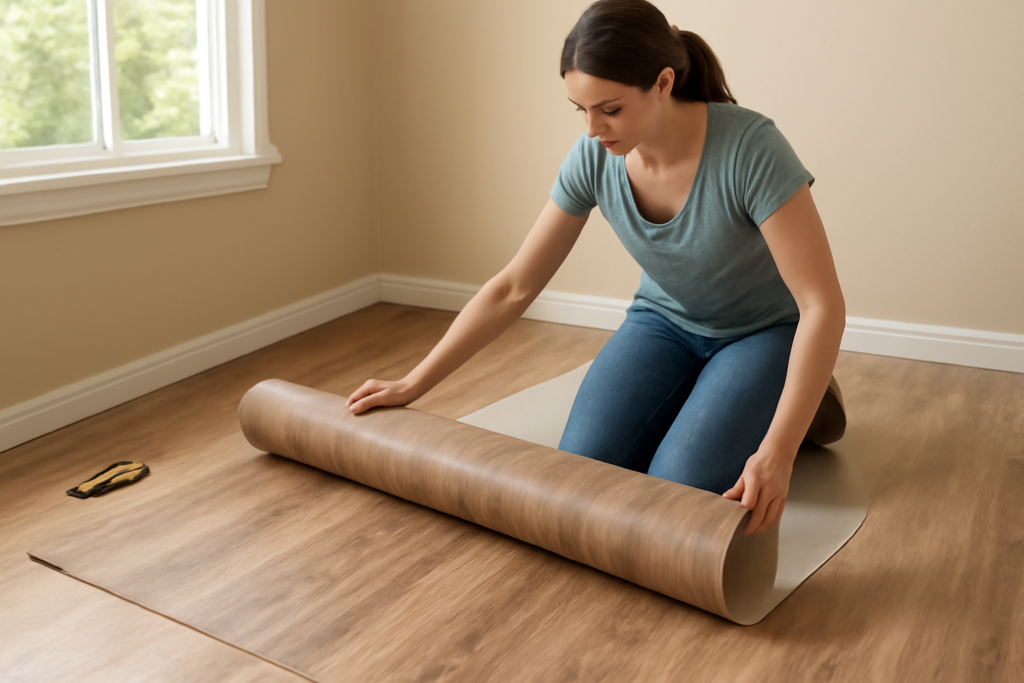
For a fully waterproof floor that can cover a whole bathroom or kitchen with almost no seams, few options beat the budget-friendly classic. Sheet vinyl flooring comes in wide rolls, typically 6 or 12 feet, that lay down as a near-continuous surface, which is exactly why it remains a favorite for wet rooms and rental properties. It is inexpensive, water-resistant, and comfortable underfoot, though it lacks the premium look and resale appeal of plank flooring or tile. This guide covers what sheet vinyl does well, where it falls short, and how to decide if it fits your space.
What Sheet Vinyl Is
Sheet vinyl is a flexible flooring sold in large rolls and cut to fit a room. A printed design layer sits beneath a clear wear layer, with a backing for cushioning and stability. Because it installs in large pieces, a small bathroom may need only a single seamless sheet, which is its biggest advantage over tile and plank in wet areas: fewer seams mean fewer places for water to penetrate.
It comes in felt-backed and fiberglass-backed versions, the latter being more dimensionally stable and easier to install loose-lay or with minimal adhesive.
The Pros
- Water-resistant and nearly seamless: Ideal for bathrooms, laundry rooms, and kitchens where spills are routine.
- Budget-friendly: Among the cheapest flooring available, great for rentals and quick refreshes.
- Comfortable and quiet: The cushioned backing is softer and warmer underfoot than tile.
- Low maintenance: Sweep and damp mop; no grout to scrub or seal.
- Wide design range: Convincing wood, stone, and tile looks at a fraction of the cost.
The Cons
- Lower resale appeal: Buyers and appraisers value hardwood and tile more highly.
- Can tear and dent: Sharp objects and heavy furniture legs can puncture or indent it.
- Hard to repair: A damaged area usually means replacing the whole sheet rather than a single piece.
- Subfloor shows through: Imperfections in the subfloor can telegraph through the thin material over time.
- Adhesive challenges: Glued-down sheets are difficult to remove later.
Where Sheet Vinyl Works Best
Sheet vinyl excels in moisture-prone rooms where its seamlessness is an asset: bathrooms, laundry rooms, mudrooms, and budget kitchens. It is a staple in rental properties because it is cheap, easy to clean, and quick to replace. For homeowners doing a fast, affordable refresh on a tight budget, it covers a lot of square footage for very little money.
It is less ideal in showcase living spaces and for homeowners focused on resale, where plank flooring or tile makes a stronger impression.
What Sheet Vinyl Costs
Sheet vinyl is among the most affordable flooring you can buy. Material commonly runs $1 to $4 per square foot, with professional installation adding $1 to $3 per square foot. A typical 100-square-foot bathroom often lands in the $200 to $700 range installed, depending on product quality and subfloor prep. DIY installation with a fiberglass-backed loose-lay product can lower the cost further.
Installation Basics
The key to a good sheet vinyl install is the subfloor. Because the material is thin, any bump, gap, or seam underneath can show through and wear prematurely. A clean, smooth, flat underlayment, often a layer of luan or a skim of patching compound, makes the difference between a floor that looks crisp and one that telegraphs every flaw.
Templating, making a paper or felt pattern of the room before cutting the vinyl, helps you get tight, accurate edges around toilets, vanities, and door casings. Fiberglass-backed products can be loose-laid or perimeter-glued, while felt-backed sheets usually require full adhesive.
Sheet Vinyl vs. LVP and Tile
Compared with luxury vinyl plank, sheet vinyl is cheaper and more seamless but less durable, harder to repair, and lower in perceived value. LVP offers a more premium look, easier spot repairs, and a thicker wear layer. Against tile, sheet vinyl is far cheaper, warmer, and faster to install, but it cannot match tile’s durability, longevity, or resale appeal. The choice comes down to budget and how long you need the floor to last.
Understanding Wear Layers and Quality Grades
Not all sheet vinyl is the same, and the wear layer is what separates a floor that lasts a decade from one that scuffs in a year. Higher-grade products use a thicker, clear wear layer, sometimes with a urethane coating, that resists scratches, scuffs, and staining. Budget builder-grade sheet vinyl has a thin wear layer that shows traffic patterns quickly.
When you shop, ask about the wear-layer thickness and any surface coating rather than choosing on pattern alone. For a busy kitchen or a rental that turns over often, paying a bit more for a thicker wear layer pays off in fewer replacements. For a guest bathroom that sees light use, a basic grade is perfectly adequate.
Felt-Backed vs. Fiberglass-Backed
The backing type shapes both installation and performance. Felt-backed sheet vinyl is typically thinner, less expensive, and requires full adhesive spread across the floor, which makes it more permanent and harder to remove later. Fiberglass-backed, sometimes called loose-lay or modified loose-lay, is more flexible, more dimensionally stable, and can often be installed with only perimeter adhesive or double-sided tape.
For DIY installers, fiberglass-backed is far more forgiving: it lies flatter, hides minor subfloor imperfections better, and is easier to reposition during installation. Felt-backed can be a good value for a permanent install done with care, but the full-adhesive method leaves little room for error and makes future removal a chore.
Caring for Sheet Vinyl
Sheet vinyl is one of the easiest floors to maintain, which is part of its appeal. Sweep or vacuum regularly to remove grit, and damp mop with a mild cleaner formulated for vinyl. Avoid abrasive scrubbing pads and harsh solvents that can dull the wear layer over time. Place felt pads under furniture legs and use a protective mat under rolling chairs to prevent dents and tears, the most common ways sheet vinyl gets damaged.
For scuffs, a little mild cleaner and a soft cloth usually does the job. Because repairs are difficult once the sheet is down, prevention matters: trim pet nails, lift rather than drag heavy furniture, and keep grit off the surface. Treated gently, a quality sheet vinyl floor can serve well for ten years or more.
Is Sheet Vinyl Right for You?
Choose sheet vinyl when you want an affordable, waterproof, low-maintenance floor for a bathroom, laundry, or rental, and when a seamless surface matters more than premium resale value. Invest in a smooth subfloor, consider a fiberglass-backed product for easier installation, and template carefully around fixtures. For the right room and budget, sheet vinyl delivers practical, water-tight performance at a price almost nothing else can match.
Prefer to explore on your own?
See how new flooring looks in your actual room in seconds — free, no signup.
Try the free Floor Studio →