
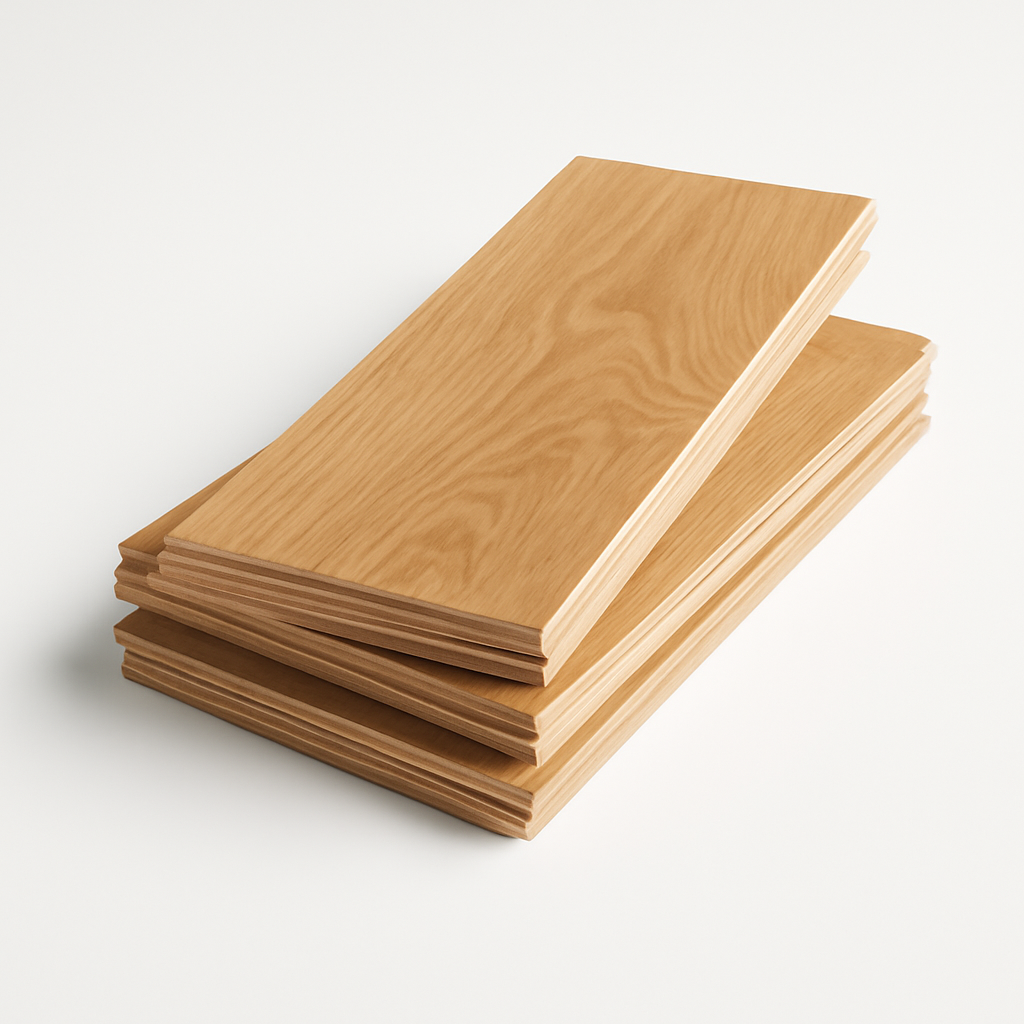
Overview
Waterproof Engineered Oak gives you the floor most people picture when they say “real wood” — a genuine white-oak veneer with natural grain, character, and warmth — but built on a stable multi-ply or HDF core instead of a single solid plank. That construction is the whole point. Solid oak is one piece of wood that swells and shrinks across its width with every seasonal humidity swing, which is why it has to be nailed down and kept away from damp rooms. Engineered oak cross-layers the core, so the board moves far less. The result is a real-wood surface that behaves predictably over concrete slabs, in basements, and in homes that run dry in winter and humid in summer.
A word on the “waterproof” label, because it matters: in engineered hardwood, waterproof really means water-resistant. A quality finish and a tight seam will shrug off a dropped glass, a mopped floor, or a pet accident you catch promptly. What it will not do is survive standing water the way a solid vinyl plank can — the top layer is still natural wood. If your priority is a floor you never think about in a wet room, an SPC rigid core vinyl plank is the honest answer. If you want the look and resale value of true oak with a sensible margin against everyday spills, this is the right category.
Specifications
| Surface | Real white-oak veneer (natural grain) |
|---|---|
| Construction | Engineered — oak wear layer over multi-ply / HDF core |
| Moisture rating | Water-resistant (“waterproof” finish + sealed seams) |
| Finish | Matte, low-sheen factory finish |
| Install methods | Float, glue-down, or nail (varies by line) |
| Refinishing | Light sand & recoat once or twice (depends on veneer thickness) |
| Best rooms | Living, dining, bedrooms, kitchens, basements / slabs |
| Underfloor heating | Compatible on most floated lines — check the spec sheet |
| Sold via | Hardwood Bargains (affiliate partner) |
Pros & cons
What we like
- Genuine white-oak surface — looks and feels like real wood
- Far more dimensionally stable than solid hardwood
- Can go over concrete slabs and into basements
- Holds resale value better than vinyl or laminate
- Flexible install — float, glue, or nail depending on the line
- Can be refinished at least once if the veneer is thick enough
Trade-offs
- “Waterproof” means water-resistant, not flood-proof
- Costs more than vinyl plank or laminate
- Limited refinishing vs. solid oak (thin veneer = fewer recoats)
- Real wood can still dent under heavy point loads
- Needs a moisture test and acclimation before install
Who it’s for
Buy it if you want genuine wood underfoot, you’re flooring over a slab or in a basement where solid oak is risky, or you care about the resale appeal real hardwood adds to a home.
Consider something else if the floor will see standing water or constant wet feet — a bathroom, a mudroom in a snowy climate, a laundry room — where an SPC rigid core vinyl plank is the safer call, or if you want the deepest possible refinishing budget for decades of sanding, in which case solid oak still wins.
How it compares
Against an SPC rigid core vinyl plank, engineered oak loses on pure water resistance — vinyl is the floor for wet rooms and worry-free mopping — but wins on authenticity, warmth underfoot, and resale value. Against solid hardwood, it trades away some refinishing life (a thin veneer sands once or twice, where solid oak survives many cycles) for the stability to install over concrete, in basements, and across climates that would cup a solid board. For most homeowners who want real wood without the solid-oak fragility, this is the sweet spot.
Installation notes
Acclimate longer than you think
Because this is real wood, give the unopened boxes a full 3 to 5 days flat in the installation room so the planks reach your home’s everyday temperature and humidity before you lock or glue them.
Test the subfloor for moisture
Run a moisture test on any concrete slab and confirm the subfloor is dry and flat. Engineered oak tolerates damp far better than solid, but persistent slab moisture still demands a vapor barrier or the right glue system.
Leave proper expansion gaps
Hold roughly a 1/4″ gap at every wall and fixed object, hidden under baseboard or quarter-round. Even a stable engineered board needs room to breathe — never pinch it under cabinets or a heavy island.
Seal and protect the edges
The veneer is sealed on top, but cut ends and seams are the vulnerable points. Wipe spills promptly, keep the matte finish clean with a wood-safe cleaner, and use felt pads under furniture to protect the natural surface.
FAQ
- Can engineered oak be refinished?
- Usually once, sometimes twice, depending on how thick the oak wear layer is. A light sand-and-recoat refreshes it — but it can’t be sanded repeatedly like solid oak, so treat deep refinishing as a one-time option.
- Is it really waterproof?
- It’s water-resistant. The finish and sealed seams handle spills and mopping well, but the surface is natural wood. Don’t expect it to survive standing water — that’s vinyl’s job.
- Where should I avoid using it?
- Skip full bathrooms, wet-climate mudrooms, and laundry rooms where water pools — choose an SPC rigid core vinyl plank there. Kitchens, living areas, bedrooms, and basements are all fair game.
- Can I install it over a concrete slab?
- Yes — a big advantage over solid oak. Float or glue it down after a moisture test and, where needed, a vapor barrier.
- Does it add resale value like real hardwood?
- It does. Because the surface is genuine white oak, buyers treat it as real wood flooring, which is why it’s our pick for homeowners thinking about resale.