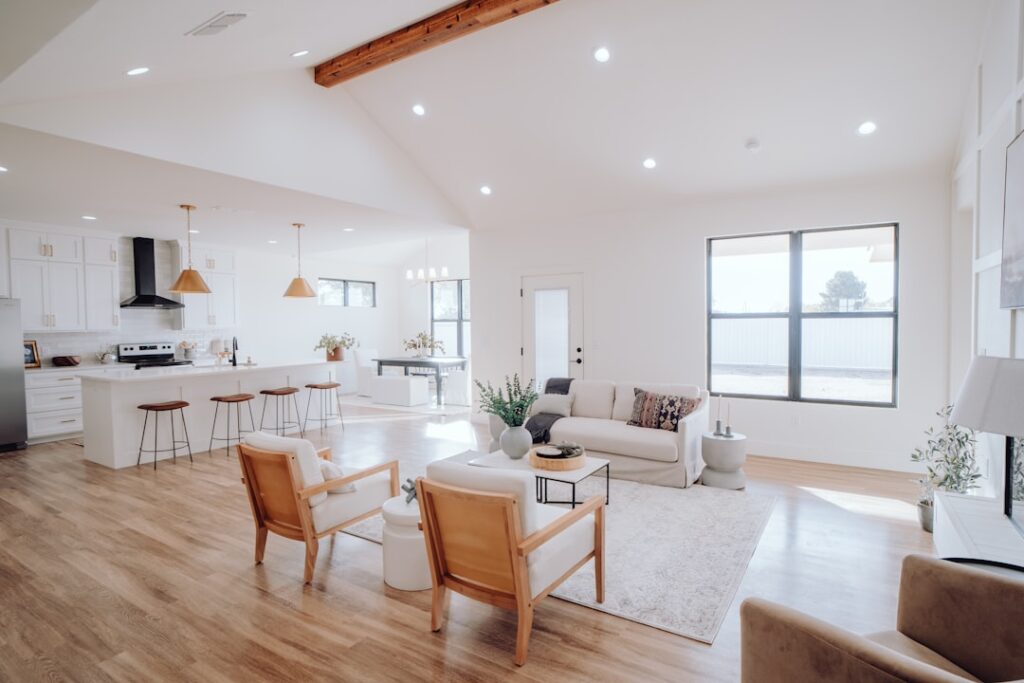
Walk into a designer-staged home and the drapes almost always graze the floor, but walk into a builder-grade apartment and they hover six inches above the carpet like awkward dinner guests. Should drapes touch the floor is one of those small questions that completely changes how a room reads, and the answer depends on your ceiling height, fabric weight, traffic, and how much vacuuming you are willing to do. Get the length right and a $90 set of curtains looks custom. Get it wrong and a $900 set looks like it shrank in the wash.
The Four Standard Drape Lengths
Designers describe drape length using four terms that show up on every workroom order:
- Floating: 1/2 inch above the floor
- Kissing: just touching the floor, no break
- Breaking: 1/2 to 1 inch puddle, panels fold slightly at the hem
- Puddling: 2 to 8 inches of fabric spilling onto the floor
Pick the wrong one and the room will feel off even if you cannot articulate why. The good news is that hem length is the cheapest fix in window treatments, often $20 to $40 per panel at a dry cleaner or alteration shop.
When Drapes Should Touch the Floor
The kissing or 1/2-inch break length is the safe default in 90 percent of American homes. It looks tailored, photographs well, and works with hardwood, tile, vinyl plank, and low-pile carpet. If you cannot decide, this is your answer.
Floor-length drapes also make a ceiling look taller. Hanging the rod 4 to 6 inches below the ceiling and dropping panels to the floor stretches the eye vertically and adds visible height to a standard 8-foot wall. This is the single highest-impact trick in residential design and costs nothing beyond longer panels.
When to Float Drapes Above the Floor
A 1/2-inch float is the right move in a few specific situations. Sliding patio doors are the obvious one because the panels need to clear the track and any vacuum or door sweep. Forced-air heat registers under a window also need a small gap so the drape does not balloon when the furnace cycles.
Active households with pets and toddlers are the other case. A floating panel stays cleaner, dries faster after a spill, and does not collect dust bunnies along the bottom hem. Crews with white labs and shedding cats know that a 1/2-inch gap can save a panel from monthly washing.
The Case for Puddled Drapes
Puddling adds drama and a sense of luxury that flat-hung panels cannot match. It works in formal living rooms, primary bedrooms, and dining rooms where traffic is low and the goal is mood, not function. Heavy fabrics like velvet, linen-cotton blends, and silk dupioni puddle naturally. Lightweight polyester looks limp and wrinkled when it tries.
Budget for 2 to 4 inches of puddle in a modern transitional room and 6 to 8 inches for a true traditional or French-country look. Plan to fluff and arrange the fabric every time you vacuum, which means about 15 seconds of work each week.
How to Measure for Each Length
The measurement that matters is from the bottom of the curtain ring or grommet to the floor, not from the rod itself. To find it, install your rod first, then hang a tape measure from a ring and read the number where it meets the floor.
- Mount the rod 4 to 6 inches above the window casing, or higher to add ceiling drama.
- Hook a ring or grommet onto the rod where the panel will hang.
- Drop a tape measure from the bottom of the ring straight to the floor.
- Subtract or add for your desired finish: minus 1/2 inch for floating, exact number for kissing, plus 1 inch for breaking, plus 4 to 8 inches for puddling.
- Order or hem to that length. Always confirm with a second measurement at the opposite side of the window because floors are rarely level.
Pro tip: measure all four corners of a long picture window. Variance of 1/4 inch over 8 feet is normal in older homes. Hem to the longest measurement so no corner floats by accident.
Standard Drape Lengths You Can Buy Off the Shelf
Big-box stores stock panels in 63, 84, 95, 108, and 120-inch lengths. Most living rooms with 8-foot ceilings need a 95 or 96-inch panel hung high. For 9-foot ceilings, jump to 108. For 10-foot ceilings or higher, custom or 120-inch is the only way to get the proper proportion.
- 8-foot ceilings: 95 or 96-inch panels
- 9-foot ceilings: 108-inch panels
- 10-foot ceilings: 120-inch panels
- Vaulted or taller: custom workroom (Calico, Ethan Allen, or local)
Stock panels at Target, IKEA, and Pottery Barn run $30 to $120 each. Custom panels typically start at $150 per panel and climb fast based on fabric.
Fabric Choice Changes the Right Length
Heavier fabrics drape better at floor level because they hang in straight folds rather than swinging. Velvet, twill cotton, linen, and lined drapes all benefit from a kiss or slight break. Sheer panels and unlined polyester look better with a small float because the bottom hem is too light to stay flat on the floor.
Lining matters more than people think. Adding a $20 cotton sateen lining doubles the weight, blocks light, and makes any panel hang correctly. Most stock panels can be lined after the fact at the same alteration shop that hems them.
The Bottom Line
Kiss the floor in formal rooms. Float in kitchens, laundry rooms, and over heat registers. Puddle in bedrooms and dining rooms where you want a softer feel. Avoid the high-water look at all costs. If the panels stop more than an inch above the floor without an active reason, the entire room reads as unfinished, no matter how expensive everything else cost.
Prefer to explore on your own?
See how new flooring looks in your actual room in seconds — free, no signup.
Try the free Floor Studio →