A leak-free shower depends on a component many homeowners never think about: the shower threshold water dam. This is the raised barrier at the entrance of the shower, also called the curb or dam, that keeps water inside the shower area and stops it from spilling out onto the bathroom floor. It sounds simple, but the threshold is a critical waterproofing detail, and doing it right prevents rot, mold, and costly water damage below and around the shower. This guide explains what the water dam does, the materials used, and how it is built and waterproofed for lasting protection.
- What Is a Shower Threshold Water Dam?
- Why the Water Dam Matters
- Types of Shower Curbs and Dams
- Materials Used for Waterproofing
- How a Shower Threshold Water Dam Is Built
- Common Mistakes to Avoid
- Maintenance and Care
- Curbed Versus Curbless Shower Designs
- Signs Your Shower Threshold May Be Failing
- Final Thoughts on the Shower Threshold Water Dam
What Is a Shower Threshold Water Dam?
The shower threshold water dam is the raised strip or curb at the doorway of a shower that contains the water. In a curbed shower it is the small step you cross to enter, and in some prefabricated bases and curbless designs it takes the form of a low dam strip that holds water back at the entry. Its job is to create a watertight boundary so that water draining across the sloped shower floor cannot escape past the opening. Because it sits at the wettest transition in the whole bathroom, the dam must be properly sloped, sealed, and waterproofed on all sides to do its job for the life of the shower.
Why the Water Dam Matters
The threshold does far more than hold back a puddle. Water that escapes a shower can seep under flooring, into subfloor and framing, and down into ceilings on lower levels, causing hidden rot and mold that is expensive to repair. A properly built and waterproofed dam directs every drop back toward the drain. It also anchors the waterproofing system, tying together the shower pan liner or membrane, the walls, and the floor into one continuous sealed envelope. When a shower leaks, the threshold and its connections are among the most common failure points, which is why builders pay such close attention to getting this detail right.
Types of Shower Curbs and Dams
The water dam can be constructed in several ways depending on the shower system:
- Mortar or brick curb: A traditional curb built from bricks or blocks and covered in mortar, then waterproofed and tiled.
- Preformed foam curb: Lightweight, waterproof foam curbs designed to pair with sheet membrane systems for fast, reliable installation.
- Integrated base dam: Prefabricated acrylic or composite shower bases with a molded-in dam at the entry.
- Curbless dam strips: Low-profile dam or water-stop strips used in barrier-free showers to hold water back at a flush entry.
Each approach must be waterproofed consistently with the rest of the shower to prevent leaks.
Materials Used for Waterproofing
Whatever the curb is made of, the waterproofing is what keeps it sound. Common materials include a shower pan liner that wraps up and over the curb, sheet membranes that bond to foam curbs, liquid-applied waterproofing that is painted on in coats, and waterproof backer boards on the walls above. Sealants and banding tape lock the corners and seams where the curb meets the floor and walls. The goal is a continuous, unbroken waterproof layer from the shower floor, up and over the dam, and onto the walls, so water has no path to reach the framing beneath the tile.
How a Shower Threshold Water Dam Is Built
Building the dam correctly is a step-by-step process that must integrate with the whole shower:
- Form the curb. Set a mortar, brick, or preformed foam curb at the shower opening, level along its length and firmly anchored.
- Slope the top slightly. Angle the top of the curb gently back toward the shower so water runs inward, not out onto the floor.
- Waterproof all three sides. Wrap the pan liner or membrane up the inside face, over the top, and down the outside face so the entire dam is sealed.
- Seal the corners. Treat inside and outside corners with preformed pieces or banding tape and sealant, since corners are the most common leak points.
- Test for leaks. On traditional pan liners, a flood test confirms the waterproofing holds before tiling.
- Tile and grout. Cover the finished dam with tile, then seal the grout and any movement joints.
Common Mistakes to Avoid
Several errors doom a shower threshold water dam. Failing to waterproof the outside face of the curb lets water wick through and escape, a frequent and hidden cause of leaks. Sloping the curb top outward instead of inward channels water toward the bathroom floor. Skipping proper corner treatment leaves gaps that no amount of grout will fix, since grout is not waterproof. Puncturing the pan liner with nails or screws through the curb creates leak paths, so fasteners must never penetrate the waterproofing below the flood line. And relying on tile and grout alone as the water barrier, without a membrane underneath, virtually guarantees eventual failure.
Maintenance and Care
Once your shower is built, a little upkeep protects the waterproofing. Keep the grout and any caulked joints at the base of the curb intact, resealing grout periodically and replacing cracked or moldy caulk before water can find a way in. Watch for loose or hollow-sounding tiles on the threshold, which can signal movement or a problem below. Wipe down the curb and squeegee the shower to reduce standing water, and address any signs of dampness on the bathroom floor near the entry promptly. Because the membrane does the real waterproofing, maintaining the surface layers simply extends the life of the whole system.
Curbed Versus Curbless Shower Designs
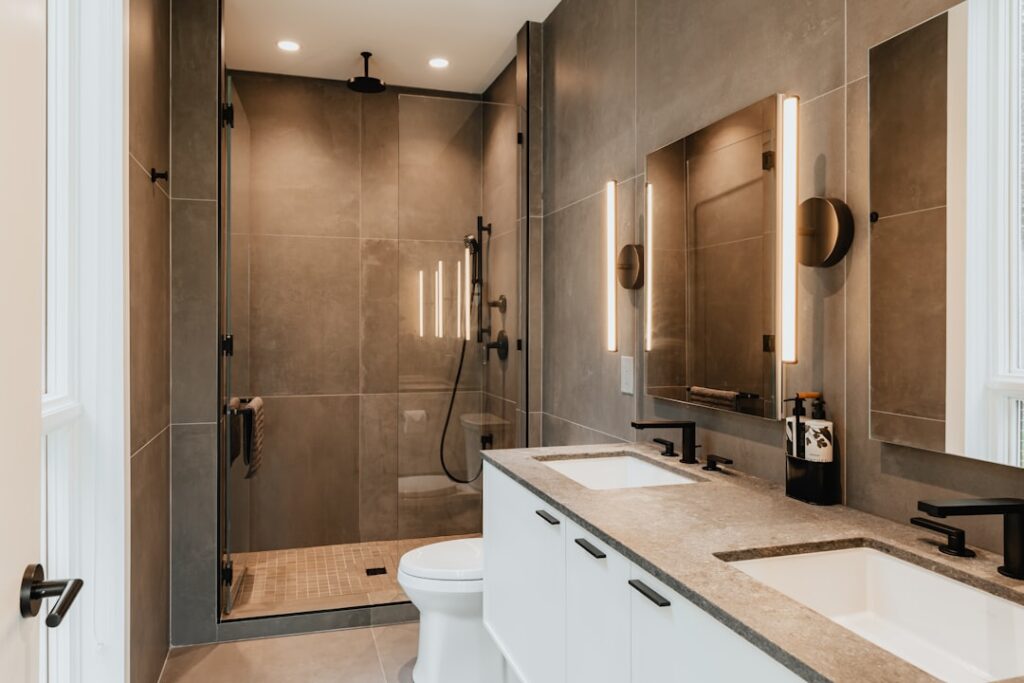
The form your water dam takes depends heavily on whether you build a traditional curbed shower or a modern curbless one, and each approach handles water containment differently. A curbed shower uses a raised threshold you step over, which is the most reliable and forgiving way to keep water inside, since the physical barrier does much of the work. It is also the more budget-friendly and straightforward option for most bathrooms. A curbless, or barrier-free, shower has no step at the entry, offering a sleek, open look and easy wheelchair or walker access. Containing water in a curbless design is more demanding: it relies on a carefully sloped floor, sometimes a low dam strip or a linear drain positioned to pull water away from the opening, and precise waterproofing throughout. Curbless showers can absolutely stay dry, but they require expert design and installation to do so, whereas a curbed threshold is more tolerant of small imperfections.
Signs Your Shower Threshold May Be Failing
Catching a threshold problem early can save you from major structural repairs, so watch for warning signs. Water pooling on the bathroom floor just outside the shower entry after use is a red flag that the dam is not containing water properly. Loose, cracked, or hollow-sounding tiles on the curb suggest movement or moisture damage beneath. Persistent musty odors, dark staining, or soft, spongy flooring near the shower point to water reaching the subfloor. Peeling paint, bubbling, or stains on the ceiling of a room below the bathroom often trace directly back to a leaking threshold or pan. Mold that keeps returning at the base of the curb despite cleaning hints at moisture trapped within. If you notice any of these, investigate promptly, because a failing water dam rarely fixes itself and the hidden damage only grows more expensive the longer it goes unaddressed.
Final Thoughts on the Shower Threshold Water Dam
The shower threshold water dam is a small feature with an outsized role in keeping your bathroom dry and your home free of hidden water damage. Whether built as a mortar curb, a preformed foam block, or a low dam strip in a curbless design, its success depends on continuous waterproofing that wraps all three sides, carefully sealed corners, and a slope that directs water back toward the drain. Get those details right, maintain the grout and caulk over time, and your shower will stay watertight and trouble-free for many years.