
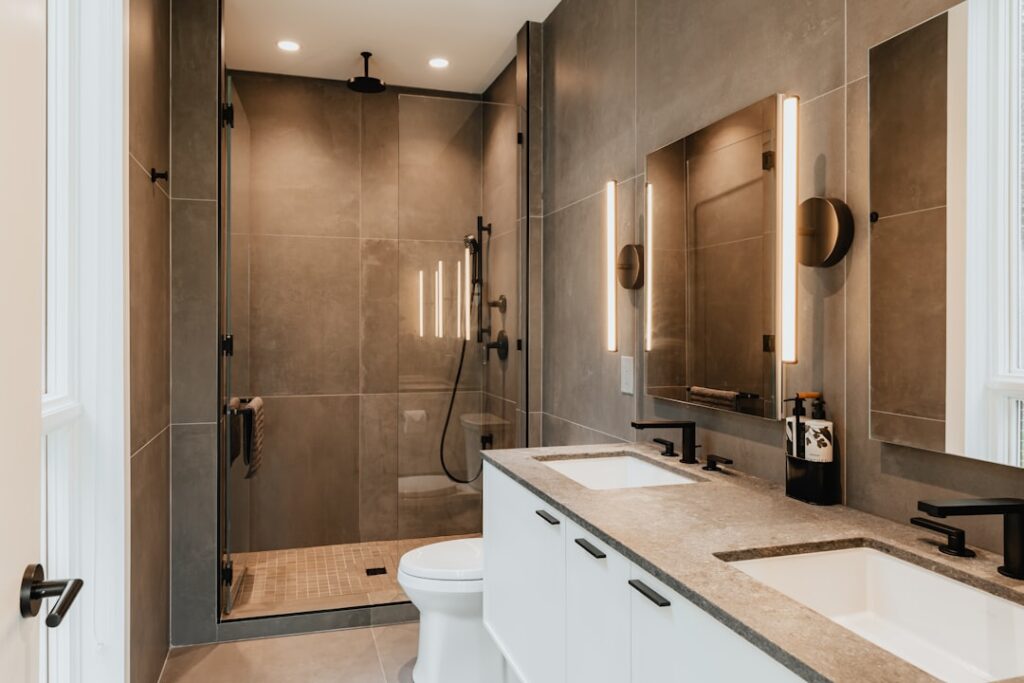
A second shower head sounds like a small upgrade until you discover the typical 3/4-inch supply line in your wall can’t push enough water for both heads at full blast. Building a shower with two shower heads is one of the most popular bathroom remodels of 2026, but most homeowners underestimate the plumbing math. Done right, you get a spa-like wet zone that adds resale value. Done wrong, you get two trickling heads and a frustrated household.
Why Two Shower Heads Make Sense
Dual shower heads do more than impress guests. For couples, it cuts morning routines nearly in half. For aging-in-place planning, a handheld at one end and a fixed head at the other adds flexibility without a full remodel later. And resale data from 2025 shows master baths with dual shower setups sell 6 to 9 days faster than single-head equivalents in the same price tier.
Most installs fall into one of three configurations: two fixed wall-mount heads, one fixed plus one handheld, or a rain head paired with a body spray panel.
Plumbing Reality: Flow Rate and Supply Lines
Every shower head in the US since 1994 is capped at 2.5 gallons per minute under federal law. California, Colorado, and a handful of other states cap at 1.8 GPM. Two heads running at once means 3.6 to 5 GPM through your supply lines, and that’s where the math gets tight.
Standard 1/2-inch copper or PEX delivers about 6.5 GPM at 60 psi. That sounds adequate, but factor in pressure drops from elbows, length of run, and the second-floor location of most bathrooms, and you can lose 20% of that flow. The fix: upgrade the main shower supply to 3/4-inch line back to the manifold.
Pick the Right Valve Setup
The shower valve is the single most important spec in a dual-head shower. Three valve types cover nearly every install:
- Two separate thermostatic valves: Each user controls their own temperature. Best for two adults sharing the shower. Adds $400 to $800 in valves alone (Hansgrohe Ecostat or Grohe Grohtherm)
- One thermostatic valve with diverter: Single temperature, choose which head(s) run. Most cost-effective, around $250 to $500
- Pressure-balancing valve with diverter: Code-required in many states, adjusts for sudden pressure changes when a toilet flushes elsewhere
For new builds or full remodels, dual thermostatic valves are worth the cost. They eliminate every “honey, the temperature changed” argument.
Sizing the Shower Stall
A shower with two shower heads needs space — more than most homeowners realize. Code minimum for a single-head shower is 30×30 inches, but that’s painful even for one person.
Realistic minimums for a dual-head setup:
- Two people, opposite walls: 60×36 inches minimum, 72×42 ideal
- Two heads, same wall (for one user): 48×36 inches works, 60×36 is more comfortable
- Rain head plus body sprays: 60×42 minimum, with the rain head centered overhead
Curbless walk-in showers need an additional 6 to 12 inches of dry zone to prevent splash-out, so factor that into the overall bathroom footprint.
Head Configurations That Actually Work
Not every two-head layout delivers a good experience. The best configurations balance coverage with practical use.
Side-by-Side Wall Mount
Both heads on the same wall, mounted 76 to 80 inches above the floor and 16 to 24 inches apart. Cheapest install, single valve possible. Works well for solo users who want full coverage from shoulders down.
Opposing Walls
One head on each end wall, requires the longest plumbing runs but creates true side-by-side showering. Needs two valves and at least a 60-inch wide stall.
Ceiling Rain Head Plus Wall Head
The most popular 2026 setup. Rain head centered overhead, traditional adjustable head on one wall. Combines drenching coverage with a usable spray for hair-washing. Rain heads like the Kohler Awaken or Hansgrohe Raindance run $200 to $700.
Cost Breakdown
Budget realistically. A shower with two shower heads is a mid-tier bathroom remodel, not a cheap upgrade.
- Two quality shower heads: $200 to $1,200
- Valves (one or two thermostatic): $250 to $1,200
- Plumbing rough-in and supply line upgrade: $800 to $1,800
- Tile and waterproofing (new build or expansion): $2,500 to $7,000
- Glass enclosure (frameless): $1,500 to $3,500
- Labor (plumber + tile setter): $2,000 to $5,000
Total project cost typically runs $7,000 to $18,000 for a midrange master shower upgrade, with luxury builds hitting $25,000-plus when steam, body sprays, and high-end stone are added.
Water Heater and Drain Considerations
Two shower heads running 5 GPM combined will drain a 40-gallon tank water heater in about 8 minutes of usable hot water. For a household that uses dual showers regularly, upgrade to:
- 50 or 75-gallon tank: The simplest, cheapest path. Around $1,200 to $2,200 installed
- Tankless gas unit (199K BTU): Unlimited hot water at the right flow rate. $3,000 to $5,500 installed
- Heat pump hybrid: Energy efficient but slower recovery — not ideal unless paired with a buffer tank
Drain sizing matters too. Code allows 2-inch drains for showers up to about 5.5 GPM, but for a high-flow dual setup, upsize to a 3-inch drain or add a linear drain rated for 9 to 12 GPM. A clogged 2-inch drain with two heads running floods fast.
Steam, Body Sprays, and Smart Features
Once you’ve committed to dual heads, the upsell list grows fast. Steam generators (Mr. Steam eTempo at $2,400 to $3,800) turn the shower into a sauna. Body spray panels add 2 to 6 horizontal jets, but they require a dedicated valve and significantly more flow. Smart digital controls from Kohler DTV+ or Moen U Shower let you preset temperatures and head combinations from your phone.
Skip body sprays unless you can dedicate a 3/4-inch supply line just for them — otherwise the rain head suffers when sprays are on.
Common Mistakes to Avoid
The five errors that derail most dual-head shower projects:
- Sticking with a 1/2-inch supply line “to save money” — guarantees weak flow
- Using a single non-thermostatic valve for two users — temperature swings will frustrate everyone
- Skipping the dry zone outside a curbless shower — water migrates farther than you think
- Choosing identical fixed heads when one user is significantly taller — at least one head should be adjustable
- Forgetting to confirm your water heater capacity before the rough-in
A shower with two shower heads is worth the investment when the plumbing, valve, and sizing are all sized for the flow you actually want. Plan the math first, pick fixtures second, and you’ll end up with the upgrade that gets used every single day.


